

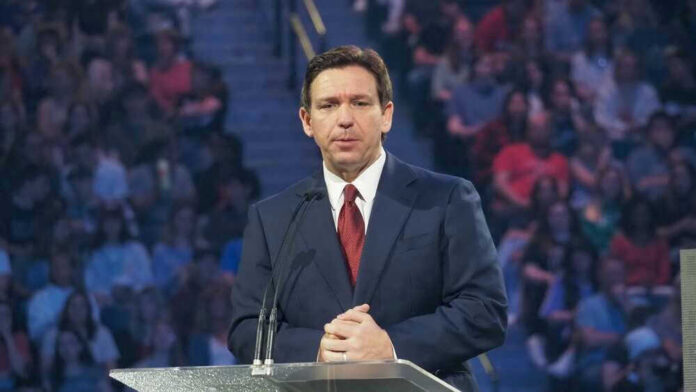
Florida set a 6 p.m. execution for William Reaves Jr. under a death warrant signed by Governor Ron DeSantis, marking the state’s 18th execution scheduled in 2026.
At a Glance
- Governor Ron DeSantis signed a death warrant for William Reaves Jr. on September 18, 2026.
- The execution was scheduled for October 20, 2026, at 6 p.m., at Florida State Prison in Raiford.
- Reaves was convicted and sentenced to death in 1992 for the 1986 murder of Deputy Richard Raczkoski.
- If carried out, this would be Florida’s 18th execution of the year, nearing a modern state record.
What Florida Scheduled, When, and Why It Matters
Florida set the execution of William Reaves Jr., 77, for 6 p.m. on October 20, 2026, at Florida State Prison in Raiford. Governor Ron DeSantis signed the death warrant on September 18, 2026, based on Reaves’s February 25, 1992 conviction and March 31, 1992 death sentence for the first-degree murder of Indian River County Deputy Sheriff Richard Raczkoski. State filings say the case includes a confession by Reaves. The warrant places the state within reach of tying a modern Florida execution record.
The scheduled execution sits within Florida’s aggressive capital schedule. Local outlets reported the warrant and the timing, underscoring a broader statewide push that has made Florida the national driver of executions this year. The legal basis is not in doubt: the United States Supreme Court docket reflects active filings that reference the warrant, the conviction, and the completed stages of direct appeal and postconviction review.
The Case Against Reaves: From 1986 Murder To 1992 Sentence
Court records identify the victim as Indian River County Deputy Sheriff Richard Raczkoski, killed on September 23, 1986. Prosecutors retried the case after an earlier conviction was overturned due to a prosecutor conflict, and a second jury delivered the 1992 conviction and death sentence that still stands. State filings assert that Reaves confessed, a point the state highlights in opposing a stay request. Florida’s brief also notes that Reaves completed direct appeal, state postconviction, and federal habeas review.
Reaves’s lawyers sought a stay from the United States Supreme Court as the date neared. That is common in capital cases and does not change the warrant’s authority. Filings in Capital Case No. 26A524 and related docket No. 26-5865 show the defense challenging the execution timeline and raising claims for review. News outlets noted pending appeals, but the Florida Department of Corrections stood ready to proceed at the set time and place unless a court ordered otherwise.
Florida’s Pace and the Policy Signal
The scheduled execution would be Florida’s 18th in 2026. Outlets reported Florida as approaching or tying a modern mark for annual executions, and as leading the nation’s totals by a wide margin. That pace reflects an executive and legislative posture that stresses finality after years of review and gives weight to victims and law enforcement families. From a common-sense perspective, the state points to completed appeals and a decades-old murder of a deputy as reasons to carry out the sentence now.
MIAMI (AP) — Florida is set Tuesday to carry out its 18th execution of the year under Republican Gov. Ron DeSantis ’ aggressive use of the death penalty in his final term. William Reaves, 77, was s… pic.twitter.com/SOw8L3wYJU
— KSAN News (@ksannews) October 20, 2026
Critics focused on Reaves’s age and veteran status in coverage, and more than 100 veterans reportedly sought clemency, but the legal backbone remained the 1992 judgment and the signed warrant. Supporters of capital punishment argue that justice delayed for four decades erodes deterrence and respect for law. They see Florida’s approach as consistent with public safety and the rule of law. A brief caveat: last-minute court action can delay or stop an execution, even on the scheduled day.
Sources:
nbcnews.com, supremecourt.gov, wptv.com, independent.co.uk