
Prosecutors say three Iran-backed operatives plotted to strike U.S. forces at a British air base, with orders relayed from a New York jail.
Story Snapshot
- A grand jury charged three men over a September 2026 plot at RAF Fairford.
- Justice Department names roles: a jailed coordinator, an on-the-ground planner, and a network link.
- British authorities charged two men after a security breach at the same base.
- The case involves alleged support for Kata’ib Hizballah and Iran’s Revolutionary Guard.
Indictment centers on a September 2026 plot at a U.K. base hosting U.S. forces.
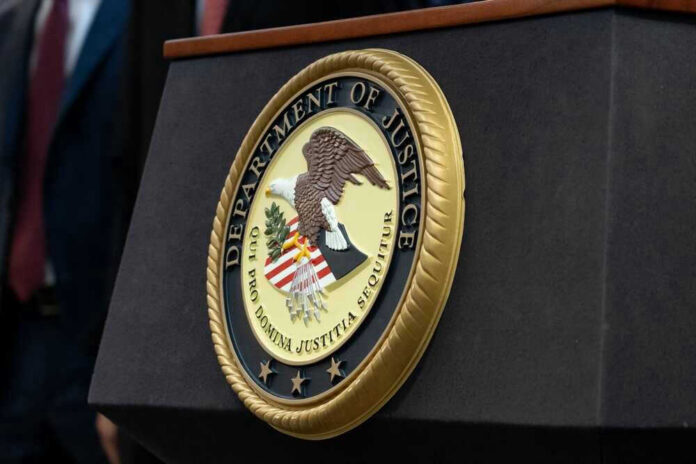
The U.S. Department of Justice announced an eight-count superseding indictment that targets a plot at Royal Air Force Fairford in September 2026. The base hosts U.S. aircraft and personnel. Prosecutors say the scheme is one of nearly 20 attacks and attempts tied to the same network across Europe and the United States. The charging papers place the Fairford plan inside a wider effort that aligns with proxy methods used by groups linked to Iran’s security apparatus, according to the announcement.
The indictment names three alleged conspirators: Mohammad Baqer Saad Dawood al-Saadi, Mohsen Mohajeri, and Mohammad Ali al-Hassani. The Justice Department describes al-Hassani as the organizer of the Fairford operation, with Mohajeri tied to the network’s support activities. Officials say al-Saadi helped direct operations while already in U.S. custody. News reports describe prosecutors’ claim that each man had a defined role inside the same cell.
Prosecutors outline a relay system built on coded jail calls.s
Prosecutors allege al-Saadi passed instructions from a New York jail using coded messages through third parties. They say family calls carried signals that guided actions abroad. The alleged method suggests a simple but durable command channel that can function even when a key player is locked up. Coverage of the case echoes the claim about coded communications, saying the calls formed part of the command-and-control chain.
Officials connect the Fairford plot to a real security incident at the base weeks earlier. British prosecutors charged two men under the National Security Act after that event. The men appeared in a London court in late October 2026. Those charges show that the United Kingdom treated the base breach as a national-security case with potential foreign ties.
Alleged ties to Kata’ib Hizballah and Iran’s Revolutionary Guard frame the stakes.
The Justice Department places the Fairford plot within activity that supports Kata’ib Hizballah and Iran’s Islamic Revolutionary Guard Corps. The United States designates both as foreign terrorist organizations. That framing matters for threat analysis, because it links a local target to a network with state-grade resources and a long record of using proxies. It also aligns with broader reporting that points to a layered model of agents, cutouts, and deniable recruits.
The charge sheet describes a campaign that presses on soft seams: jail phones, family ties, cash channels, and local helpers near targets. That mix is common in proxy warfare inside the West. It reduces cost and risk for sponsors while forcing defenders to scan many small signals—American conservative values prize swift accountability and deterrence. A firm legal response to networks that target U.S. troops honors that standard and signals that borders and badges still mean something in practice.
Why the Fairford case matters for base security and allied resolve
RAF Fairford sits on allied soil but hosts U.S. power projection. A plot there aims at both flags at once. That makes the case a live test of joint defense, cross-border policing, and timely intel sharing. The United States and the United Kingdom have decades of practice here, but the alleged use of jail calls shows threats can route through mundane systems. That pushes commanders and wardens to harden routine touchpoints, not just perimeters and runways.
US indictment charges three Iran-backed operatives over a September plot on RAF Fairford, the UK base housing US bombers; prosecutors allege one steered it from a New York jail via coded calls to family. https://t.co/6Ua10qoBzu
— Apex Wigger (@vrilmag) November 11, 2026
Prosecutors stress that charges are allegations and the defendants are presumed innocent. Courts will weigh translations, intent, and links to the named groups. Yet the lineup of a charged plot, named roles, and a tied security incident gives this case unusual clarity. If the facts hold, the lesson is blunt: hostile networks seek the seams between agencies and allies. The fix is the opposite—tight seams, shared facts, and fast action when a base that shelters U.S. airmen comes under threat.
Sources:
justice.gov, cbsnews.com, abc17news.com, reuters.com