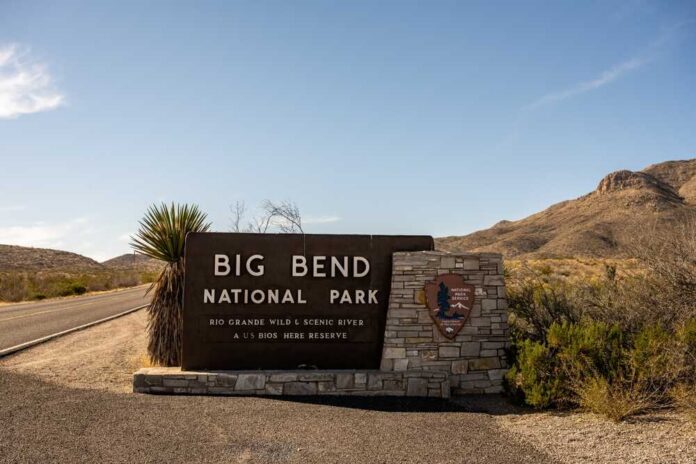
Bulldozers, 30-foot steel, and floodlights have arrived in Texas’ Big Bend—backed by federal waivers and a plan that runs far beyond a simple fence.
Story Snapshot
- Homeland Security waived environmental laws to fast-track a border barrier system in Big Bend.
- Customs and Border Protection plans include steel bollards, roads, lights, cameras, and fiber lines.
- Big Bend crossings are low compared with other sectors, fueling local pushback.
- Apprehensions fell 74% since 2023, yet the sector still records illegal entries.
What is being built and where it goes
Customs and Border Protection sent landowners detailed letters describing a “border barrier system” across about 175 miles in Hudspeth, Jeff Davis, and Presidio counties.
The package lists 30-foot steel bollard barriers, patrol roads, drainage gates, fiber optic and power cables, lighting poles, surveillance cameras, staging areas, utility shelters, and planned water use for construction. This is not a sign or a razor wire strand; it is a layered build meant to support patrol and detection.
Trump administration begins construction on Texas’s Big Bend border wallhttps://t.co/0dwLbjanFJ
— The Hill (@thehill) September 19, 2026
Planning materials also reference a “smart wall” approach that ties cameras and sensors to road access and command centers. Maps published in coverage show shifts over time between heavy steel segments and larger detection-only stretches.
Agencies describe a mix of primary and secondary barriers with waterborne elements in river zones. That blend reflects a hard lesson at the border: steel alone slows people; steel plus roads, lights, and eyes gives agents time to act.
Why the federal government moved now
The Department of Homeland Security issued a Federal Register waiver on February 17, 2026. That action cleared environmental and cultural-resource laws to speed construction in the Big Bend Sector. Waivers signal more than talk; they trigger contracting, staging, and access.
Supporters argue Congress already funded parts of the broader barrier effort, and they frame Big Bend as a missing link in a larger enforcement chain, not a stand-alone showcase.
Customs and Border Protection data show Big Bend apprehensions dropped to about 3,096 in fiscal year 2025, down from 11,823 in fiscal year 2023.
The decline bolsters the case that pressure matters, but it also feeds critics who say the area is low volume and does not justify miles of steel. Both things can be true: crossings are fewer than elsewhere, yet agents still catch people here, and the terrain makes response time precious.
The clash on necessity, cost, and common sense
Local opponents and national groups argue a continuous wall in canyon country is wasteful and harmful. They cite rugged cliffs that already block vehicles, river access needs, and wildlife corridors. They warn that lights and roads will industrialize a dark-sky reserve and hurt tourism.
Their claims land with force because Big Bend is iconic and because public data show it accounts for a small share of southwest-border encounters. Skeptics see a project outpacing the problem.
The administration answers with a layered-security view: deter, detect, and respond. Steel is not the only tool; it is one piece of a time-and-distance equation.
In this frame, long, empty stretches are not an excuse to do nothing; they are a reason to build roads, add sensors, and use barriers where terrain allows. That mix respects the first duty of government—secure the border—while aiming to minimize agent risk and close gaps.
How to judge effectiveness without hype
Results hinge on placement and integration, not slogans. Wall segments must sit where terrain does not already do the job. Roads must let agents reach hits that cameras flag. Lights must cover river bends without blasting night skies far beyond construction zones.
A practical test will come fast: do apprehensions in targeted hotspots drop, and do agents report faster, safer interdictions? If those metrics move, the case for a measured build strengthens. If not, scale and scope should change.
What comes next on the ground and in court
Expect lawsuits, access disputes, and map changes. The waiver guarantees speed, but it also fuels backlash. Contractors will stage equipment, trench for utilities, and pour foundations before bollards rise. Some planned steel could shift to tech-only zones as engineering and land access evolve.
The public deserves clear segment-by-segment justifications: why this mile gets steel, that mile gets sensors, and where existing cliffs already do the work for free. That transparency will decide trust.
Sources:
doggett.house.gov, marfapublicradio.org, yahoo.com, nobigbendwall.org, ourpubliclandsandwaters.substack.com, ca.news.yahoo.com