President Trump proposes capping credit card rates at 10%, prompting unlikely outreach from progressive Sen. Elizabeth Warren despite their bitter rivalry, raising questions about government overreach into free markets.
Story Snapshot
- Trump floats 10% credit card rate cap for one year, echoing progressive ideas amid high consumer debt from past inflation.
- Warren criticizes Trump publicly, then reveals he called her, urging Congress to pass rate cap legislation.
- Bernie Sanders’ S.381 bill for 10% cap sits stalled in Republican-controlled Senate Banking Committee.
- Bank stocks dip on news, signaling Wall Street fears of profit erosion and tighter credit for Americans.
Trump’s Populist Proposal Emerges
President Donald Trump proposed capping credit card interest rates at 10% for one year late Friday in early January 2026. This move targets affordability struggles fueled by rates exceeding 20-25%, a burden intensified by prior fiscal mismanagement and inflation.
Trump, focusing on economic populism, aims to deliver relief to working families crushed by debt. His idea revives consumer protection rhetoric from his 2016 campaign against financial institutions. Banks reacted swiftly with dipping stocks, highlighting tensions between Main Street relief and Wall Street profits.
Sen. Elizabeth Warren says Trump called her(!) after her speech at @PressClubDC and they talked about capping credit card interest rates and her housing bill. pic.twitter.com/L9LPMzOPCH
— bryan metzger (@metzgov) January 12, 2026
Warren’s Mixed Signals After Trump Call
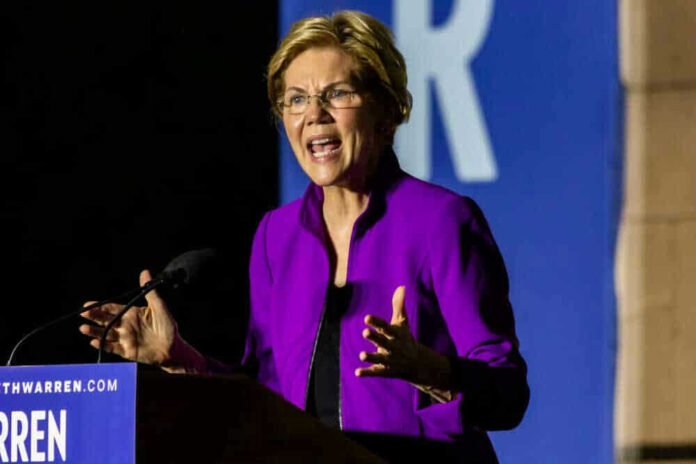
Sen. Elizabeth Warren delivered a Monday morning speech criticizing Trump’s affordability record while calling for rate caps. Trump then called her personally. Warren urged him to back congressional action on rate caps and the ROAD to Housing Act.
She stated Congress could pass legislation if Trump fights for it. This rare dialogue bridges their rivalry—marked by Trump’s past “Pocahontas” jabs—with policy overlap. Warren, CFPB creator, has long pushed caps, now aligning temporarily with Trump’s pitch.
Sanders’ Bill Faces GOP Roadblocks
Sen. Bernie Sanders introduced S.381, the 10 Percent Credit Card Interest Rate Cap Act, on February 4, 2025. The bill proposes a cap until January 1, 2031, with penalties like interest forfeiture for violators.
Referred to the Senate Banking Committee, it has seen no action in Republican-controlled Congress. Trump’s informal proposal mirrors it but lacks legislative backing. Passage faces resistance from GOP lawmakers protective of free-market principles and bank lobbying power.
Congressional hurdles loom large. Banks oppose caps to safeguard revenues, potentially tightening credit access for riskier borrowers. This tests Republican unity as Trump’s populism clashes with party orthodoxy favoring deregulation.
Potential Wins and Risks for Consumers
Enactment could save billions short-term for debt-laden households, especially low-income families hit hardest by high rates. Reduced costs might boost spending and ease affordability.
Long-term, S.381’s sunset risks returning to status quo unless extended. Banks warn of disrupted lending, possibly limiting credit for small businesses and families. Trump’s move bolsters his voter appeal but invites progressive credit-grabbing on policy.
Expert analysis flags congressional skepticism as a “tall order.” Progressives see opportunity; finance sectors fear industry threats. No Trump response to Warren’s call has surfaced, leaving bipartisan potential uncertain amid GOP control.
Sources:
Sen. Elizabeth Warren says Congress could work with Trump to cap credit card rates
Trump proposes 10% credit card interest rate cap
S.381 – 10 Percent Credit Card Interest Rate Cap Act