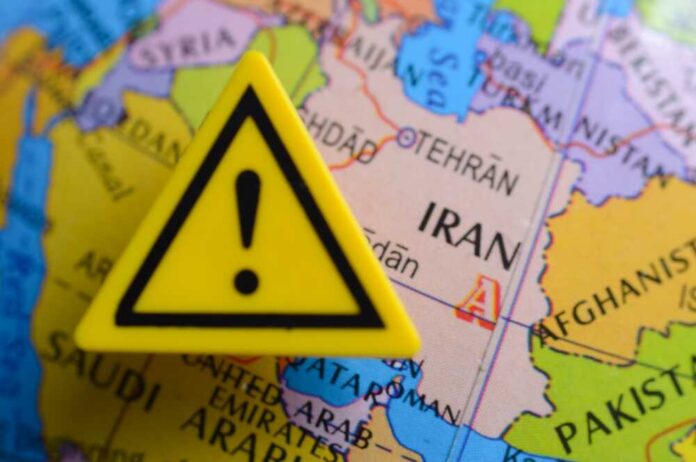
US banks brace for Iranian cyberattacks that could cripple payments and Treasury markets, exposing vulnerabilities left by prior weak leadership now demanding President Trump’s decisive action.
Story Snapshot
- US airstrike killed Iranian Supreme Leader Ali Khamenei last weekend, sparking war and cyber retaliation fears.
- Banks elevate cybersecurity vigilance against Iran-linked hacktivists targeting critical financial infrastructure.
- US intelligence warns of low-level DDoS attacks on payments, trading platforms, and Treasury markets.
- CISA faces a 38% staffing shortfall due to past DHS mismanagement, heightening national risks.
Trigger of Escalation
US forces conducted an airstrike last weekend in late February 2026, eliminating Iranian Supreme Leader Ali Khamenei. This action ignited a fierce US-Iran conflict across the Middle East. Financial markets reacted with volatility as oil prices spiked.
US banks immediately heightened monitoring for retaliatory cyberattacks. Intelligence assessments from Monday, March 2, flagged potential low-level disruptions from Iran-aligned groups. President Trump’s strong stance against terror regimes now faces this digital front line.
Banks Fortify Defenses
US financial firms operate critical infrastructure, including payments, clearing, settlement, trading platforms, and Treasury markets. These systems draw persistent cyber threats, amplified by Iran’s history of targeting Western banks. SIFMA coordinates resilience exercises across the sector.
Managing Director Todd Klessman stresses operational readiness amid surging risks. Morningstar DBRS issued warnings on Tuesday, March 3, about cyber dangers alongside oil-driven shocks. Lazard analysts highlight Iran’s past financial assaults.
Iranian Cyber Threat Profile
Iran-aligned hacktivists, tied to the Revolutionary Guard Corps and Ministry of Intelligence, ramp up reconnaissance after US-Israel strikes. Pro-Iran groups claim minor breaches like a Jordanian silo attack, though unverified and overstated. No major US hits reported yet, but low-intensity probes noted.
Google Threat Intelligence’s John Hultquist predicts disruptive operations against US, Israel, and GCC infrastructure. Recorded Future’s Alexander Leslie tracks IRGC silence as preparation signals.
FS-ISAC data shows finance topped DDoS targets in 2024 due to geopolitical wars. Past Iranian strikes hit US banks, Pittsburgh water systems, and oil facilities. Ransomware disrupted ICBC’s Treasury trades in 2023.
US banks on high alert for cyberattacks as Iran war escalates https://t.co/gezhsqah3V https://t.co/gezhsqah3V
— Reuters (@Reuters) March 4, 2026
Vulnerabilities from Past Policies
CISA operates at 38% staffing capacity due to DHS funding battles under previous administrations. Republicans criticized Democrats for weakening cyber defenses through cuts. This leaves critical infrastructure exposed as Iran exploits asymmetric tools against US military superiority.
Banks collaborate via SIFMA and FS-ISAC for shared threat intelligence. President Trump’s America First priorities demand restoring full defenses to protect economic stability.
🚨US Banks on High Alert for Cyberattacks as Iran War Escalates
U.S. banks are on heightened alert for potential cyberattacks as the war with Iran escalates.
Following the killing of Iran’s Supreme Leader Ali Khamenei, tensions in the Middle East have intensified, raising…
— War.Sphere (@WarSphere_Media) March 4, 2026
Experts like University of Chicago’s Braun foresee repeats of bank, oil, and water attacks, potentially worse. Ex-CIA’s Burgess urges multinationals to plan for multi-week outages. Consensus urges preparation over panic, with no confirmed major disruptions yet.
Sources:
US banks on high alert for cyberattacks as Iran war escalates
US banks on high alert for cyberattacks as political tension escalates
Intelligence firms watch uptick in Iran cyber activity after US-Israel strikes
Cybersecurity experts warn of potential cyberattacks amid war with Iran