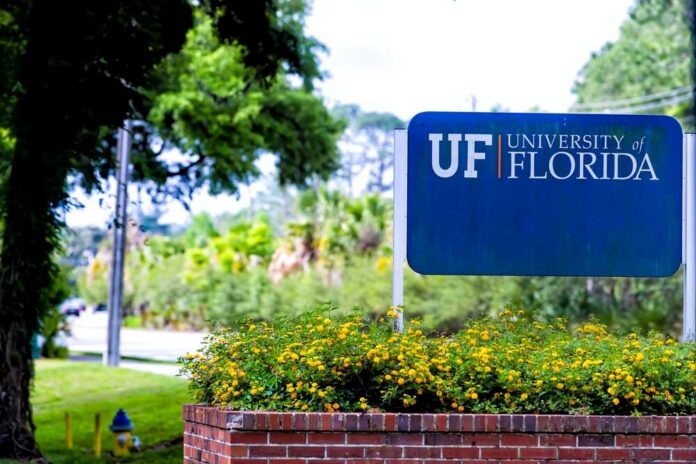
A major public university just froze a College Republicans chapter after an alleged antisemitic gesture—raising hard questions about accountability, free association, and whether political student groups can survive the campus pressure cooker without losing their principles.
Quick Take
- The University of Florida is moving to deactivate its College Republicans chapter as a registered student organization after the Florida Federation of College Republicans disbanded the chapter.
- UF said the federation cited a “pattern of conduct” that violated federation rules, including a recent antisemitic gesture; specific details were not publicly provided.
- UF said it supports the Jewish community and will help the group reactivate under new leadership when it is ready.
- The episode follows other recent controversies involving Republican-leaning student networks in Florida and beyond, often tied to offensive private messages or behavior.
UF deactivates the chapter after the federation already pulled the plug
University of Florida officials announced they are processing the deactivation of the UF College Republicans as a registered student organization after receiving notice from the Florida Federation of College Republicans that the Gainesville chapter had been disbanded.
According to the reports, the federation’s action came first, after an investigation into rule violations that included a “recent antisemitic gesture.” UF communicated the decision publicly on March 15 and, as of March 16, referred questions back to that statement.
Republicans close University of Florida chapter over alleged antisemitism https://t.co/4tU2h2hi5X pic.twitter.com/6b9fR526bi
— New York Post (@nypost) March 15, 2026
The key point in the public record is that this was not a university leadership crackdown that initiated the removal. The parent federation determined the chapter had crossed lines under its own rules and then requested UF deactivate the organization’s campus registration.
That sequence matters because it frames the issue as internal enforcement within a conservative student network rather than a top-down administrative punishment. It also narrows what can be confirmed: the federation cited misconduct, but the precise conduct has not been detailed publicly.
What’s known—and what’s still missing—about the alleged incident
UF and the federation described the trigger as a broader “pattern of conduct” capped by a “recent antisemitic gesture,” but neither report provides a public description of the gesture itself.
UF spokesperson Cynthia Roldán reportedly told media there were no additional details to share beyond the university’s social media post. With no official documentation released publicly, readers should treat social-media rumors and “anonymous screenshots” with caution. The verified facts are limited to the organizational actions and the stated reason.
For conservative readers, the absence of specifics creates two competing concerns that both deserve attention. Antisemitism is real and morally unacceptable, and Republican organizations do themselves no favors by tolerating conduct that discredits the movement and harms Jewish students.
At the same time, when a sanction is imposed and the public is told only broad labels, it becomes harder to evaluate proportionality, due process, and whether the response is being applied consistently across campus groups. The reports simply do not provide enough detail to resolve that tension.
How deactivation changes campus life for conservative students
Deactivation as a registered student organization typically means the chapter loses access to official university channels—such as reserved meeting spaces, student-activity funding pathways, and recruitment visibility—until it is reapproved.
UF signaled that this is not necessarily permanent, saying it will assist the group in reactivating under new leadership when it is ready. That pathway suggests UF expects a reset, not a ban, and it places the next step on rebuilding a chapter that can operate without attracting misconduct allegations.
Even with a reactivation option on the table, the short-term effect is disruption for students who joined for policy debate, campaign volunteering, and community. Conservative campus organizations already operate in a national environment where politics is often treated as identity and disagreement is quickly moralized.
When a chapter collapses, the void is often filled by louder activists and administrators rather than student-led civic engagement. The result can be fewer normal, constructive outlets for center-right students—and more polarization that benefits nobody.
The Florida pattern: political groups under scrutiny, internal standards tested
WUSF linked the UF episode to another recent Florida controversy at Florida International University involving a group chat that contained racist slurs, antisemitic comments, and misogyny, after which a campus Turning Point USA chapter president stepped down.
The report also noted an out-of-state precedent in 2025 when New York’s Republican State Committee suspended a Young Republicans group over offensive chat content. These episodes share a theme: private conduct spilling into public consequences and forcing institutions to decide what standards apply.
BREAKING NEWS – University of Florida moves to disband College Republicans after antisemitism reports https://t.co/gvRi1aiKcl
— Campus Circle (@CampusCircle) March 16, 2026
The practical takeaway for conservative organizations is straightforward: internal discipline and clear standards protect the mission. When a state federation disbands a chapter, it signals that reputational damage is being treated as a serious threat to the broader movement’s credibility.
For constitutional-minded voters, the correct response is not to excuse ugly behavior, but to insist on transparency, fair process, and equal enforcement across ideological lines—so “accountability” does not become a selective weapon on campus.
Sources:
University of Florida moves to deactivate College Republicans after report of antisemitic behavior
UF College Republicans forced to disband