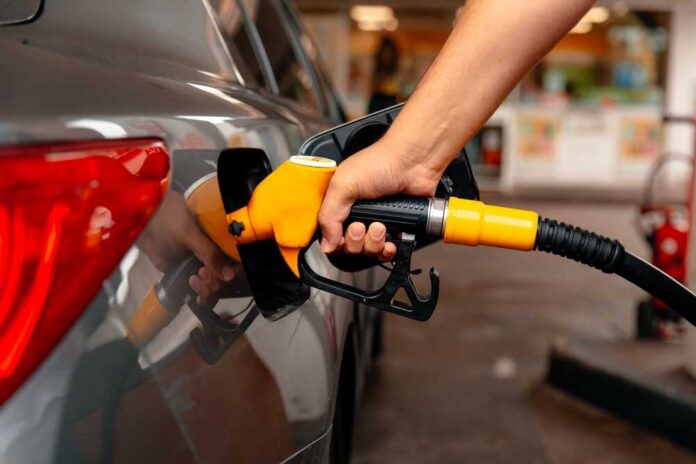
President Trump’s proposal to suspend the 18-cent federal gas tax reveals just how deeply the Iran conflict is hitting American wallets, with prices soaring over 50 percent since hostilities began.
Story Snapshot
- Gas prices jumped 52 percent to $4.52 per gallon nationally since the U.S.-Iran war escalated
- Trump and Congressional Republicans propose temporarily suspending the 18.4-cent federal gas tax to provide relief
- The suspension would cost the Highway Trust Fund approximately $500 million weekly or $2 billion monthly
- Three states already suspended their gas taxes, with eight more considering similar action
- The tax would phase back in as prices decline following the anticipated war resolution
When War Hits the Gas Pump
Americans filling their tanks now pay $4.52 per gallon on average, according to AAA data. That represents a staggering 52 percent increase from pre-war levels of roughly $2.97 per gallon. The culprit is Iran’s effective closure of the Strait of Hormuz, which normally handles 20 percent of global oil transport.
Energy Secretary Chris Wright publicly endorsed the federal tax suspension on NBC’s Meet the Press, calling it one of several measures under consideration. Congressional Republicans announced legislation plans within hours of Trump’s confirmation that the proposal was on the table.
The Price of Temporary Relief
The federal gas tax has remained frozen at 18.4 cents per gallon since 1993. This tax funds approximately 80 percent of federal highway and transit programs through the Highway Trust Fund. Suspending it would drop prices to roughly $4.34 per gallon, a modest four percent reduction.
The political calculation is straightforward: provide visible relief to consumers facing Memorial Day travel with prices 50 percent higher than normal. The financial calculation is more complicated, requiring Congress to either borrow funds or cut infrastructure spending to cover the monthly $2 billion shortfall.
Trump Says He Supports Suspending Gas Tax
With gas prices surging 50 percent since the start of the war in Iran, Trump told CBS News on May 11 that stopping excise taxes would be a "great idea."
"Yup, we're going to take off the gas tax for a period of time, and when gas goes… pic.twitter.com/FVV2fdkcU7
— NTD (@NTD_Live) May 11, 2026
States Lead Where Washington Follows
Georgia, Indiana, and Utah already suspended their state gas taxes before Trump floated the federal proposal. Eight additional states including Alabama, Arizona, Connecticut, Florida, Maryland, New York, Pennsylvania, and South Carolina are actively considering similar measures. This state-level experimentation provides a roadmap for federal action, though the scale differs dramatically.
State suspensions typically affect taxes ranging from 10 to 30 cents per gallon. The federal suspension represents a smaller per-gallon savings but affects every American motorist, creating significant political visibility despite modest economic impact for individual consumers.
Highway Funding Faces Collateral Damage
The Highway Trust Fund has operated since 1956 to finance America’s roads and bridges. No federal gas tax suspension has ever been enacted, making this proposal unprecedented. Transportation economists warn that pulling $2 billion monthly from infrastructure funding could delay critical repairs and construction projects.
Democrats pointed out they proposed similar relief measures in 2022 during inflation spikes, though Republicans blocked those efforts. The role reversal highlights how wartime economics create strange political alignments. Trump described the suspension as temporary, phasing back in as gas prices fall following expected war resolution in coming weeks.
The proposal’s effectiveness depends entirely on how quickly the Iran situation resolves. Wright predicted the conflict would end within weeks, allowing prices to normalize. That timeline remains speculative with the Strait of Hormuz still closed and ceasefire talks stalled. Trump rejected Iran’s latest peace proposal as inadequate.
Meanwhile, American consumers continue paying dramatically higher prices at the pump. The 18-cent federal tax relief represents roughly four percent savings, hardly transformative but politically significant as families plan summer travel amid economic uncertainty created by the conflict.
Political Calculations and Economic Reality
Republicans positioned themselves as responsive to consumer pain, moving legislation forward rapidly. Democrats countered they championed identical relief previously. The policy debate obscures a deeper question about wartime fiscal responsibility. Suspending the gas tax creates a precedent for using tax policy as emergency relief during conflicts.
Critics argue the administration should focus on ending the war rather than treating symptoms. Supporters counter that families need immediate help regardless of geopolitical strategy. The minimal per-gallon savings may matter less than the symbolic message that government recognizes and responds to economic hardship caused by military engagement overseas.
Sources:
KATU: Trump in favor of suspending federal gas tax as Iran ceasefire remains in limbo