Profits from one controversial data company helped push the whole U.S. stock market to fresh records on a day when oil suddenly got cheaper and Wall Street decided, for now, that risk was back in style.
Story Snapshot
- U.S. stock indexes hit new record highs as profits jumped and oil prices fell.
- Palantir posted a huge earnings beat, raised its outlook, and its stock exploded higher.
- Strong profits extended a wider earnings boom that has been driving this bull market.
- Cheaper oil and lower bond yields added fuel, but earnings still did the heavy lifting.
How a single trading day turned into a milestone for Wall Street
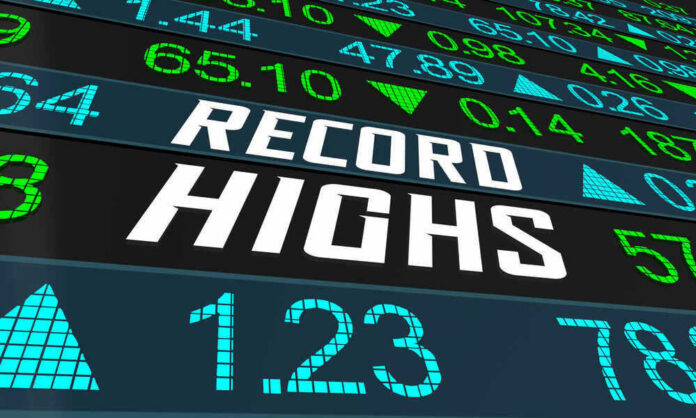
U.S. stocks did not just rise on that Tuesday in August; they broke records across the board. The Standard and Poor’s 500 index jumped about 1.8 percent and set a fresh all-time high, topping its last peak from a couple of months earlier.
The Dow Jones Industrial Average climbed more than 900 points to its own record, while the Nasdaq composite, heavy with technology shares, surged roughly 2.6 percent. This was not a quiet grind higher. It was a broad, fast push into new territory with profits at center stage.
The S&P 500 and Dow closed at record highs, powered by earnings from AI-related companies such as Caterpillar and Palantir that eased demand concerns, while crude prices and Treasury yields fell on hopes for a deal in the Iran war https://t.co/M1KJN6u0hF pic.twitter.com/Ha6SiQReOl
— Reuters Business (@ReutersBiz) August 4, 2026
The core story behind those numbers was simple enough for any busy reader to grasp: profits are strong, and that matters. Associated Press reporting noted that companies “kept piling up profits” while oil prices eased, giving investors two big reasons to buy instead of hide.
FactSet data cited in that same coverage showed earnings per share for Standard and Poor’s 500 companies on track to grow nearly 50 percent from the prior year’s spring quarter. That kind of profit growth is not normal. It is supercharged.
Palantir’s “otherworldly” quarter and why traders cared
Among the winners, Palantir Technologies stood out like a rocket on a clear night. The data and software firm reported second-quarter adjusted earnings of forty-one cents per share, beating Wall Street’s forecast of thirty-five cents.
Revenue came in at 1.94 billion dollars, compared with expectations around 1.8 billion. That is not a small beat. It is a clear sign that demand for Palantir’s tools, many tied to artificial intelligence, is running far ahead of what analysts had penciled in.
Management did not treat this quarter as a one-off fluke. Palantir raised its full-year revenue outlook to about 8.16 billion dollars, up from earlier estimates near 7.65 to 7.66 billion. Chief executive Alex Karp described the quarter as “otherworldly,” pointing to revenue growth of ninety-three percent year over year and huge gains in U.S. commercial business.
U.S. commercial revenue rose 149 percent to 764 million dollars, while government revenue jumped 90 percent to 809 million. Those numbers say the growth is broad inside the company, not just one big contract landing at the right moment.
Market reaction: a single stock’s surge inside a bigger earnings boom
Wall Street noticed. Several outlets reported Palantir’s shares jumping sharply once the results hit, with moves around 16 percent in premarket trading and near 30 percent during the day in some accounts. In the Associated Press wrap, Palantir “helped lead the way” as its stock surged 29.5 percent on that record-setting session.
For traders, this was textbook: earnings beat, raised guidance, explosive price action. It also fit a pattern where artificial intelligence winners draw outsized attention and capital.
When a company reports almost double revenue growth, beats on both earnings and sales, and lifts its guidance, the market should reprice that company higher. That is not “hype,” it is a reaction to better cash flows.
The risk is not the market cheering strong profits; the risk is when investors assume one “otherworldly” quarter for an artificial intelligence firm proves the whole market is safe forever, which the facts do not claim.
Oil prices, bond yields, and the quiet power of lower costs
The record day was not about profits alone. The same reports that highlighted corporate earnings also pointed to cheaper oil as a key driver. Brent crude, the global oil benchmark, fell below 80 dollars per barrel, easing fears about energy costs and helping Treasury yields move lower.
When oil drops and bond yields ease, future profits get discounted at a lower rate, which boosts the present value of stocks. That macro tailwind worked alongside the earnings news rather than fighting it.
Business & economic snapshot (Aug 4–5, 2026):
On Tuesday, U.S. stocks surged to fresh record highs. The S&P 500, Dow, and Nasdaq all closed at all-time peaks, powered by strong corporate earnings (high beat rates across the S&P 500, standout results from Palantir on explosive… pic.twitter.com/e9Eg2EkvAt— Techage (@techageone) August 5, 2026
On that score, headline writers did not hide the mix. They clearly tied the rally to “profits piling up for Palantir and others” and to easing oil prices. Commentators also pointed to strong results from heavy equipment maker Caterpillar and other firms.
What this says about the broader bull market and its risks
This day fits into a bigger pattern that long-term investors should not ignore. Analysts from Goldman Sachs, Morgan Stanley, and others have argued for years that strong U.S. earnings are the main force behind rising stock prices, even with political tension and wars in the background.
Studies from the Federal Reserve and private managers show that macro conditions like inflation and unemployment explain a large share of Standard and Poor’s 500 earnings growth. In plain terms, profits do not float in space. They rise and fall with the real economy, policy, and technology trends.
That makes this record day both encouraging and sobering. Encouraging, because rising profits signal productive businesses, real customers, and future investment in tools like artificial intelligence that could lift living standards.
Sobering, because history shows very rapid earnings growth often comes late in bull markets, when valuations are rich and shocks can bite harder.
The same Associated Press note that cheered profits also flagged worries about inflation, war in Iran, and possible bubble behavior. Strong profits are good, but they are not a guarantee against bad policy or global trouble.
Sources:
apnews.com, finance.yahoo.com, newsday.com, ncnewsonline.com, youtube.com, investors.palantir.com, timesofindia.indiatimes.com, whalesbook.com, clickorlando.com, marketbeat.com, morganstanley.com