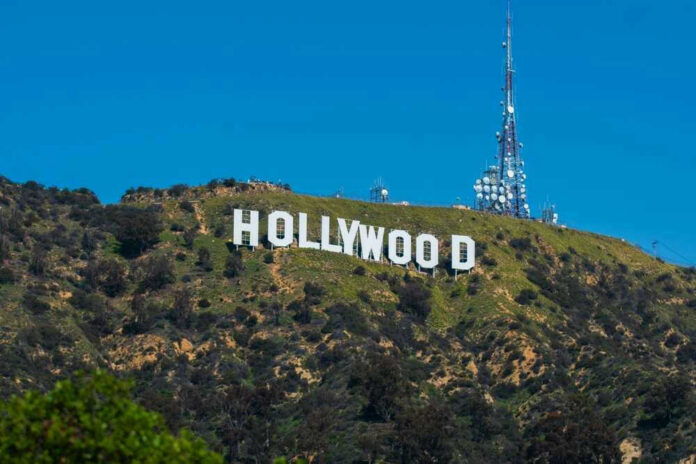
Paramount now owns Warner Bros. Discovery after sealing a $110 billion deal that just merged two of Hollywood’s biggest studios into one company.
Quick Take
- The Department of Justice cleared the merger in June, saying it would not likely harm competition or consumers.
- Twelve states sued in July, claiming the combined company would control about 27% of the wide-release movie market.
- Paramount settled with the states in September, agreeing to keep making a set number of films each year.
- The settlement adds $1.5 billion in U.S. film spending and a $47.5 million fund for affected workers.
Federal Regulators Gave Their Blessing First
The Justice Department’s Antitrust Division closed its investigation in June and said the deal was “not likely to result in harm to competition or American consumers” across streaming, cable, and film distribution markets. Reporting at the time noted something unusual: the agency approved the merger without demanding a single divestiture, behavioral restriction, or concession from either company. That clean approval became the foundation for Paramount’s defense once the fight moved to state courtrooms just weeks later.
Federal sign-off rarely ends these fights anymore, and this one proved no different. A dozen state attorneys general, led by California’s Rob Bonta, filed suit arguing the deal would “extinguish competition” in Hollywood and squeeze both movie theaters and cable distributors. Their complaint zeroed in on a specific number: the merged company would control roughly 27% of the wide-release theatrical market, a concentration level they said crossed into illegal territory.
A Courtroom Fight Over Who Controls the Movies You Watch
The states’ case rested on a simple argument. Paramount and Warner Bros. had been rivals for decades, competing for screens, cable carriage deals, and audience attention. Combine them, the lawsuit said, and that rivalry disappears for good, leaving theaters and distributors with less leverage to negotiate fair prices or terms. Bonta also raised a separate concern: the new company would own both CBS News and CNN, concentrating major news outlets under one roof and raising questions about diminished press freedom.
Those are legitimate worries worth taking seriously. A free press depends on more than one owner calling the editorial shots across major networks. But it’s also worth noting that the Justice Department, operating under a straightforward reading of antitrust law, looked at the same deal and found no likely harm to consumers. Two credible government bodies reached opposite conclusions, and that gap is the real story here, not a cover-up.
How the Standoff Finally Resolved
Rather than let a judge decide the matter outright, Paramount negotiated a court-enforceable settlement with the states in September. The company agreed to release at least 30 films a year, including 20 wide theatrical releases, for the first two years, then bump that to 32 films with 21 wide releases for years three through five. It also committed to spending an extra $1.5 billion on domestic film production and set up a $47.5 million fund for workers affected by the merger.
Bonta signed off on the settlement but made clear he still had reservations, saying further consolidation “does not serve the American economy, consumers or competition”. That’s a telling admission. If the antitrust concerns were truly resolved, there would be little reason to keep voicing them after the ink dried. It suggests the settlement was more a practical compromise than a verdict that the merger is harmless.
What This Means Going Forward
The merger is done, and Paramount now runs one of the largest content libraries in entertainment history. The output commitments and spending floors built into the settlement give regulators a tool to monitor whether promised benefits actually show up, rather than just taking the companies’ word for it. That’s a reasonable safeguard, and it reflects a broader lesson for Washington: when a deal this size moves forward, enforceable conditions matter more than press-release assurances. Hollywood workers, theater chains, and viewers will find out over the next five years whether this merger delivers the competition and output it promised, or whether the settlement’s restrictions were quietly admitting the critics had a point all along.
🔴 Paramount-Warner merger completed as $111B Skydance deal clears antitrust hurdle
Paramount Skydance and Warner Bros. Discovery closed their $111 billion merger today after US District Judge Araceli Martínez-Olguín approved a settlement with California and 11 other states that… pic.twitter.com/OFaJTxYDD0
— NewsTongue (@NewsTongueX) October 6, 2026
For now, the deal stands as one of the largest media mergers in American history, built on a federal approval that cleared the path and a state settlement that kept it on track. Whether it strengthens Hollywood or shrinks its competitive landscape will be judged in theaters, cable negotiations, and paychecks for years to come.
Sources:
bbc.com, nytimes.com, politico.com, npr.org, jurist.org