

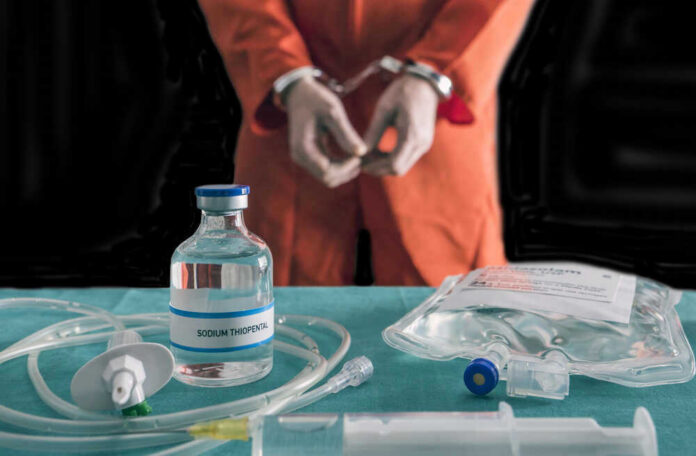
Christa Pike woke up and spoke days after two lethal injections failed to kill her, turning a closed-door procedure into a statewide reckoning.
Story Snapshot
- The state confirmed it followed protocol and then sent Pike to a hospital.
- Her lawyers say she is awake, speaking, and recovering after critical care.
- Officials have shared almost no medical detail beyond confirming hospitalization.
- The failure fits a larger pattern of lethal injection problems nationwide.
What Tennessee Confirms, And What It Won’t Say
The Tennessee Department of Correction said it followed every step of its execution protocol. It also said the chemical used has been “consistently effective” and that the protocol allows no extra procedures beyond what happened that night. After the injections failed to cause death, the department stated Pike was transported to an off-site medical facility. The department later confirmed only that she remained hospitalized, citing privacy laws for withholding further medical details.
Those statements matter for one reason: they set the official boundary of established fact. The state does not dispute that the execution did not achieve its purpose. It does not dispute that Pike left in an ambulance rather than a hearse. It does dispute nothing else because it has said little else. That vacuum left the public to weigh attorneys’ claims against the department’s terse lines, which is never a good way to build trust.
What Pike’s Lawyers Say She Told Them
Pike’s attorneys say she was intubated after the failed execution, later came off a ventilator, and is now awake and speaking. They describe severe injuries to her arms and say she remains handcuffed and shackled to the hospital bed. They call her survival “medically unprecedented” and predict a long recovery. Skeptics will note these are defense claims, not hospital charts. But the bottom line holds: she is alive, and the attorneys say she is talking.
One line from her camp keeps echoing: “Against all odds, Christa Pike is conscious, speaking, and continues to receive critical medical care.” That is not just spin; it is a shove at the state’s claims of a tight, reliable process. If you insist the protocol works, and then your subject sits up and speaks days later, the public will not read your footnotes. It will ask what “works” means in plain English.
How A “Reliable” Protocol Still Failed Twice
Lethal injection has the worst record of failure among execution methods tracked in modern American history. Across decades of data, about three percent of executions were botched overall, while lethal injection has been botched at a much higher rate. The Death Penalty Information Center’s summaries and related scholarship show recurring problems, especially with intravenous access and drug delivery. Tennessee officials have faced similar questions before, which makes this failure feel less like a fluke and more like a feature many states still refuse to fix.
On October 6, Pike regained consciousness.
Her lawyers said she was responsive and speaking.
Reuters reported that she remained in critical condition, suffering serious injuries following the failed execution.
The person Tennessee had attempted to execute was alive.
Not…
— Kelly West™️ (@agbesikelly) October 7, 2026
Conservative common sense says government must do few things, and do them well. Capital punishment is the heaviest thing a state does. If the law demands an execution, the process must be exact, humane within the law, and transparent to the public that grants the power. Saying “we followed the protocol” does not answer why the protocol produced an ambulance ride. A serious, public review is not indulgence; it is basic accountability.
What Should Happen Next
State leaders should preserve every record, from drug lot numbers to line-placement notes and timing logs. Courts should secure access for both sides to the medical evidence. The public deserves a clear timeline that explains when teams recognized failure and who authorized medical transfer. The department’s claim that the chemical has been “consistently effective” now sits next to a living counterexample. That tension will only resolve with facts that can stand in daylight.
Attorneys will keep pushing their narrative because the vacuum invites it. Officials can shrink that vacuum by releasing verifiable details without violating patient privacy. Name the steps in the room. Show the chain of custody. Explain the decision tree once the first dose failed. If the process cannot survive that level of disclosure, the process needs change. That is not anti-death-penalty rhetoric. That is pro-competence governance.
The Stakes For Justice And The Public
Victims’ families deserve finality that does not collapse into chaos. Officers and clinicians deserve protocols that do not set them up to fail in front of the nation. Taxpayers deserve a state that tells the truth the first time. Pike’s survival after two doses is the loudest alarm a system can get without a death in the wrong direction. Tennessee can either treat it as a warning to fix the machine or pretend the noise is normal and hope no one hears it next time.
Sources:
abcnews.com, cbsnews.com, tennessean.com