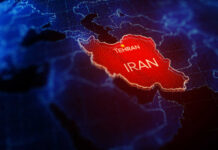


Pete Hegseth’s blunt message to Tehran—surrender is coming “whether they know it or not”—signals a decisive Trump-era break from the endless, negotiation-first approach that defined the last generation of Middle East policy.
Story Snapshot
- Defense Secretary Pete Hegseth says U.S.-led operations against Iran are “only just beginning,” even as he claims Iran’s navy is “largely no more.”
- President Trump is publicly insisting on unconditional surrender terms, while Hegseth rejects renewed talks after decades of failed diplomacy.
- U.S. and Israeli forces claim uncontested control of Iranian airspace, with strikes expanding against missiles, drones, and nuclear pathways.
- Iran’s leadership is projecting defiance, but U.S. officials argue Tehran’s ability to sustain a fight is collapsing under sustained pressure.
Hegseth’s Surrender Line Puts Trump’s War Aims on Paper
Defense Secretary Pete Hegseth used a nationally televised interview to frame the conflict in unusually definitive terms: Iran, he argued, has “no choice” but to surrender on President Trump’s conditions, “whether they know it or not.”
He also described U.S. operations as “only just beginning,” a direct rebuttal to any early victory narrative. The point was strategic: Washington is communicating terms, not bargaining positions, as the campaign widens.
“Whether they know it or not, they will be combat-ineffective. They will surrender,” Defense Secretary Pete Hegseth says of Iran. https://t.co/2z3DIZjW5t pic.twitter.com/US2K2SZNtR
— 60 Minutes (@60Minutes) March 8, 2026
Hegseth’s remarks also emphasized what the administration says it is not doing. He rejected the idea of open-ended “nation-building” and signaled that the U.S. is pursuing military objectives—destroying capabilities tied to missiles, drones, naval power, and nuclear infrastructure—rather than occupying Iran.
For conservatives wary of “dumb wars,” that distinction matters, but the administration still faces a high bar: translating air dominance and strikes into durable security without sliding into another long-term commitment.
From “Talks” to Terms: Why Negotiations Are Being Dismissed
Hegseth’s argument for sidelining negotiations rests on history as presented by the administration: 47–48 years of hostility, repeated proxy violence, and ongoing nuclear ambition. The administration points to what it describes as bad-faith stalling in past diplomacy, and it is using that record to justify a terms-first approach. For voters burned by globalist “process over results,” this posture reads as a reset—less deference to international pressure, more emphasis on deterrence and outcomes.
The timeline offered by U.S. reporting underscores how quickly events escalated. U.S.-Israeli strikes in June 2025—described as having “obliterated” Iran’s nuclear program—were followed by continued conflict and, in late February 2026, claims of uncontested control of Iranian airspace through Operation Epic Fury and Operation Roaring Lion.
By early March, the U.S. was reporting roughly 3,000 targets hit, while also saying no ground forces had been deployed. Several operational claims cannot be independently verified from the provided sources, but the messaging is consistent across outlets.
Airspace Control, Target Lists, and the “No Ground Forces” Question
The administration’s operational focus is being described in layers: degrade the navy, suppress air defenses, and then systematically eliminate missiles, drones, and “pathways” back to a nuclear capability. Hegseth has stressed overwhelming U.S. superiority and a combined approach with Israel, while also insisting the U.S. is not targeting civilians.
That claim is central to maintaining domestic legitimacy and preventing the war from drifting into the kind of moral and legal fog that opponents use to justify more restrictions and executive-branch overreach at home.
Still, the biggest unanswered question is the same one Americans have learned to ask after two decades of conflict: what happens if airstrikes don’t produce political capitulation? Reporting cited here says no ground troops are deployed “yet,” but it does not rule out escalation.
Speaker Mike Johnson’s comment that the mission is “nearly accomplished” also clashes with Hegseth’s “only just beginning” framing, suggesting even Washington’s allies are not fully aligned on the campaign’s pace and end-state.
Iran’s Defiance, Leadership Turbulence, and Regional Realignment
Iran’s public posture is defiance. President Masoud Pezeshkian has dismissed surrender as a “dream,” a familiar line from regimes that rely on pride and propaganda to hold together under pressure. At the same time, U.S. reporting says Iran’s Supreme Leader Ali Khamenei has been declared dead, with leadership succession quickly announced.
President Trump has warned that leaders not approved under his terms “won’t last long,” a statement that raises the stakes and reinforces the administration’s insistence that the war’s political outcome is inseparable from military pressure.
Regionally, the conflict is reshaping alliances in ways the administration is highlighting as strategic wins. Reporting indicates Gulf states have been pulled closer into the U.S. orbit after what is described as Iran’s “chaotic retaliation,” and U.K. base access—initially hesitant—was ultimately provided.
Another major factor is Russia’s role: U.S. reporting says Moscow has fed Iran intelligence on American assets, while U.S. officials claim they can mitigate that risk through superior intelligence. The sources don’t provide independent verification of those intelligence claims, but they frame the conflict as a broader contest than Iran alone.
Sources:
https://www.jpost.com/international/article-889321
https://www.cbsnews.com/amp/news/hegseth-iran-war-plans-60-minutes/