

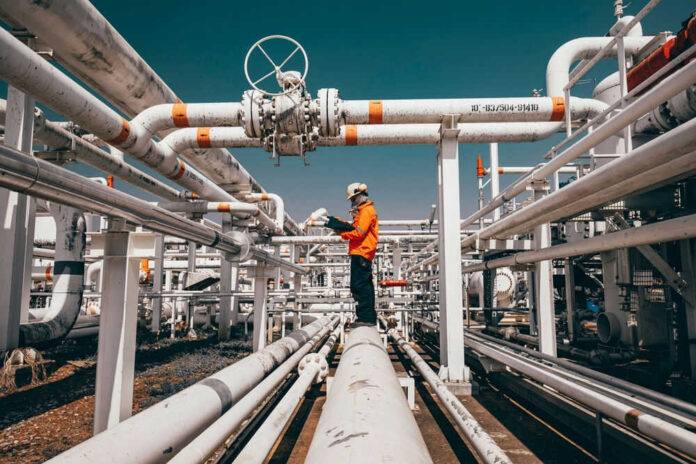
Brent crude sprinted past $108 after Saudi Arabia shut its Hormuz-bypass pipeline following drone strikes that set parts of the route on fire.
Story Snapshot
- Saudi Arabia temporarily shut the East-West Pipeline after drone attacks in Riyadh and Madinah.
- Officials called the halt a precaution while crews handled fires and injuries.
- Saudi statements said the drones came from Iraq; no group claimed responsibility.
- Satellite images showed scorched ground near the site, reinforcing the on-the-ground reports.
Saudi Pipeline Hit, Fires Reported, Operations Paused
Saudi Arabia’s Ministry of Energy said drones struck the East-West Pipeline on Thursday morning in the Riyadh and Madinah regions, triggering fires and some damage.
The ministry ordered a temporary shutdown as a precaution while emergency teams responded. Saudi officials reported several injuries and medical treatment for those hurt.
The East-West line carries crude from the Gulf to the Red Sea, letting the kingdom bypass the Strait of Hormuz during crises. The pause added fresh risk to a tight oil market.
Saudi officials said the drones were launched from Iraq. The government chose not to retaliate immediately, giving Baghdad time to investigate. That stance aimed to keep the incident from spiraling while facts are gathered.
Fires at the site and visible damage were addressed by response teams. Early satellite images showing smoke near facilities lined up with the accounts from Saudi ministries and state media, adding confidence that a real strike occurred.
Why This Pipeline Matters To Every Driver
The East-West Pipeline, also called Petroline, is Saudi Arabia’s safety valve when the Strait of Hormuz looks shaky. Moving oil across the peninsula to the Red Sea removes tankers from Iran’s shadow at the narrow choke point.
Any disruption here gets traders’ attention because it risks rerouting barrels back through Hormuz or delaying loadings altogether. Even a short shutdown can jolt prices because spare export pathways are limited and demand does not pause when pipes do.
The wider region has seen repeated strikes on energy sites over recent years. The pattern is familiar: a clear hit on infrastructure, a quick operational response, then days or weeks of attribution debate.
The political argument often outlives the flames because proof of who ordered a drone strike can be harder than proving a fire burned. Markets do not wait for forensic certainty. They price the risk the minute infrastructure goes offline and adjust only when capacity returns.
Brent crude jumps above $108 after Saudi Arabia shuts down critical pipeline that bypasses Strait of Hormuz $XOM https://t.co/O3TWtjCG4y
— Financier.news (@FINANCIERNEWS) September 14, 2026
Price Shock, Risk Premium, And The Road Ahead
Brent crude punched above $108 as traders added a geopolitical risk premium. The key driver was not a giant loss of barrels on day one, but fear of a repeat or a longer outage. When a route that avoids Hormuz goes down, risk stacks on both sides of the map.
Buyers worry about rebuilding inventories and freight timing. Sellers weigh security costs and scheduling hiccups. This is how a single chain of events turns into higher prices at the pump within weeks.
Saudi Arabia’s East-West oil pipeline shutdown pushed Brent above $107, with no clear restart timetable. The disruption adds a physical supply constraint to a market already absorbing Strait of Hormuz risks.
— cplx_io (@cplx_io) September 14, 2026
Saudi Arabia said the shutdown was precautionary, which signals intent to restart as soon as safe. That language matters because it tells shippers and refiners to expect a managed disruption rather than a prolonged crisis.
Saudi officials also said they would hold off on retaliation at Iraq’s request while an inquiry proceeds. That choice supports stability and aligns with common sense: secure the asset, verify the facts, then decide on next steps rather than risk a wider conflict.
Security Lessons: Cheap Drones, High-Value Targets
Drone swarms and loitering munitions are now a standard tool for striking energy systems. They are cheap, hard to spot at low altitude, and can overwhelm fixed defenses. Pipelines stretch for hundreds of miles, with pumping stations and valves that cannot hide.
That makes defense a layered job: better radar, mobile interceptors, rapid repair kits, and redundancy in flows. Saudi Arabia’s pipeline network has improved since earlier attacks, but this strike shows the offense keeps learning too.
For policy makers, the takeaway is simple. Protect critical infrastructure first, argue later. Energy security underpins jobs, food prices, and household bills. The United States benefits when global supply stays steady, not when shocks push gasoline and diesel higher.
Support for allies to harden sites, share intelligence, and track cross-border launch teams makes sense. It is a classic case where prevention is cheaper than emergency response and far cheaper than the next war.
What To Watch Next
Watch for a formal restart notice, visible export flows from Red Sea terminals, and signs of repair crews rotating out. Look for Iraq’s investigation update and whether Saudi Arabia presents debris analysis that ties the drones to a known supplier or militia.
Markets will also parse any changes to shipping insurance rates and freight spreads between Red Sea and Gulf loadings. Clear proof of secure operations should bleed the risk premium; new strikes would do the opposite.
Sources:
feedpress.me, thenationalnews.com, pbs.org, nytimes.com, reuters.com