
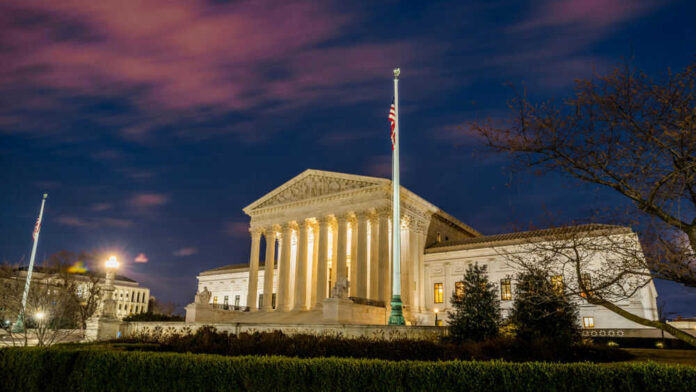
The Supreme Court will decide whether President Trump can end the longstanding practice of granting automatic citizenship to children born on American soil to illegal immigrants and temporary visitors.
Story Highlights
- Supreme Court agrees to hear Trump’s birthright citizenship case on December 5, 2025
- Executive order blocks citizenship documents for children of illegal immigrants and temporary visitors
- Lower federal courts have blocked the order, claiming constitutional violations
- Decision expected in 2026 could reshape immigration policy and constitutional interpretation
Trump’s Bold Executive Action Challenges Decades of Immigration Policy
President Trump signed a groundbreaking executive order on his first day in office, January 20, 2025, targeting birthright citizenship for children of illegal immigrants.
The order instructs federal agencies to deny citizenship documents to babies born in the United States more than 30 days after the order’s signing if their parents lack legal status or permanent residency.
This represents the most significant challenge to birthright citizenship policies in modern American history, directly addressing conservative concerns about immigration exploitation and anchor baby policies that have frustrated patriots for decades.
🚨The Supreme Court announced Friday that it will hear arguments regarding Trump’s executive order that would revoke the automatic guarantee that any child born on U.S. soil—even to an illegal immigrant parent—would be an American citizen. @FredLucasWH https://t.co/aDOgZG1c5t
— The Daily Signal (@DailySignal) December 5, 2025
Constitutional Battle Centers on 14th Amendment Interpretation
The legal dispute focuses on the 14th Amendment’s Citizenship Clause, which states that “All persons born or naturalized in the United States, and subject to the jurisdiction thereof, are citizens of the United States.”
Trump’s order specifically targets children whose mothers were unlawfully present or temporarily visiting when their fathers lacked citizenship or permanent resident status.
Conservative legal scholars have long argued that the phrase “subject to the jurisdiction thereof” was never intended to grant citizenship to children of foreign nationals who entered illegally, making this Supreme Court case a crucial test of constitutional originalism versus liberal judicial activism.
Federal Courts Block Trump Order Despite Constitutional Questions
Multiple federal district court judges have issued injunctions against Trump’s executive order, with two federal circuit courts of appeals upholding these blocks.
These lower court decisions reflect the ongoing judicial resistance that has consistently undermined conservative efforts to enforce immigration law and secure America’s borders.
The pattern mirrors previous attempts by Trump to implement common-sense immigration policies, only to face immediate challenges from activist judges who prioritize globalist interpretations over constitutional text and original intent that would protect American sovereignty.
Supreme Court Decision Could Reshape Immigration and Citizenship Law
The Supreme Court’s agreement to hear this case represents a pivotal moment for constitutional interpretation and immigration policy.
A ruling expected in 2026 will determine whether decades of automatic citizenship for children of illegal immigrants continue or whether America can finally close this loophole that has incentivized illegal border crossings.
This case directly addresses conservative frustrations with policies that reward unlawful entry and undermine immigration law enforcement, potentially restoring the original constitutional meaning that citizenship requires genuine allegiance and legal presence rather than mere geographic birth circumstances.