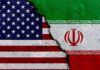
High-fidelity CIA intelligence pinpointing Iran’s Supreme Leader Khamenei’s exact location enabled a joint US-Israel operation that decapitated the regime’s leadership, vindicating years of patient intelligence work and demonstrating how American strength protects our allies against terror-sponsoring adversaries.
Story Snapshot
- CIA human source intelligence shared with Israel revealed Khamenei’s precise location at a Tehran compound meeting, triggering immediate Israeli airstrikes
- Operation Roaring Lion killed Supreme Leader Khamenei, IRGC Commander Pakpour, and Military Council head Shamkhani in coordinated daytime strikes
- Months of CIA tracking following last year’s 12-day war built the intelligence network that made the regime-changing operation possible
- Iranian retaliation killed three US troops and nine Israelis, prompting President Trump’s warning of overwhelming force if attacks continue
CIA Intelligence Network Delivers Decisive Strike
The CIA spent months tracking Ayatollah Ali Khamenei’s movements and patterns following last year’s 12-day conflict with Israel, building human intelligence networks that ultimately revealed his exact schedule.
When sources identified a Saturday morning meeting of Iran’s top military and intelligence officials at a Tehran government compound, the agency shared high-fidelity intelligence with Israeli counterparts.
This triggered an immediate operational pivot. Israeli jets launched around 6 a.m. local time with long-range missiles, striking at 9:40 a.m.
Tehran time and killing Khamenei along with IRGC Commander Mohammad Pakpour and Military Council head Admiral Ali Shamkhani. President Trump and Prime Minister Netanyahu both viewed photographs of Khamenei’s shrapnel-riddled body recovered from the compound.
The CIA had tracked Khamenei's location for several months before the strike that killed him, a person familiar with the matter tells CBS News. https://t.co/2CcDfcLa7a
— CBS Philadelphia (@CBSPhiladelphia) March 1, 2026
Strategic Partnership Enables Regime Decapitation
The operation, designated Operation Roaring Lion by Israel and Operation Epic Fury by the United States, exemplifies the intelligence-sharing relationship that makes America’s alliance with Israel indispensable for Middle East stability.
Trump’s administration rebuilt this partnership after years of Obama-Biden appeasement policies that enriched Tehran’s coffers and emboldened its nuclear ambitions.
The strikes targeted not just Khamenei but additional senior officials including Defense Minister Aziz Nasirzadeh, IRGC Aerospace Commander Seyyed Majid Mousavi, and Deputy Intelligence Minister Mohammad Shirazi, decimating Iran’s leadership structure in a single coordinated assault. Follow-up strikes hit Iranian intelligence facilities, though one top intelligence officer escaped.
Iranian Nuclear Threat Drives Operational Urgency
CIA intelligence revealed Iran had been frantically rebuilding nuclear sites destroyed in previous strikes, installing advanced centrifuges despite denials of weapons development and restricting international inspector access.
Satellite imagery reviewed by the Associated Press confirmed these rebuilding efforts, validating concerns that the regime remained committed to obtaining nuclear weapons capability.
The 86-year-old Khamenei wielded final authority over Iran’s military, nuclear programs, and foreign policy since 1989, making his removal critical to disrupting the Islamic Republic’s aggression.
This operation represents the Trump administration’s commitment to preventing rogue regimes from acquiring weapons of mass destruction, a stark contrast to the previous administration’s Iran nuclear deal that lifted sanctions while Tehran continued financing terrorism.
Regional Consequences and American Casualties
Iranian retaliation came swiftly with missile and drone strikes hitting Israeli cities and US military bases across the Gulf region. Nine Israelis were killed, with 28 wounded and 11 missing, after a strike on a Beit Shemesh synagogue shelter.
At the same time, three American service members died and five were wounded in attacks on Gulf bases, marking the first US casualties in this escalating conflict.
Over 200 people have died in Tehran from ongoing strikes since Saturday’s initial operation. President Trump issued a forceful warning on social media that Iran “better not” continue retaliatory attacks or face overwhelming American military force, demonstrating the resolve absent during Biden’s weakness.
Iranian officials vowed perpetrators “will pay the price” while scrambling to form a temporary governing council and select Khamenei’s successor within days.
CIA Shared Khamenei Location for Israeli Strike https://t.co/0qnPjFfnwr
— JimThomas (@NMTVJimThomas) March 1, 2026
Leadership Vacuum Creates Strategic Opportunity
The elimination of Iran’s Supreme Leader alongside its top military commanders creates unprecedented instability within the regime, potentially opening pathways for internal opposition movements that have suffered under theocratic rule.
President Masoud Pezeshkian, Foreign Minister Abbas Araghchi, and Parliament Speaker Mohammad Bagher Qalibaf now oversee an interim government while jockeying for influence in the succession.
The power vacuum raises concerns about hardliner consolidation versus potential liberalization, though experts note Khamenei’s death “deepens regional instability” in the short term.
Energy markets face uncertainty over the Strait of Hormuz, through which 20 percent of globally traded oil flows, while air travel disruptions affect the broader region.
The operation showcases American intelligence capabilities and willingness to support allies decisively, sending unmistakable messages to adversaries worldwide about consequences for threatening US interests.
Sources:
Revealed: CIA report pinpointing Khamenei location triggered launch of campaign against Iran regime
Israeli strikes kill Iran’s Supreme Leader Khamenei
How did the C.I.A. manage to locate and eliminate the Supreme Leader?
CIA intel guided strikes that killed Khamenei