
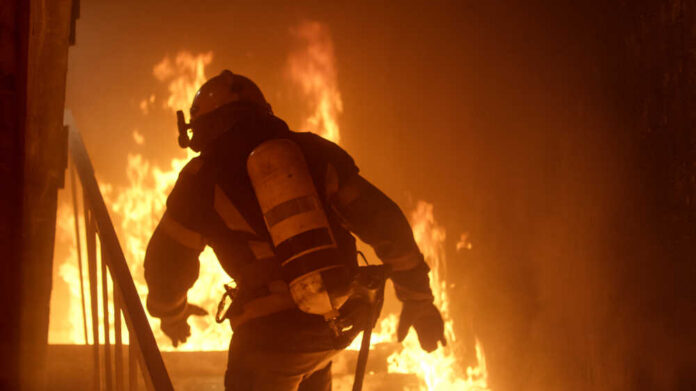
A blast and fire tore through the Quaker Oats complex in downtown Cedar Rapids, yet everyone walked away.
At a Glance
- Fire crews found evidence of an explosion and fire around 4:45 p.m.
- All workers were accounted for; officials reported no injuries or fatalities.
- Flames and black smoke rose from the north side of the massive milling site.
- Investigators are investigating the cause; multiple agencies supported the response.
What Happened And When The Alarms Hit
Firefighters in Cedar Rapids raced to the Quaker Oats facility after reports of an explosion and fire at about 4:44–4:45 p.m. They found what they described as evidence of an explosion and a subsequent fire, then moved fast to contain hot spots and check for spread inside the maze-like plant. Officials reported heavy flames and dark smoke on the north side of the complex, a landmark mill that dominates the city’s skyline. The incident drew a major response from nearby departments and ambulance crews.
Reporters on scene described large flames and thick smoke pouring from the plant, echoing accounts that spread quickly across local and national outlets. Crews kept water streams trained on the affected area while others searched for hidden embers. Dispatch logs placed the response on the 400 block of 2nd Street Southeast in the city’s core. The fire department requested help from Marion, Hiawatha, Linn County, and Area Ambulance Service to secure the scene and stand by for medical needs if conditions changed.
How Everyone Got Out And Why That Mattered
Plant leaders accounted for all workers soon after firefighters arrived, a key step that shaped the response. Mayor Tiffany O’Donnell said employees exited safely and that the fire broke out in a back or product-handling area where people do not typically work. That detail helps explain why no injuries were reported, even with fire and a blast inside a huge industrial site. Officials later confirmed no firefighters were hurt during the operation either. That is a rare clean sheet after a dramatic mill incident.
Emergency teams ran standard checklists: confirm headcounts, secure utilities, and isolate any process lines that could feed heat or fuel. Crews then shifted to overhaul, which means breaking open walls or ducts to chase hidden fire and testing air for hazards. The timeline and control suggest solid pre-plans for the site and fast coordination with company staff. That mix often determines whether a plant suffers a brief scare or a long shutdown. Here, responders kept it tight and avoided secondary harm.
What Investigators Will Probe Next
Investigators will now work through the grind of cause and origin. They will trace heat, flame, and pressure back to the first point of failure. In grain and food plants, one hazard sits top of mind: combustible dust. Dust from oats, flour, sugar, and grain can explode if it builds up, lifts into the air, and meets a spark. The Occupational Safety and Health Administration reports that wood and food products made up about 70 percent of combustible dust fires and explosions in 2018. That is why milling sites run strict housekeeping and ventilation programs.
🚨 FIRE ERUPTS AT MAJOR QUAKER OATS FACILITY IN IOWA
An apparent explosion triggered a fire at a Quaker Oats facility in Cedar Rapids, Iowa, prompting an emergency response from local firefighters.
Officials reported that all workers were accounted for and no injuries were…
— Eyeworldnewsdigital (@eyeworldnews444) October 26, 2026
The Chemical Safety and Hazard Investigation Board has logged deadly dust events in food processing, including the 2017 Didion Milling disaster in Wisconsin. That tragedy killed five workers and injured 14, and the final report detailed dust layers, air movement, and ignition sources as the chain of failure. None of that says dust caused the Cedar Rapids blast. It does explain why engineers will test equipment, inspect ducts, and map debris to confirm or rule out a dust-driven event before the plant returns to full operation.
Why This Plant Matters To People Far Beyond Iowa
The Cedar Rapids complex is often described as one of the world’s largest oat milling sites, with capacity to process more than 2 million pounds of oats per day. A fire there raises instant questions: Will breakfast shelves thin out? Will prices move? Early reporting did not show broad supply impacts, and the fast headcount and control limited the worst-case scenarios. Still, any pause at a hub like this can ripple through trucking schedules and regional grain flows for days.
City leaders and plant managers will balance two aims next: restart safely and tell the truth plainly. That means a clear cause report, time-bound repair steps, and proof that housekeeping and ignition controls meet or exceed standards. American consumers deserve both: a steady food supply and plants that run by the book. That view is not anti-business; it is common sense. When firms and fire officials get this right, workers go home, towns keep jobs, and breakfast stays boring—the way it should be.
Sources:
weareiowa.com, thecanadianpressnews.ca, who13.com, csb.gov, osha.gov