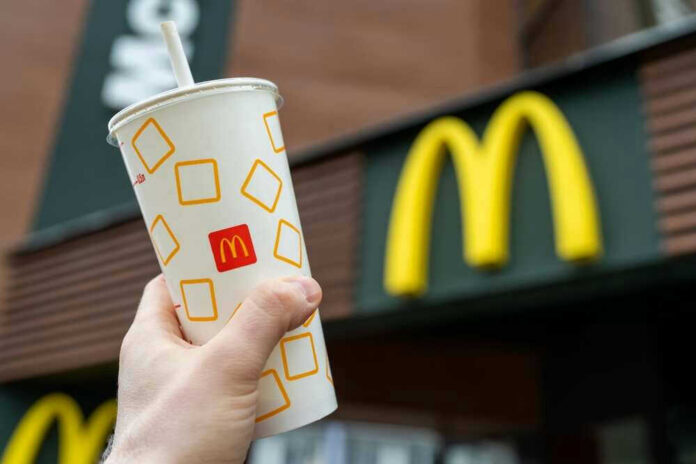
McDonald’s ends the self-serve soda fountain era by 2032, trading customer freedom for corporate control in a silent goodbye to fast-food nostalgia.
Story Snapshot
- McDonald’s phases out self-serve soda fountains in U.S. dining rooms nationwide by 2032 during remodels.
- Employees prepare drinks behind counters to reduce maintenance, improve hygiene, and prevent theft.
- Shift matches declining dine-in traffic, prioritizing drive-thru and delivery dominance.
- Franchisees like Mikel Petro lead early changes, creating relaxed table service.
- New beverages like Refreshers signal a premium-drink future without the self-service mess.
Historical Roots of Self-Serve Soda Fountains
Self-serve soda fountains became fast-food fixtures in the 1970s and 1980s. Customers customized refills endlessly, fostering loyalty through choice.
Machines demanded constant upkeep; however, spills and sticky residues plagued hygiene. Public access invited abuse, like reused home cups for free fills.
McDonald’s tolerated these for decades until post-COVID realities forced change. Dine-in plummeted as drive-thru claimed most sales. Delivery apps and mobile orders accelerated the pivot. Corporate now mandates efficiency over indulgence.
Corporate Directive Drives Nationwide Rollout
McDonald’s Corporation sets the 2032 deadline for U.S. dining rooms only. Drive-thru stations stay self-serve. Remodels trigger the switch, starting summer 2024.
Franchisees pour initial drinks; refills remain self-serve temporarily. Full table service follows. This gradual pace avoids backlash while aligning with “convenience theaters.”
Customers sit; staff delivers. Hygiene improves immediately—no more public nozzle touches. Theft drops as inventory stays locked.
Franchisees Implement Changes on the Ground
Mikel Petro operates 15 stores in central Illinois. He fills drinks behind counters now. Employees deliver to tables, easing theft and cleaning burdens. Petro calls it evolution toward digital growth and relaxed dining. Low dine-in traffic justifies the hassle.
Corporate holds power, but franchisees adapt locally and offer feedback. Petro’s early adoption tests the model. Competitors like Wendy’s and Taco Bell made partial shifts for similar reasons. McDonald’s scales it nationwide, proving business smarts over sentiment.
McDonald’s is quietly ditching a popular in-store feature nationwide https://t.co/pzw2ByW9BJ
— FOX Business (@FoxBusiness) May 4, 2026
Impacts Reshape Customer and Employee Roles
Customers lose unlimited refills and tweaks, sparking short-term gripes. In the long term, dine-in service elevates to premium service. Employees handle pours, trading maintenance for drink prep. Labor shifts minimally amid automation.
Franchisees save on repairs and theft losses. Socially, nostalgia fades; waited-on dining suits the few insiders. Economically, it bolsters drive-thru profits. Industry-wide, it signals post-pandemic hygiene priority. Fast food sheds self-service relics in favor of controlled efficiency.
New Beverage Era Fills the Gap
McDonald’s dodges direct fountain questions. Instead, they tout Refreshers and crafted sodas rolling nationwide soon. This “new era” modernizes menus amid the shift. Franchisee Petro eyes full service soon. Sources align: phase-out hits 2032, driven by costs and habits.
No contradictions emerge. McDonald’s evasive style fits quiet execution. American values prize practical fixes—hygiene trumps tradition when facts demand it. Dine-in survivors get upscale treatment; speed freaks keep drive-thru bliss.
Sources:
McDonald’s is quietly ditching a popular in-store feature nationwide
McDonald’s set to scrap popular feature over major hygiene concerns