
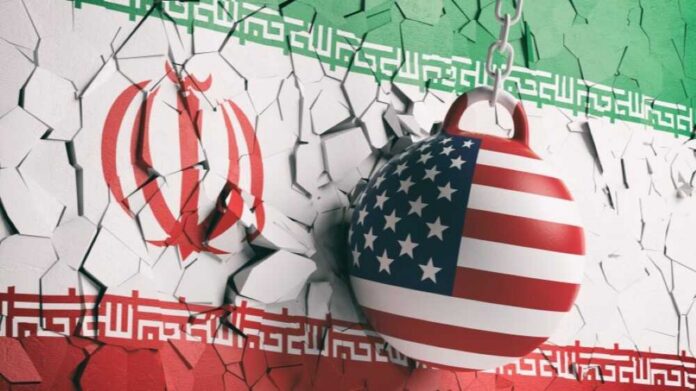
U.S. airstrikes have widened the fight with Iran after a deadly attack on American troops in Jordan gave Washington its sharpest justification yet for escalation.
Quick Take
- The U.S. military said it launched new strikes against Iran to “swiftly punish” the Islamic Revolutionary Guard Corps after the Jordan attack.
- U.S. Central Command said two American service members were killed, one was missing, and four others were hospitalized.
- The U.S. said the strikes also aimed to weaken Iran’s ability to threaten shipping in the Strait of Hormuz.
- Iran and its military have repeatedly framed their strikes as retaliation, keeping both sides on a fast path toward wider conflict.
The Strike That Changed the Tempo
The latest round of U.S. airstrikes followed a missile and drone attack on a base in Jordan that killed two American service members and left one missing. U.S. Central Command said the new strikes hit Iranian forces tied to the attack and were meant to further damage Iran’s military reach.
The U.S. conducted a new round of airstrikes early Monday targeting Iran after announcing the death of another American service member, hitting around a northwestern city believed to be home to underground missile bases. https://t.co/7MSQmyv3Da
— NBC10 Boston (@NBC10Boston) July 20, 2026
The timing matters because the U.S. moved quickly from mourning to retaliation. That kind of speed sends a message far beyond the battlefield. It tells Iran, allied militias, and U.S. partners that Washington wants to punish attacks on American troops without waiting for a slow diplomatic process.
Why Washington Called the Response Punitive
Central Command said the strikes were designed to “swiftly punish” the Revolutionary Guard and reduce Iran’s ability to restrict oil traffic through the Strait of Hormuz. That is a narrow military goal with a broad economic edge, because the waterway carries a large share of the world’s crude oil shipments.
The U.S. also framed the operation around troop protection. Officials tied the retaliation to the Jordan attack and to earlier Iranian fire at American and partner forces in the region. In plain terms, Washington is treating the deaths as both a military insult and a test of deterrence.
What Iran Said, and Why That Still Matters
Iran’s Revolutionary Guard has claimed responsibility for strikes on U.S. targets in Jordan and other places, while other reporting notes that Iran has denied involvement in deadly attacks elsewhere. That split is familiar in Middle East conflict. Public claims, denials, and counterclaims often move faster than independent verification.
That gap leaves room for escalation. When each side says it is only answering the other side, both can tell their own audiences a clean story. The problem is that clean stories often produce messy wars. In this case, the U.S. had enough confidence to strike first and explain later.
The Larger Pattern Behind the Blast Radius
This episode fits a broader pattern of direct and indirect clashes between the U.S. and Iranian forces. Past fighting in the region has repeatedly followed the same script: an attack on U.S. troops, a rapid American response, then a new round of retaliation. The cycle rewards speed and punishes hesitation.
🇺🇸|US Military Strikes Iran for Eighth Consecutive Night
On July 18, 2026, U.S. Central Command (CENTCOM) announced the completion of another round of airstrikes against Iran. This marks the eighth consecutive night since July 11 that U.S. forces have conducted military strikes… pic.twitter.com/vYvtze8L5O
— Aprajita Nafs Nefes 🦋 Ancient Believer (@aprajitanefes) July 19, 2026
That is why this story is bigger than one base in Jordan. The strike showed how quickly a single attack can pull the United States and Iran into a wider exchange, with shipping lanes, regional bases, and troop safety all inside the same frame. The next move will matter because both sides have already committed to the logic of force.
Sources:
apnews.com, usatoday.com, irishtimes.com, en.mehrnews.com, washingtonexaminer.com, caliber.az, english.news.cn, youtube.com, timesofisrael.com, reuters.com, axios.com, facebook.com, cbsnews.com, middleeasteye.net, cnn.com, en.wikipedia.org, wane.com, eagleintelreports.com, dawn.com, timesofindia.indiatimes.com, en.webangah.ir, iz.ru, theweek.in, instagram.com, state.gov, criticalthreats.org, cptik.org, omranstudies.org, csis.org, mwi.westpoint.edu, hstoday.us, securityscorecard.com, engelsbergideas.com, understandingwar.org