
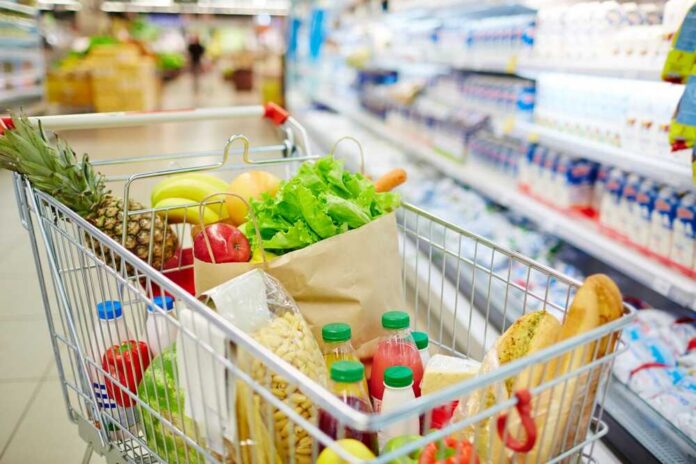
Americans are spending more at the grocery store and bringing home less food — and the gap between those two facts tells you everything about where household budgets stand right now.
Quick Take
- U.S. grocery sales rose 1.2% in 2025, but shoppers actually bought 1.0% fewer items as prices climbed 2.2%
- Overall grocery spending fell roughly 3% year-over-year as consumers rethink where and how they shop for food
- Food-at-home prices hit a near three-year high of 2.9% annual growth in April 2026, keeping pressure on household budgets
- Shoppers are fighting back by switching to store brands, skipping impulse buys, and making more frequent but smaller trips
Paying More, Getting Less at the Register
The numbers are striking. Grocery sales went up 1.2% in 2025, which sounds like good news until you look at what drove it. Prices rose 2.2%, meaning the dollar increase was entirely a price effect — not a sign that people bought more.
In fact, unit volume dropped 1.0%, according to McKinsey’s State of Grocery North America 2026 report. Shoppers paid more and walked out with fewer bags. That is not a grocery boom. That is a squeeze.
U.S. grocery slowdown deepens as shoppers buy fewer items, raising pressure on food companies https://t.co/F1jS89oACL
— CNBC (@CNBC) July 16, 2026
Food-at-home prices rose 2.7% annually in May 2026, just below the three-year high of 2.9% recorded in April. For a family spending $133 a week on groceries — the average reported in late 2025 — that adds up fast. The math is simple and brutal: when prices rise faster than paychecks, something has to give. What gives is the number of items in the cart.
Shoppers Are Changing Behavior, Not Just Complaining
This is not just a feeling. Consumer Edge data shows overall grocery spending fell roughly 3% year-over-year as shoppers fundamentally rethink where they buy food.
CoBank’s July 2026 quarterly report put it plainly: U.S. consumers are trading down, cutting discretionary purchases, and buying fewer groceries in response to higher food prices. These are real behavioral shifts — not just grumbling in checkout lines.
McKinsey tracked exactly how people are adapting. Shoppers are visiting stores more often but buying less each trip. They skip impulse purchases. They compare prices. They use more coupons and promotions. And they are buying more store-brand products instead of name brands. This is the grocery version of tightening your belt — methodical, deliberate, and driven by necessity.
Food Manufacturers Are Sounding the Alarm
Major food companies are not hiding their concern. Manufacturers of cereal, chips, and cookies warned in 2026 of a prolonged spending downturn. Their word for it: consumers appear “tapped out” after years of inflation-driven price increases. That is a striking admission from an industry that spent several years passing cost increases on to shoppers without much resistance. The resistance has arrived.
Weekly food and beverage unit sales fell 0.9% for the week ending May 31, 2026, compared to the same week a year earlier, according to Circana data. That weekly snapshot matches the annual trend. Volume is shrinking. The question food companies now face is whether to absorb margin pressure or raise prices again — and risk losing even more volume.
The Bigger Picture: This Has Happened Before
History offers useful context here. During the 2007 to 2009 recession, inflation-adjusted food spending by U.S. households fell 5% — the largest drop in at least 25 years.
After that recession, households cut real grocery spending by over 6% between 2005 to 2007 and 2010 to 2012, shifting to cheaper stores and store brands. The current 1.0% volume decline in 2025 is modest by comparison — but the direction is the same, and the causes rhyme closely.
Some point to the fact that total U.S. food spending reached $2.51 trillion in 2025, with food-at-home spending rising to $1.10 trillion. That is true — but aggregate dollar totals reflect price inflation, not purchasing power. Spending more dollars to buy fewer groceries is not prosperity.
It is the definition of losing ground. The distinction matters enormously for any honest reading of what American families are actually experiencing.
What Shoppers Should Watch For Next
The trajectory heading into late 2026 depends on two things: whether food prices continue to ease month-to-month, and whether income growth catches up.
The U.S. Department of Agriculture’s Economic Research Service noted that food-at-home prices rose just 0.1% from April to May 2026, a sign that monthly price pressure may be cooling slightly. But annual price levels remain near three-year highs, and the cumulative damage to household budgets from years of above-normal food inflation does not reverse quickly.
The smart move for shoppers right now is exactly what the data shows many are already doing: embrace store brands, plan meals before shopping, and cut impulse purchases ruthlessly.
These are not radical ideas. They are the same strategies American families used to survive the last two major cost squeezes — and they work. The grocery industry will adapt to shrinking volumes. Shoppers who adapt first will come out ahead.
Sources:
bls.gov, consumeredge.com, mckinsey.com, finance.yahoo.com, ncoa.org, makemyreceipt.com, academic.oup.com