
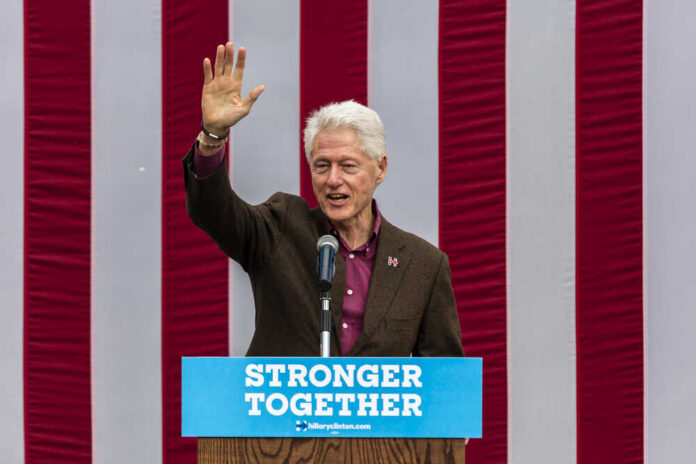
Bill Clinton used Independence Day to praise America’s promise while putting today’s leaders on notice.
Story Snapshot
- Clinton tied America’s 250th year to a call for accountability from “people in charge”.
- He framed the moment as divided, but fixable with civic duty and neighbor-first action.
- He repeated his long-held line that “America’s best days are yet to come”.
- Critics called it an attack, but offered little transcript-based pushback on his words.
What Clinton Actually Said And Why It Landed
Bill Clinton’s July Fourth message set a firm tone. He honored the 250th birthday while saying we face deep division and fresh doubts about our future and our role in the world. He aimed his critique at “people in charge,” not at the country itself, which channels frustration into accountability.
He urged citizens to look to their neighbors and “embrace this moment,” a simple, local frame that fits a national holiday and puts the burden of repair on both leaders and us.
Bill Clinton calls out 'people in charge' in July Fourth message https://t.co/ZpA1JKWpUY
— Bo Snerdley (@BoSnerdley) July 5, 2026
He also reached back to a familiar promise: “America’s best days are yet to come”. That line matters because it anchors criticism in hope. Voters tolerate tough talk when it points to a better path.
The message works like a two-by-four and a blueprint: first, a jolt to power; then, a plan that starts with the person next to you. The balance strikes a patriotic chord without giving leaders a free pass for drift or dysfunction.
What We Know And What We Don’t
The available reporting confirms three core points: he marked the semiquincentennial, he warned about division and doubt, and he called out “people in charge”. Clinton’s own social posts echo a neighbor-centered push to “turn to your left, turn to your right” and step up.
What we do not have is a full public transcript of the entire message. That gap limits line-by-line analysis and lets partisans project their own angles onto a short clip or caption.
Lack of a transcript does not erase the parts we do see. It does mean readers should be cautious with sweeping claims about tone or policy detail. The core on record sounds like civic pep talk plus pressure on leadership. If further video or a full text surfaces, it could sharpen or soften that reading. Until then, the strongest claims are the ones that match the verified lines we have.
Why The Message Fits A Long American Tradition
July Fourth speeches often mix praise with hard truths. Abraham Lincoln did it during the Civil War. Modern presidents and former presidents do it when the country hits a crossroads. Media outlets, left and right, then frame the same speech to fit their tribes.
Research on news framing shows how small shifts in what gets highlighted can swing how audiences feel about a message, even when the facts do not change. That is the battlefield where Clinton’s lines now live.
The practical test remains simple. Did he knock America, or did he press leaders to meet America’s standard and invite citizens to act? The verified lines point to the second.
Demanding more from “people in charge” aligns with the founding idea that power answers to the people. Calling neighbors to “embrace this moment” puts skin in the game for all of us. That is not tearing down the house. That is asking the contractor and the homeowners to pick up tools and finish the job.
Sources:
twitchy.com, abcnews.com, millercenter.org, beyondintractability.org