
One trade deal that once promised a stronger North America is now on a ticking ten‑year clock, and that should make every American who cares about jobs sit up straight.
Story Snapshot
- United States chose not to grant USMCA a 16-year renewal, triggering a decade of annual reviews instead.
- The Trump administration now says the deal it once praised has “substantial issues” and has not met its goals.
- Supporters point to real gains: tighter rules, better enforcement, and improved conditions for tens of thousands of workers.
- Critics say USMCA failed to stop wage pressure and opened new “back doors” for unfair imports that hurt U.S. manufacturing.
Why the United States Refused a 16-Year Renewal
United States Trade Representative Jamieson Greer told Congress he would not recommend a straight 16-year renewal of the United States-Mexico-Canada Agreement without changes, and that decision shaped the 2026 joint review. Under the deal’s sunset clause, all three countries had to decide by July 1, 2026 whether to extend the pact out to 2042 or move into annual reviews.
The United States declined, which keeps USMCA in place but under a cloud of uncertainty and starts a ten-year countdown toward a possible end in 2036 if differences are never resolved.
This move gives Washington leverage. By blocking the long renewal, the United States can press Mexico and Canada for tougher rules on autos, energy, and China-related trade, plus stricter enforcement. Reports say U.S. negotiators are demanding higher U.S. content in vehicles and more tools to push back on policies they see as unfair.
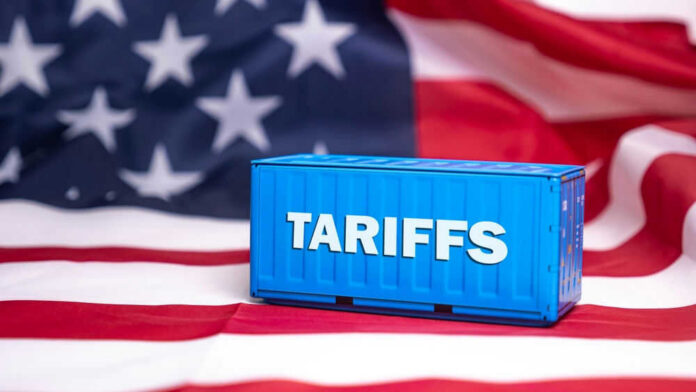
From an America-first lens, this is classic tariff politics: keep the threat of new duties and tighter rules on the table to force concessions instead of locking in a deal that no longer fits today’s economic and security concerns.
What USMCA Was Supposed to Deliver
When USMCA replaced the old North American Free Trade Agreement, the Trump administration sold it as a major upgrade that would protect American jobs and push more manufacturing back into the United States.
The official description from the Office of the United States Trade Representative calls USMCA a “balanced, reciprocal” trade pact designed to support higher-paying jobs and modernize rules for sectors like autos, digital trade, and agriculture.
Business groups echo that language, arguing that new provisions raised regional content rules, updated labor chapters, and added enforcement tools that companies needed in a tougher global environment.
There is evidence the deal changed behavior. A Brookings Institution analysis found that Mexican and Canadian exports covered by USMCA rules now comply at close to 80 percent of their trade value, showing firms adjust when rules matter.
There is progress on one of USMCA’s most talked-about tools: the Rapid Response Labor Mechanism, which lets the United States challenge specific facilities in Mexico that violate labor rights. That mechanism helped improve wages and conditions for around 60,000 workers so far.
How Critics Say the Deal Failed Working People
Economic Policy Institute, a left-leaning research group, argues bluntly that USMCA did not fix the “intense downward pressure” on jobs and wages in U.S. manufacturing.
Their 2024 report says there is “no evidence that things have improved” for working people in the three countries and warns that the agreement still allows unfairly traded products to reach U.S. markets through a “back door,” despite new rules.
They call for dramatic reform to put workers first, claiming the pact failed working people and needs major changes, not a rubber stamp. While that critique comes from the opposite side of the ideological spectrum, it lines up with a core worry: global deals that sound tough on paper but still leave communities bleeding factory jobs in practice.
There is a broader pattern here. For decades, big trade agreements have been sold as engines of growth, while folks on the factory floor see plant closures and shrinking paychecks. North American Free Trade Agreement faced the same divide; it expanded trade and cut tariffs, but many Americans blamed it for job loss to lower-wage regions.
USMCA tried to answer those fears with stronger labor enforcement and tighter auto rules, yet critics argue the structural pressures of global competition and cheap labor still overwhelm any paper promise. That gap between elite optimism and kitchen-table reality fuels today’s anger over trade.
Trump’s Reversal and What It Signals About Future Trade Fights
The Trump administration once branded USMCA “the best and most important trade deal” it had struck, and the agreement passed Congress with large bipartisan majorities. Now the same political camp refuses to extend it, says it has not met its goals, and keeps the threat of tariffs and eventual termination alive.
That reversal tells us something about how trade fits into modern politics. In practice, the right is willing to use trade deals as tools, but not treat them as sacred. Once a pact stops delivering clear gains for U.S. workers and strategic industries, keeping it under constant review is seen as a feature, not a bug.
USMCA REVIEW 2026: TRUMP SAYS NO — AND PUTS CANADA AND MEXICO ON NOTICE
On July 1, 2026, the United States officially refused to renew the USMCA.
U.S. Trade Representative Jamieson Greer issued the statement that will reverberate across North America for the next decade:
"The… pic.twitter.com/TvBRZOSNKR
— U.S. & Middle East News 🇺🇸 🇮🇱 🇵🇪 🇨🇴🇬🇧 (@Carlisitus) July 2, 2026
Mexico and Canada read the signal clearly. Analysis shows they will likely offer concessions—more access, tighter rules, maybe new commitments on energy and state-owned enterprises—to keep the accord going and avoid a messy fallback to World Trade Organization terms.
For American voters, the next decade will test whether this hardball stance produces better outcomes or just more uncertainty. If U.S. negotiators use the leverage to secure real gains in manufacturing, energy independence, and worker power, many will see the refusal to renew as a needed correction.
If not, it will look like one more chapter in a long story where trade politics outplay the people they are supposed to protect.
Sources:
nbcnews.com, epi.org, csis.org, bhfs.com, cfr.org, ustr.gov, businessroundtable.org, en.wikipedia.org, cato.org