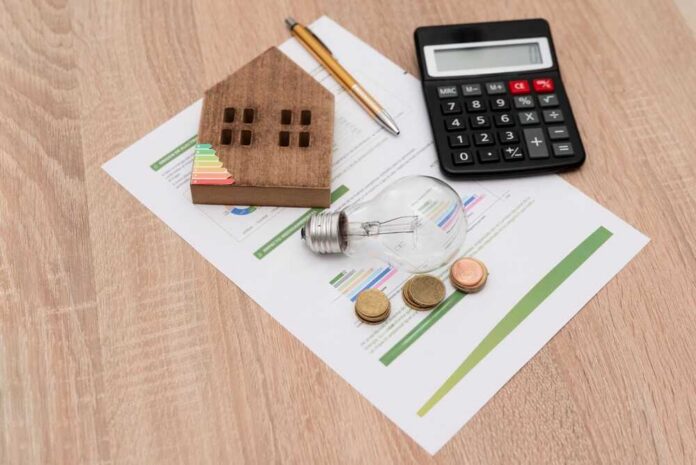
The income needed to buy a basic American home has jumped so fast that millions of middle-class families now make “too much” for help and “too little” to own.
Story Snapshot
- The income needed to afford a median-priced home has leapt from about $66,000 in 2020 to over $120,000 today.
- Payments on a typical home climbed from roughly $1,700 to about $3,100 a month, driven by higher prices and mortgage rates.
- Median home prices now hover above $400,000 and are roughly five times median household income.
- Demand and home sales are stuck near 30‑year lows as regular buyers step back and investors and cash buyers fill the gap.
How The Harvard Math Turns The American Dream Into A Luxury Item
Harvard’s housing researchers did not bury the lead. They say a household now needs more than $120,000 a year to afford the payment on a median-priced U.S. home, assuming a small down payment and a standard rule that housing should not eat more than about a third of income.[7] Back in 2020, that same “typical” home took about $66,000 of income.[1][2]
That is close enough to “double” that any normal buyer feels the punch long before the economists finish arguing over decimals.
Income required to afford a median-priced home has almost doubled since 2020, report finds https://t.co/Q3DcSs9wXP pic.twitter.com/3lyJaHuJ15
— New York Post (@nypost) June 19, 2026
Those dollars are not falling into a black hole. They show up as a monthly payment that has exploded. In early 2020, a median-priced home cost around $1,700 per month, including principal, interest, taxes, and insurance. By late 2025, that payment hit roughly $3,100.[1][2][5]
The reason is simple: prices jumped, and mortgage rates more than doubled. When the price sticker and the interest rate both go up, the payment curve does not creep higher. It spikes.
Prices Up, Rates Up, And Wages Stuck In The Slow Lane
The Harvard data and follow‑on press coverage paint the same picture. Median prices for both new and existing homes now sit above $400,000 nationwide.[1][2]
Existing home prices alone are up roughly 54 percent since 2020.[1][2] Yet the typical paycheck did not grow by anything close to 54 percent.
One analysis finds that the income needed to buy a home has doubled since 2019, while wages have lagged far behind.[19] When house prices outrun paychecks year after year, you do not get a “cycle.” You get a structural squeeze.
The price-to-income ratio reveals how far this has gone. Harvard notes that existing homes now cost about five times the median household income, compared with roughly three times the income in the 1990s.[2]
Research from the Federal Reserve Bank of St. Louis finds the same pattern over two decades: home values have risen about 207 percent since 2000, while incomes have risen about 155 percent.[15]
That gap does not sound huge until you try to put kids through school, fund retirement, pay for health care, and still scrape together a down payment.
Why A “National Number” Both Reveals And Hides The Truth
Some critics warn that “$120,000 to buy a house” is too simple, and they are partly right. Harvard’s own report shows that the income needed to afford the median home exceeds $100,000 in 169 of 387 metro areas, meaning other markets still sit below that mark.[1]
The Housing and Urban Development Department’s median-income methods also highlight big regional gaps; some places are brutal, others only tough.[13] A rural county in the Midwest is not San Francisco, and a national headline can blur that difference.
A new Harvard housing report finds high home prices, mortgage rates and affordability challenges are slowing household growth and keeping the U.S. housing market subdued, with many young adults delaying homeownership and even forming their own households.https://t.co/FSKxlbzuSe
— WLOS (@WLOS_13) June 21, 2026
But here is the hard truth for anyone who values a broad, property‑owning middle class. When home prices are five times income nationwide and more than 97 percent of counties are less affordable than their own history, as one major data firm finds, the problem is not a few “hot” cities.[14]
The typical household can no longer afford the typical home without taking on crippling debt or receiving help from parents, an inheritance, or government programs. That is not a healthy market. That is a slow‑moving transfer of ownership from families to investors and institutions.
What Conservative Common Sense Says About The Causes And Fixes
Harvard and its allies focus on cost burdens and call for more federal housing aid.[3][18][21] They are right that the shortage of affordable homes for low‑income renters is severe; the country lacks more than seven million affordable rentals for the poorest households.[18]
Yet the same reports acknowledge something that aligns with basic supply‑and‑demand logic: we did not build enough homes, especially smaller starter units, for years.[3][19] When you choke supply with red tape and local veto power, prices surge. That is not ideology. That is math.
From this lens, the solution starts with unleashing buildings where people actually want to live and work. That means cutting zoning rules that ban modest homes, speeding up permitting, and reining in fees that add thousands of dollars to each unit before a shovel hits the dirt.[12][19]
It also means asking hard questions about federal rules that raise costs or crowd out private builders while doing little to fix the underlying shortage. Public aid has a role for the truly vulnerable, but no serious nation tries to subsidize its way out of a supply problem.
Why This Matters For Your Kids And Grandkids
The Federal Reserve reports that the median mortgage payment is now about $1,500, with higher costs in the Northeast and West, and that many renters say they cannot buy because they lack both the down payment and the income to qualify.[20]
Renters who earn less than $30,000 a year are left with about $210 a month after housing, on average.[11]
Those numbers describe a generation with no slack, no margin, and very little chance to climb into ownership without a radical change in policy or a sharp drop in prices.
When homeownership slips out of reach, wealth pools in fewer hands. Long‑time owners and large investors see their balance sheets swell. Young families and working‑class renters watch from the sidelines, paying rising rents that fund someone else’s equity.
The Harvard headline about income needing to “nearly double” is not just a statistical quirk. It is a flashing red light for anyone who cares about stability, family formation, and a country where the middle class owns a real stake in the future.
Sources:
[1] Web – Income needed to afford a median-priced home has nearly doubled since …
[2] Web – [PDF] The State of the Nation’s Housing 2026
[3] Web – Housing market ‘subdued,’ as household growth held back by …
[5] Web – Harvard’s 2026 Rental Housing Report Points to a Softer Market with …
[7] Web – New Report Finds Cooling Rental Markets, But Affordability Crisis …
[11] Web – Housing Affordability – Joint Center for Housing Studies
[12] Web – Joint Center for Housing Studies’ Rental Housing Report Finds …
[13] Web – Harvard Report Shows Stakeholders Must Address Housing … – NAHB
[14] Web – [PDF] Methodology for Calculating FY 2026 Medians – HUD User
[15] Web – Home Affordability In ‘Holding Pattern’ As Housing Costs Outpace …
[18] Web – Housing Affordability and Supply
[19] Web – The GAP | National Low Income Housing Coalition
[20] Web – Digging Out of the U.S. Housing Affordability Crisis
[21] Web – Report on the Economic Well-Being of U.S. Households in 2024