
A soft, fresh cheese that felt like home cooking is now tied to a deadly, multi-year Listeria outbreak stretching across three states.
Story Snapshot
- A small Maryland dairy’s cheeses are linked to nine serious Listeria illnesses and one death across multiple states.[4]
- Officials did not just recall one cheese; they warned against every cheese product from the facility because risk appeared facility-wide.[2]
- Lab tests found the same Listeria strain in people and in unopened Clover Hill requesón buckets.
- The dairy shut down production, recalled products, and apologized, but its license remains suspended while investigations continue.[2][6]
How a beloved cheese turned into a multi-state crime scene
People in Maryland, New York, and Virginia thought they were buying comfort food: soft ricotta-style cheese called requesón, along with other traditional “Spanish-style” cheeses from Clover Hill Dairy in Mechanicsville, Maryland.[2][4]
Instead, at least nine ended up sick, eight landed in the hospital, and one person died, according to federal outbreak counts.[4] The sick span years, with patient samples collected from March 2023 through May 2026, which is why investigators now call this a multi-year outbreak.[4]
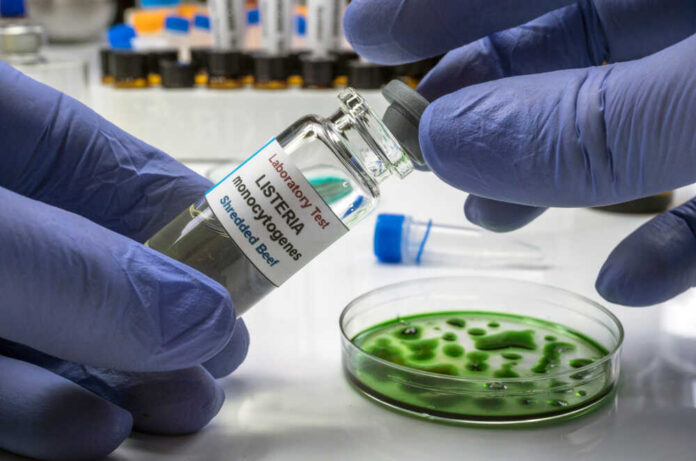
What changed everything was the lab work. State and federal health teams traced two New York patients back to a retailer selling requesón supplied by Clover Hill Dairy. A repacked sample from that retailer tested positive for Listeria monocytogenes.
Then inspectors pulled an unopened 18‑pound bucket of Clover Hill requesón. That sealed bucket also tested positive for Listeria, and genetic testing showed it was the same outbreak strain found in sick patients.[5] At that point, this was no longer a vague suspicion; it was a match.
Why an advisory about one cheese exploded into a recall of all cheese
Maryland first warned the public on June 3, 2026, about Clover Hill’s requesón and soft ricotta cheese.[2] Within days, the picture looked worse.
The Maryland Department of Health said whole genome sequencing had identified nine people infected with the outbreak strain across several states, including one death in Maryland back in 2023.[2]
Because the same facility produced many cheese styles on shared equipment, the state expanded its consumer advisory to include every cheese product produced there and suspended the dairy’s operating license on May 30, citing a public health risk.[2][5]
This was not a narrow pull by a single brand on a single supermarket shelf. Clover Hill’s cheeses were sold from farmers’ markets, a farm store, and through distributors in Maryland, New York, Virginia, New Jersey, North Carolina, and Washington, D.C.[2][4]
Some of those cheeses were relabeled under other names such as KESSO, QUESOS LA RICURA, IZALCO, DE MI PUEBLO, and RIO LINDO, which means many buyers had no idea they were eating Clover Hill products.[2] Regulators had to assume contamination could spread across product lines and labels, so they widened the recall net.
What Listeria does, and who is most at risk
Listeria monocytogenes is not a mild stomach bug. It can invade the bloodstream and central nervous system, causing severe illness, miscarriage, stillbirth, and death, especially in pregnant women, older adults, newborns, and people with weak immune systems.[3]
That is why federal and state officials treat even a handful of matching cases as a serious alarm. In this outbreak, eight out of nine known patients were hospitalized, a sky-high rate that matches how dangerous Listeria infections can be.[4]
Soft, fresh cheeses are a common vehicle. Even when made from pasteurized milk, they can become contaminated during or after production if equipment, drains, or surfaces harbor the bacteria.[2]
Listeria also survives at refrigerator temperatures, so it can grow quietly in foods people assume are safe. That is one reason health agencies often advise high-risk groups to avoid soft cheeses, especially those made with unpasteurized milk.[2][3]
Accountability, fairness, and what common sense says consumers should do
Some people will see the license suspension and sweeping recall and say “case closed, they are guilty.” Others will note that Clover Hill voluntarily recalled products, shut down production, cooperated with investigators, and publicly apologized, which sounds more responsible than defiant.[4][6]
Both can be true: a company can be the source of a serious outbreak and still respond in ways that respect customers and the rule of law, rather than stonewalling regulators or hiding problems.
The core questions are simple: Did the food make people seriously sick, and did the system move fast enough to protect others once that risk came into focus?
Epidemiology, lab results, and traceback data together strongly point to Clover Hill as the source of this outbreak, with facility-wide contamination concerns driving the expanded recall.[4][5]
That does not require demonizing a small business, but it does demand clear accountability and tough sanitation fixes before any restart. For everyday consumers, the takeaway is basic but vital: when a recall says “do not eat this,” believe it, throw it out, and watch for symptoms if you already took a bite.
Sources:
[2] Web – Deadly Clover Hill Dairy Requesón Listeria Outbreak [Update]
[3] Web – Consumer advisory expanded for all Clover Hill Dairy cheese …
[4] Web – Clover Hill Dairy Ricotta Cheese Linked to Listeria Outbreak
[5] Web – Outbreak Investigation of Listeria monocytogenes: Soft Cheese – FDA
[6] X – Health officials suspended Clover Hill Dairy’s license on May 30 …