

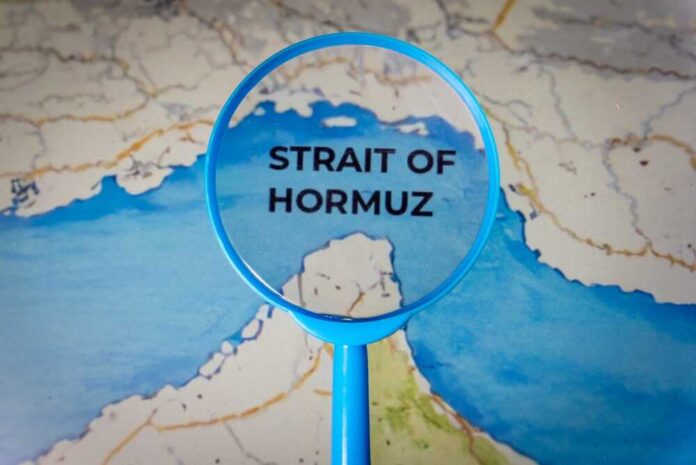
The U.S. just turned a disputed tanker attack into a full-blown test of whether Iran can choke off the world’s oil artery and get away with it.
Story Snapshot
- U.S. Central Command launched “powerful strikes” on Iran after attacks on three commercial ships in the Strait of Hormuz.
- American forces hit more than 80 Iranian targets, including missile, drone, radar and small attack boats.
- Iran denies direct blame for the tanker hits and claims it is defending its right to control shipping routes.
- The clash exposes how a fragile ceasefire and a vague shipping deal left a dangerous gray zone at the world’s key oil chokepoint.
U.S. says Iran crossed the line in the world’s most critical waterway
United States Central Command said it launched a “series of powerful strikes” against Iran after three commercial vessels were hit in the Strait of Hormuz within roughly 24 hours.
American officials linked the strikes to Iran’s Islamic Revolutionary Guard Corps attacks on three oil tankers, describing the incidents as “unwarranted, dangerous, and a clear violation of the ceasefire” that was supposed to calm the 2026 Iran war. The message was blunt: target civilian shipping, pay a military price.
The trigger was not one isolated shot. The British military’s United Kingdom Maritime Trade Operations office reported three tankers struck by projectiles as they moved through the vital fuel shipping lane.
United States officials said Iran used drones in at least one of the attacks, including on the Singapore-flagged cargo ship Ever Lovely, which was transiting the strait when hit. Qatar also accused Iran of attacking the Al-Rukayyat tanker, underscoring that regional states saw the strikes as hostile, not routine policing.
What U.S. forces hit inside Iran and why it matters
Central Command detailed a broad target list. United States aircraft struck missile and drone storage sites, coastal radar, air defenses, and minelayer capabilities along Iran’s southern coast. Later assessment said the operation destroyed or damaged over 80 Iranian targets, including dozens of small boats used by the Revolutionary Guard to harass or seize tankers.
This was not a symbolic warning shot. It was a direct attempt to cripple Iran’s ability to threaten commercial shipping and to reassert freedom of navigation as a hard red line.
BREAKING: U.S. Central Command says American forces launched a new wave of strikes Tuesday, hitting more than 80 targets across Iran after Tehran’s latest attacks on commercial vessels in the Strait of Hormuz. The operation targeted Iranian air defenses, command-and-control… pic.twitter.com/cqiZ3wNsMt
— Breaking911 (@Breaking911) July 8, 2026
The choice of targets fits a clear pattern: go after the tools Iran uses for what analysts call low-intensity maritime coercion. These are the drones, missiles, fast boats, and radar sites that let Iran hit tankers, shadow convoys, and claim it is enforcing “rules” in a waterway that carries about 30 percent of the world’s seaborne crude oil.
From an American perspective, this is exactly what military power is for: punish aggression, protect trade, and avoid long wars by making the costs of mischief obvious and immediate.
Iran’s counter-story and the built-in fog around tanker attacks
Iranian state media did not openly claim responsibility for the three tanker hits, instead saying one vessel ignored warnings and that Iranian naval forces later struck U.S. targets in response to American aggression.
Tehran framed the episode as defending its right to control shipping routes and insisted the United States violated a recent ceasefire agreement and related terms to reopen the strait. This narrative casts Washington as a treaty-breaking regime, a label Iran hopes will sway opinion in the region and beyond.
This ambiguity is not new. Earlier clashes in May saw both sides exchange missiles and drones around the strait while arguing over damage claims and blame. In this kind of conflict, unclear attribution is almost the default setting.
That said, Western reporting notes that Ever Lovely followed the recommended route issued by the United Kingdom Maritime Trade Operations office, contradicting Iran’s claim that the ship took an unauthorized path. When one side offers route data and the other leans on vague warnings, the weight of evidence tilts toward the documented track, not the shouted accusation.
A fragile ceasefire, a vague deal, and an expensive lesson for the markets
The strikes hit at the heart of a shaky peace framework crafted to reopen the Strait of Hormuz and pause the broader war. Reports describe a memorandum of understanding with fuzzy language about “arrangements to reopen the strait,” which left room for Iran to impose restrictive routes and then accuse ships of violations.
That kind of diplomatic mush may feel clever in Paris or Islamabad, but on a narrow shipping lane watched by armed speedboats it becomes a recipe for crisis.
Oil and markets reacted fast. Brent crude prices jumped after the U.S. strikes, and analysts warned that any sustained fight over Hormuz could send energy costs surging worldwide.
Viewer polls on U.S. television showed strong popular support, with about 90 percent backing renewed strikes, but that kind of sentiment is often driven by anger at attacks on civilians, not a close read of ceasefire text or tanker telemetry.
From a common-sense view, the core test is simple: did Iran use armed force to intimidate civilian shipping in a vital international channel? The documented hits on tankers and the need for U.S. escorts say yes.
Sources:
cnbc.com, cbsnews.com, centcom.mil, youtube.com, bbc.com, en.wikipedia.org, crisisgroup.org, facebook.com, axios.com, cnn.com, instagram.com