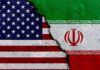

The United States handed Iran a 60-day economic lifeline, then yanked it away overnight after three tankers were hit in the Strait of Hormuz.
Story Snapshot
- The Trump administration revoked a temporary waiver that let Iran sell oil on the world market after tanker attacks in the Strait of Hormuz.
- U.S. Central Command called Iran’s actions “unwarranted, dangerous and a clear violation of the cease-fire,” and strikes followed.
- The Treasury Department blocked new Iranian oil sales after July 7, with a short grace period for traders to unwind deals.
- Iran denies responsibility and claims control over the Strait, while allies and markets largely act as if Tehran is to blame.
How a Short-Term Waiver Turned Into a Sudden Cutoff
The waiver that allowed Iran to sell oil was never meant to be a free gift. Washington framed it as a test of behavior, tied to a fragile cease-fire and early talks.
The deal gave Iran a narrow opening to move crude and petrochemicals for sixty days, easing pressure on its economy while nuclear and regional issues were on the table. When three tankers from Saudi Arabia and Qatar were hit in the Strait of Hormuz, that experiment ended almost immediately.
The Trump administration revoked the waiver the same day, cutting the exemption short and restoring full sanctions. Officials tied the move directly to the attacks, making the cause and effect clear: hit tankers, lose oil money.
According to reports, the license had let Iran sell specific at-sea cargoes under strict terms, but once the tankers were struck, Treasury pulled the license and closed the window. Economically, that slammed the door on billions in potential revenue that Iran hoped to earn.
Strikes, Strong Words, And A “Conflict Over” Claim
While Treasury handled the paperwork, the Pentagon handled the response. U.S. Central Command described Iran’s actions as “unwarranted, dangerous and a clear violation of the cease-fire” and launched strikes on Iranian military assets tied to maritime operations.
President Trump declared the conflict “over” in a prime-time address and said he did not need Congress to approve the action, pointing to Iran’s aggression as his justification. That might play well with Americans who value decisive leadership, but it raises separation-of-powers questions.
BREAKING: President Trump confirmed the U.S. launched what he called “very powerful” retaliatory strikes against Iran after the regime fired rockets at ships, warning that any future attacks would be met with overwhelming force.
“We attacked very powerfully last night,” Trump… pic.twitter.com/xmGDV1IUlw
— Breaking911 (@Breaking911) July 8, 2026
The President’s speech did not lay out detailed evidence about the tanker attacks. He offered no radar tracks, no missile fragments, and no satellite photos the public could examine.
Commentators said his remarks showed “no new clarity or endgame plan,” and the administration left allies to handle much of the diplomatic heavy lifting to reopen shipping lanes. For many Americans, that missing detail makes it hard to judge how strong the case against Iran really is, even if their instincts say Tehran fits the pattern.
What Treasury Did, And Why Sanctions Still Matter More Than Missiles
The U.S. Treasury Department translated the White House’s anger into rules that bite. After July 7, no new sales of Iranian oil could be made under U.S. law, and traders had only ten days to wind down existing deals.
That short grace period tried to avoid panic in markets while still sending a sharp signal to Tehran: behave, or the cash stops. Treasury has a long record of using oil sanctions as a main tool against Iran, and this revocation dropped the country back into that pressure box overnight.
The logic is simple. You do not pay an adversary that hits your allies’ ships. You use sanctions, not just bombs, to make bad behavior expensive.
Still, the administration’s choice to declare the conflict “over” without Congress involved worries some legal experts and lawmakers. They question whether executive power has stretched too far, even when they agree Iran must be punished. That tension between toughness and constitutional limits sits just under the surface of this whole episode.
Iran’s Denial, Control Claims, And The Missing Evidence Gap
Iran did not accept the blame that Washington and many allies assigned. Officials in Tehran “categorically” rejected the U.S. allegation, saying shadowy actors who want to wreck Iran’s ties with the world carried out the attacks.
Iranian state media went further, claiming a tanker was attacked after using a U.S.-backed corridor through the Strait of Hormuz and ignoring warnings to coordinate with Iranian authorities. Tehran publicly insists it controls the Strait, while the U.S. and partners view it as an international waterway.
United States revokes Iran oil sales license after tanker attacks, tightening sanctions and raising global energy market concerns amid escalating Gulf tensionshttps://t.co/5kaUDTUSmx
— The Sustainability Grid (@SustGrid) July 7, 2026
Iran has offered no detailed proof to support its alternate story. There are no public forensic reports or satellite images naming other attackers. The U.S., for its part, has not yet released declassified intelligence—like missile fragments or radar data—that would seal the case in the court of public opinion.
Past tanker incidents showed similar patterns, with Washington citing classified evidence while Iran denied everything. Markets, and many governments, are not waiting for perfect clarity. Oil prices jumped, analysts blamed a “lack of clear U.S. strategy,” and yet key allies still act on the assumption that Iran is behind the attacks.
Sources:
bloomberg.com, en.wikipedia.org, wsj.com, instagram.com, facebook.com, ofac.treasury.gov, thehill.com