The most chilling part of this story is not the crocodile attack itself, but how a “freak event” at a five-star resort may be part of a pattern everyone has a reason to downplay.
Story Snapshot
- A 28-year-old Mexican man, Irving Mauricio, was dragged into the sea and killed by a crocodile at Marina Vallarta Beach.
- The attack happened right in front of the Marriott Puerto Vallarta Resort and Spa, during the early evening, while families were still relaxing nearby.
- Witnesses say they saw the crocodile latch onto his thigh and spin him under as they rushed in with a life preserver, too late to save him.
- Officials call the attack “unusual and isolated,” but travelers and locals point to warning signs, earlier incidents, and deeper questions about resort safety and responsibility.
A deadly attack in the shadow of a luxury resort
On a Friday evening, around 6 p.m., the light was starting to soften over Puerto Vallarta’s Marina Vallarta Beach when the calm broke into screams.
A 28-year-old man from Mexico City, identified as Irving Mauricio, was on the stretch of sand directly in front of the Marriott Puerto Vallarta Resort and Spa. Witnesses and police say a crocodile surged from the water, grabbed him, and dragged him out to sea as people watched in shock.[1][3]
Guests at the resort pool heard the screams and ran toward the water, realizing within seconds that this was not a rip current or a routine scare but a large reptile that had locked onto a human being.
A San Clemente couple on vacation described seeing the crocodile clamp onto Irving’s thigh and roll him, pulling him under while they tried to throw a life preserver toward him. He did not resurface.
That shift—from vacation noise to the silence after someone vanishes—is what witnesses still struggle to describe.[2][9]
How authorities and the resort framed the incident
Jalisco state authorities launched an overnight search by land and sea, sending boats and teams along the shoreline and estuaries. They recovered Irving’s body the next morning, about 300 meters offshore from the beach, in waters connected to nearby river and mangrove channels where crocodiles live.
Officials later located and captured a suspected crocodile near an estuary zone up the beach, tying the animal to the attack in their public statements.[1][2][3]
Victim of horrific crocodile attack in beloved resort town revealed – as new pictures show the 12ft beast https://t.co/vKL7Qr8zha pic.twitter.com/b0viOw0fKY
— New York Post (@nypost) June 29, 2026
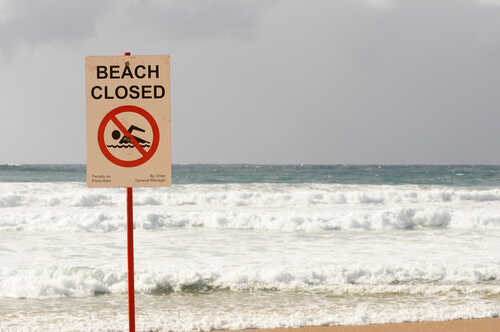
The Marriott Puerto Vallarta Resort and Spa quickly stressed that safety measures were in place. In a statement, the resort said the “safety and security of our guests and associates are our top priority,” pointing to warning signs, night patrols, and red flags along the beach. Local authorities echoed that message, reminding the public to obey signage and avoid entering waters near wildlife areas, especially estuaries and mangroves where crocodiles are known to move and feed. On paper, everyone did what the rulebook demands after a tragedy.[1][3]
Is this really an isolated freak event?
Officials and civil protection agencies framed Irving’s death as “lamentable, unusual, and isolated,” and they highlighted how rare fatal crocodile encounters are worldwide.
One analysis put the odds of a fatal crocodilian attack at roughly one in 2.5 million, a number meant to calm travelers who saw the headlines and wondered if their next beach trip is a coin flip with a predator.
Statistically, they have a point. People are far more likely to die driving to the airport than from a crocodile at a resort.[2]
A Mexican man was killed by a crocodile near the Marriott Puerto Vallarta Resort and Spa. The attack was witnessed by a pair of tourists from California.https://t.co/MUBsaMHFA2
— The Inertia (@the_inertia) June 29, 2026
But statistics do not erase local patterns. Puerto Vallarta’s beach zone sits beside estuaries and rivers that are known crocodile habitat, and guests have shared accounts of earlier non-fatal attacks and close calls on that same stretch of coast.
Social media posts and travel forums describe multiple crocodile incidents over recent years in the Marina Vallarta area, including attacks where victims survived and beach warnings appeared only afterward.
For a traveler scanning brochures with palm trees and infinity pools, those stories rarely surface until something goes horribly wrong.[5][18]
Wildlife, profit, and common-sense risk
The larger tension here is simple and uncomfortable: wild predators and mass tourism do not mix easily, yet money pushes them together. Puerto Vallarta’s tourism industry brings in billions each year, and both resorts and local officials have strong reasons to present events like this as one-off freak accidents.
Acknowledging that certain popular beaches sit next to active crocodile zones could mean stricter closures, heavier patrols, and fewer sunset walks in marketing photos.[1]
Adults should accept that nature does not bend to resort branding. Warning signs at the Marriott beach told guests about wildlife risk, and authorities repeated that message after Irving’s death. Personal responsibility matters: you do not treat an estuary next to a river as a harmless swimming hole.
At the same time, honest risk communication matters just as much. Calling repeated crocodile incidents “isolated” while continuing business as usual asks visitors to trust a narrative that may downplay real local danger.[1][3]
What this means for travelers who still love the beach
For anyone eyeing a warm-weather getaway, this story should not trigger panic, but it should sharpen your instincts. Many coastal resorts in Mexico and beyond are located near rivers, mangroves, and lagoons that are natural habitats for crocodiles.
When you see warning signs, red flags, or hear locals talk about wildlife in the area, that is not background noise. That is free information that can save your life, and it deserves more weight than the brochure or the travel influencer.
Irving Mauricio’s death is, statistically, an anomaly. That does not make it meaningless. It exposes the thin line between comfort and reality at modern resorts: luxury on one side of the property line, wild habitat on the other.
The smartest response is not fear, but respect. Respect for the animals that were there first. Respect for the signs that tell you where they still roam. And respect for the truth, even when it runs counter to the sales pitch.
Sources:
[1] Web – Man, 28, dragged out to sea and killed by crocodile at popular resort: …
[2] Web – Man killed after being dragged out to sea in crocodile attack at …
[3] Web – Crocodile Kills 28-Year-Old at Mexican Beach Resort (Video) – Surfer
[5] Web – Horrifying Crocodile Attack! : r/puertovallarta – Reddit
[9] Web – Orange County couple tried to rescue man killed in crocodile attack …
[18] Web – Trip Report: Croc Attack – Riviera Nayarit Forum – Tripadvisor