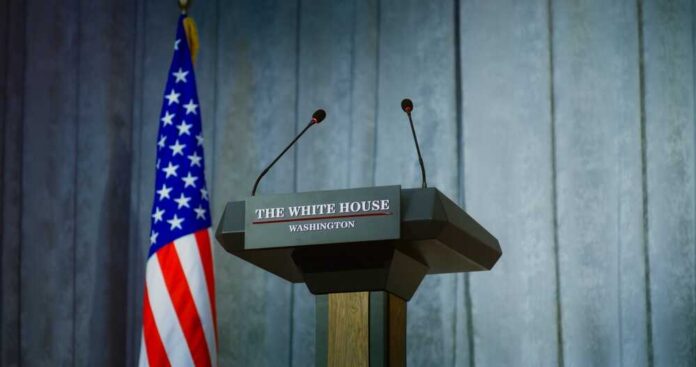
The man who fed President Trump his words turned those same words into a six-figure betting haul—and now Washington is asking how many other insiders are quietly doing the same.
Story Snapshot
- Teleprompter operator Gabriel Perez reportedly made around $100,000 betting on Trump’s speeches on Kalshi.
- Kalshi’s own surveillance team flagged his “mentions markets” trades and handed the case to regulators.
- The Commodity Futures Trading Commission (CFTC) froze most of his profits and launched an insider trading probe.
- The White House put Perez on unpaid leave and Trump called the situation a “disgrace”.
A staffer at the president’s microphone who started betting on the script
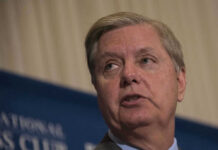
Gabriel Perez was not a household name. He stood just off camera, scrolling the words that President Trump spoke on some of the biggest stages in the world. Perez has operated Trump’s teleprompter since 2016, which means he often saw full speech drafts before the rest of the country did.
That quiet access became the center of a storm when prediction market Kalshi noticed a federal employee making eerily accurate bets on what Trump would say and when he would say it.
Kalshi runs “mentions markets,” where traders wager on whether certain words or topics will appear in a speech or event. On paper, it looks like harmless fun. In practice, it becomes a gold mine when you already know the script.
According to reporting based on ABC News and other outlets, Perez bet on more than a dozen Trump speeches over about three months, including the State of the Union, a World Economic Forum speech, and a Medal of Honor ceremony. These were not wild guesses; they lined up with events where he handled the teleprompter.
How prediction market bets turned into a six-figure problem
Sources say Perez’s trades on Kalshi earned him more than $90,000 in profit before the platform froze the account. Other reports round that figure up and describe “more than $100,000” made by riding this pattern of bets across multiple speeches. Regulators were not tipped off by a whistleblower or a media leak.
Kalshi’s own internal surveillance team flagged the account, noticed that the trader was a federal employee, and referred the case to the Commodity Futures Trading Commission for possible insider trading on a regulated prediction market.
President Donald Trump's longtime teleprompter operator, Gabriel Perez, has drawn ire from the White House after reports he'd profited from Kalshi bets linked to content in Trump's speeches. https://t.co/kYWkQSjsD7
— Business Insider (@BusinessInsider) July 16, 2026
Some reports say Perez admitted making certain trades when he met with regulators. Investigators also learned that he sometimes adjusted or closed positions while Trump was speaking, especially when the president skipped sections of his prepared remarks or went off script.
For a normal retail trader, reacting in real time to a live event is the game. For the person who loaded that script into the teleprompter, it looks much more like exploiting inside access to keep the winning streak going, and that is exactly what regulators are now trying to parse.
Regulators step in while prosecutors stand back
The Commodity Futures Trading Commission moved quickly once Kalshi made its referral. The agency can police fraud and insider trading on prediction markets just as it can in more traditional futures markets. It froze about $90,000 of Perez’s profits and opened a formal investigation into whether he used nonpublic information from Trump’s speeches to make those trades.
NPR and ABC-linked reporting says Perez is in settlement talks that would likely force him to repay profits and accept a ban on future trading. That is serious, but it is not the same as a criminal conviction.
White House Teleprompter Operator Bet on Trump Speeches, Kalshi Says https://t.co/A4JRGwWoNa
— Nancy Pearlstein (@Nunchka) July 19, 2026
The U.S. Attorney’s Office in Manhattan reportedly declined to open a criminal case after the referral, suggesting that while regulators see a problem, prosecutors do not yet view it as a slam-dunk criminal fraud case. That gap matters. It lets defenders say “no charges were filed,” while critics point out that civil enforcement and bans are still major penalties.
Perez, through sources, is said to be fully cooperating with the investigation, but has not issued a detailed public defense that explains his strategy or denies insider use of speech drafts.
Why this case hits a nerve about government, markets, and trust
This is not just one staffer’s bad week. It is the first known case of a White House employee tied to an insider trading scheme on a prediction market. That makes it a test for how seriously Washington will treat digital betting platforms that now move real money and shape public expectations.
Earlier in 2026, the White House had already warned staff not to use confidential information in any markets, including prediction sites, after a burst of suspicious trades related to foreign policy and oil. Perez’s case looks like a direct hit against that warning.
Across government and campaigns, insiders are discovering that these markets are an easy way to cash in on information that regular Americans never see. A U.S. Army soldier was charged for using classified military data to bet on Polymarket, making hundreds of thousands of dollars.
Reporting has exposed campaign staffers using internal polling to wager on election outcomes before numbers go public. In response, New York’s governor banned state workers from using nonpublic information in prediction markets, and more than forty Democratic lawmakers pushed for sweeping ethics training on these platforms.
The political fallout and what comes next
The White House placed Perez on unpaid leave and later said he would no longer work there. Trump’s press secretary called the situation “deeply unfortunate” and “a disgrace,” which fits an instinct that public servants should not treat their jobs as casino chips.
At the same time, the administration has every reason to frame this as a one-off scandal, not a sign that insider gambling is spreading across its ranks. Critics on the left see a broader pattern of “venality” and will use this episode to demand tighter rules and more aggressive enforcement.
From a common sense view, the facts line up in a troubling way. A teleprompter operator had repeated advance access to Trump’s words, bet on those words over and over, made close to six figures, got flagged by the market itself, and is now in talks to give the money back while accepting a ban. The only missing piece is a judge’s final word.
Whether or not the case ends in a formal finding of insider trading, Americans now have proof that prediction markets are not just games on a phone screen. They are another arena where the politically connected can quietly turn inside knowledge into cash, until someone finally checks the tape.
Sources:
cbsnews.com, reuters.com, gate.com, license.aiying.cc, facebook.com, cnn.com, news.bitcoin.com, pillsburylaw.com, nytimes.com, kslaw.com, debevoise.com