
President Trump’s promise to impose voter ID for the 2026 midterms by executive order is setting up a high-stakes clash between election security demands and the Constitution’s limits on federal power.
Quick Take
- Trump said he will issue an executive order to require voter ID for the 2026 midterm elections if Congress does not act.
- House Republicans passed the SAVE America Act, but Senate Democratic leaders signaled it will not advance.
- Courts previously blocked similar Trump election orders, with rulings emphasizing that presidents cannot unilaterally regulate federal elections.
- Supporters argue voter ID protects election integrity, while critics warn documentation requirements could block eligible voters and trigger massive litigation.
Trump’s Executive-Order Threat Raises the Central Question: Who Controls Elections?
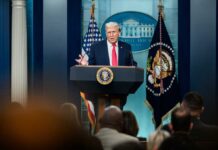
President Donald Trump used a Feb. 13 Truth Social post to say the 2026 midterm elections “will” require voter identification, and that he is prepared to do it through executive action if Congress refuses. Trump also tied the plan to proof-of-citizenship requirements and tighter limits on mail-in voting, while insisting he has a legal case strong enough to withstand challenges. As of Feb. 14 coverage, no executive order had been issued.
The constitutional friction is immediate because election administration is primarily run by states, while Congress has defined authority to regulate aspects of federal elections. That tension is why critics argue a president cannot simply rewrite voting rules nationwide with a pen stroke.
Even many voters who favor strict ID rules may still want them enacted cleanly—through legislation that can survive judicial review—rather than through a legal brawl that risks confusion close to Election Day.
The SAVE America Act Advanced in the House, Then Hit a Senate Wall
Republicans in the House passed the SAVE America Act on Feb. 11, placing voter ID and proof-of-citizenship requirements back at the center of the election-integrity debate. Senate Democratic leadership quickly dismissed the effort, calling it unacceptable and signaling it would be blocked.
That stalemate is the practical reason Trump is talking about executive action: if the Senate will not move a bill, the White House is looking for a lever that can shift policy before November 2026.
The legislative context matters because it highlights two competing approaches to the same political problem. One route is Congress passing a federal standard; the other is the president using executive agencies to pressure or reshape election procedures.
For conservatives frustrated by years of Washington gridlock, Trump’s message resonates as a direct response to a Senate bottleneck. The downside, based on recent history, is that executive orders can be stopped quickly in court.
Trump says he will issue an executive order to get voter-ID requirements before the midterms.
We don’t need approval from Congress. pic.twitter.com/zTQc6GKGna— neurofiber (@neurofiber) February 14, 2026
Courts Already Blocked a Similar Trump Order—And That Precedent Looms
Trump has tried election-related executive actions before. In 2025, he signed an order aimed at “preserving and protecting” election integrity by requiring proof of citizenship on federal forms, and that effort faced legal challenges and was blocked.
Reports also point to rulings by federal Judge Colleen Kollar-Kotelly emphasizing that presidents cannot regulate federal elections via executive order because the Constitution assigns that authority to Congress and the states, setting up a major obstacle for any 2026 repeat attempt.
That legal record is the strongest factual reason analysts doubt an executive order would “stick” long enough to govern a national midterm election. Courts can issue injunctions rapidly, and election litigation tends to accelerate as deadlines approach.
If an order is signed and immediately challenged, states and local election officials could be forced to plan for multiple scenarios at once—one set of rules if the order stands, and another if it gets blocked—creating uncertainty that undermines voter confidence.
The Policy Debate: Integrity Measures vs. Access Concerns
Trump and House Republicans frame voter ID as a straightforward integrity measure, and many Americans see identification as a commonsense safeguard. Critics counter that strict documentation rules can burden lawful voters, especially those who lack up-to-date IDs or citizenship paperwork.
Research cited in coverage also notes that proven noncitizen voting appears rare, such as a Georgia audit finding a small number of noncitizens on rolls out of millions, which opponents use to argue sweeping federal action is not justified.
Trump says he will issue executive order to get voter-ID requirements before midterms https://t.co/IMrejkJNg8
— @AcrossTheCurve (@acrossthecurve) February 15, 2026
For conservative voters, the practical issue is whether the administration can achieve durable reforms without handing opponents an easy courtroom win. If the goal is tighter verification and public trust, the cleanest path is a law that survives judicial scrutiny and gives states time to implement it.
If the White House pursues an order that gets frozen, the country could end up with months of headlines, legal fees, and uncertainty—while the underlying integrity debate remains unresolved going into 2026.
Sources:
Trump says midterm elections will require voter ID under new executive order
Trump issue executive order voter ID legislation fails
Trump: There will be voter I.D. for the midterm elections whether approved by Congress or not
Trump threatens to bypass Congress and order new voting laws ahead of midterms
New SAVE Act bills would still block millions Americans voting