
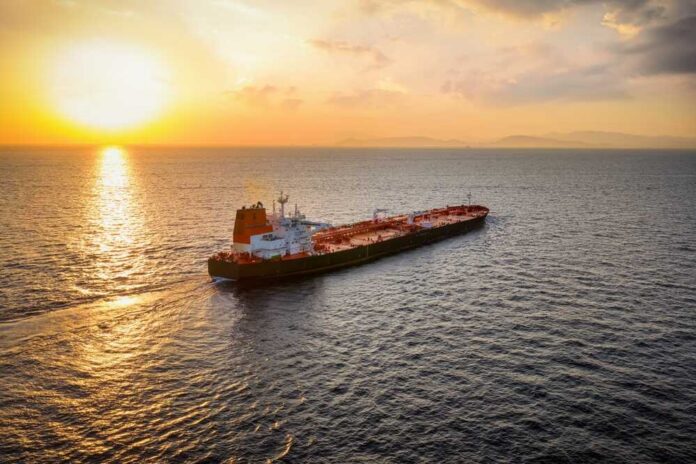
Oil jolted past $90 a barrel as two tankers were struck near Saudi waters, snapping markets back to the hard math of risk, choke points, and war.
At a Glance
- Two tankers were hit off Saudi Arabia, pushing U.S. crude above $90 and Brent near $100.
- U.S. Central Command (CENTCOM) says repeated strikes on Iran aim to protect shipping in the Strait of Hormuz.
- Washington links the campaign to Iranian attacks on commercial vessels, citing self-defense and deterrence.
- Strait of Hormuz traffic has slumped during the exchange, magnifying price spikes.
Struck Tankers, Tight Chokepoint, Fast Price Reaction
Traders moved first and asked questions later when news broke that two tankers were struck near Saudi Arabia. The location matters more than the hulls. About one-fifth of global oil moves through the Strait of Hormuz.
When ships are hit anywhere near that route, insurers raise premiums, captains slow down, and buyers pay up. That chain showed up at the pump price screens. U.S. crude sprinted past $90. Brent, the global gauge, pressed toward $100. Risk, not supply math, set the tone.
Oil nears $100 a barrel after Houthis claim strikes on Saudi Arabian tankers https://t.co/Mrdb0AKjZZ
— MarketWatch (@MarketWatch) July 23, 2026
Military statements turned the market’s fear into a forecast. U.S. Central Command said American forces hit Iranian targets to cut Iran’s ability to attack commercial vessels, naming drone sites, coastal radars, and small boat swarms as priorities.
Reuters reported the strikes followed what Washington called Iranian attacks on three commercial ships moving through the Strait of Hormuz. Risk managers in Houston and Singapore do not wait for a cease-fire to trade that information. They model more disruption days ahead and price it now.
What CENTCOM Says, And Why It Moves Oil
Investors care less about motives and more about mechanics. U.S. statements describe a rolling campaign designed to degrade maritime strike tools and reopen safe passage. That means more sorties, more nights of explosions on radar and missile fields, and more chance of miscalculation.
Newsrooms and trading floors saw similar phrasing across outlets during each strike cycle, with the same goal repeated: protect civilian mariners and keep commerce flowing. Markets hear that as “not done yet,” which supports a higher risk premium until traffic normalizes and insurance rates fall.
An open strait is not the same as a safe strait. The Guardian and Bloomberg both chronicled seven or more consecutive nights of strikes, alongside a notable drop in vessel movements through the chokepoint.
Tanker schedules change by the hour when drones and fast boats are active. Delays equal fewer delivered barrels on time, even if no pipeline or platform breaks. That timing gap alone can lift prices for weeks.
How This Hits American Families And Policy Choices
Every dollar added to crude shows up as cents at the pump and higher costs for diesel, jet fuel, farm inputs, and heating. That burden lands first on working families and small businesses. Common sense says protect sea lanes fast, clearly, and with enough strength to stop the harassment, because a steady flow of goods is not a luxury.
The stated U.S. approach—hit the tools that menace shipping and warn off the next attack—fits that test if it shortens the crisis and restores normal transit. Vague half-steps would only stretch out pain.
Clear end states matter. Markets get calmer when they see measurable milestones: fewer drone launches, lower war-risk insurance, rising transit counts, and a pause in nightly strike reports. CENTCOM’s updates provide part of that picture, but shippers’ behavior confirms it. When brokers report more bookings through Hormuz and charter rates stop spiking, the premium in oil prices bleeds out.
Until then, headlines about “another night of strikes” or “new vessel hit” will keep a floor under crude, and any fresh blast can push it higher fast.
What To Watch Next
Watch three gauges like a hawk. First, CENTCOM’s daily operational notes; fewer named targets and longer gaps between sorties suggest cooling. Second, vessel traffic and insurance chatter; if underwriters cut war-risk add-ons and Automatic Identification System pings pick up, flows are healing.
Third, diplomatic signals tied to patrol or escort deals; quiet agreements often move ships sooner than speeches. Prices will not wait for peace talks. They will follow the first proof that tankers can move through Hormuz at speed, in daylight, without flares or decoys.
Sources:
cnbc.com, nytimes.com, bbc.com, theguardian.com, thehill.com