

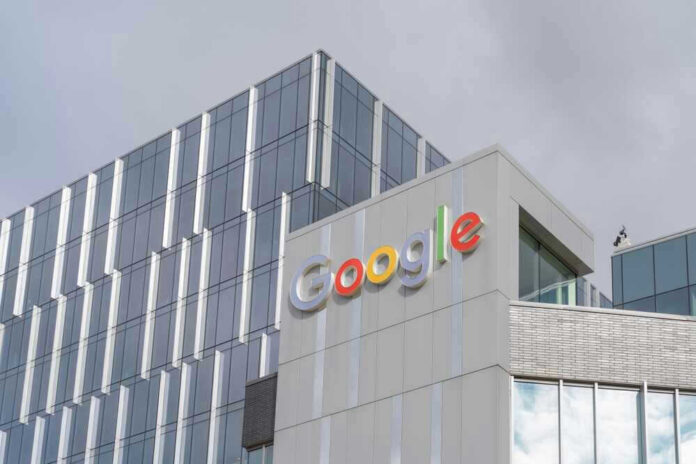
European regulators just told Google, in billion‑dollar language, that nudging users toward its own apps and services crosses the line from clever design into illegal digital gatekeeping.
Story Snapshot
- European Union fined Google about $1 billion for breaking new digital antitrust rules with Google Play and search.
- Regulators say Google steered people to its own apps and travel tools while blocking cheaper options outside Play.
- This fine lands on top of earlier European penalties worth more than €8 billion over Android, shopping, and ads.
- The fight is part of a larger global push to cut Big Tech’s power over how we search, shop, and pay online.
Europe says Google crossed the line with Play Store and search
European Union officials fined Google 890 million euros, about $1 billion, for breaking digital antitrust rules through how it runs Google Play and its search engine. Regulators say Google set up its systems to push people toward its own services and apps, while making life harder for rivals.
This new case focuses on two things: self-preferencing in search, and tight control over how app developers can talk about cheaper offers outside Google’s payment system.
Google hit with $1 billion EU fine over its Play app store and search https://t.co/rozKoDIBNW pic.twitter.com/We9d4SATYr
— New York Post (@nypost) July 23, 2026
Part of the fine, about 460 million euros, covers how search results favored Google’s own tools like Google Flights and Google Hotels over competing travel services. Regulators say those tools received better placement and visibility simply because they were Google’s, not because they were the best deals.
The other 430 million euros target Play Store “anti-steering” rules that blocked developers from clearly telling users about free or cheaper ways to buy outside the app store. That sort of gag rule matters because higher fees inside Play can mean higher prices for users.
This decision is built on a long record of Google losses in Europe
This fine is not a one-off shot in the dark; it lands on a company that has already lost some of the biggest antitrust fights in European history. In 2018, the European Commission fined Google €4.34 billion for using Android contracts to force phone makers to pre-install Google Search, Chrome, and Play, and to shut out rival systems.
Europe’s top court later upheld almost all of that case, locking in a €4.1 billion penalty and confirming that Google used Android to cement its search dominance.
That earlier Android ruling found three illegal tactics: tying Google Search and Chrome to access the Play Store; paying manufacturers and carriers to exclusively install Google Search; and blocking makers from selling devices that used alternate versions of Android.
In plain English, if a phone maker wanted the Play Store, it had to swallow Google’s entire app bundle and stay away from Android variants that might power rival app stores. For many, this looks less like open competition and more like a private toll road built on top of what used to be a public highway.
A broader pattern: platform owners favor themselves and lock in control
European regulators have now fined Google more than €8 billion across shopping, Android, and ad technology cases. A clear theme runs through these actions: when one company controls the platform, it is very tempting to give its own services front-row seats and to make every competitor buy a ticket from the back of the line.
In search, the complaint is that Google’s own shopping and travel tools got prime placement over rivals. In mobile, the complaint is that access to Play came bundled with search, browser, and strict limits on rival systems.
The new digital antitrust rules in Europe, the Digital Markets Act, take this further by directly banning self-preferencing and blocking tricks that stop apps from steering users to better deals. Regulators are now pushing Google over Play Store barriers that keep developers from easily directing users to lower prices, and over search designs that give special treatment to Google’s own services.
From a common-sense standpoint, this is the government saying: if you run the town’s only highway, you do not get to put billboards only for your own gas station and fine drivers who ask directions to a cheaper one.
What this means for consumers, competitors, and American-style free markets
Supporters of limited government often worry when regulators write new rules, but antitrust sits in a different bucket. It is about keeping markets honest so that private players can compete on merit.
When one platform can silently steer millions of users to its own tools and block clear information about cheaper options, that looks a lot like a hidden tax on everyone who uses a smartphone. Europeans argue that Google’s behavior denied consumers the benefits of real competition on mobile devices.
The core question is simple: did Google earn all this traffic by being better, or did it rig the road so rivals never had a chance?
European regulators say the evidence now shows repeated rigging, across search, apps, and ads. Whether you cheer or cringe at another billion-dollar fine, this case marks a clear shift: Big Tech platforms are no longer trusted referees of the digital game, they are players under watch, and the whistle has started to blow.
Sources:
cbsnews.com, americanbar.org, finance.yahoo.com, en.wikipedia.org, theguardian.com, pearlcohen.com, oag.ca.gov, theverge.com