
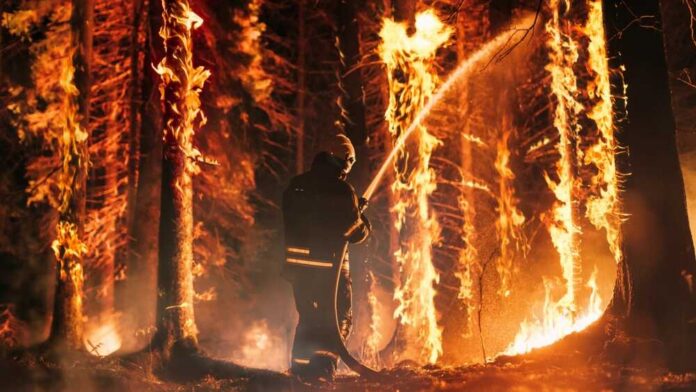
Wildfires ripped across eastern Washington, tearing through neighborhoods near Spokane, destroying about 600 structures and pushing mass evacuations at a scale the region has rarely seen.
Story Snapshot
- About 600 homes, businesses, and buildings destroyed around Spokane.
- Roughly 5,000 homes evacuated; orders shifted fast as winds changed.
- Fires jumped natural barriers, growing near city neighborhoods.
- State leaders mobilized resources as more than a dozen fires burned.
Wind, Heat, And Dry Fuel Turn A Bad Day Into A Firestorm
Gusty winds and triple-digit heat drove flames into Spokane-area communities, where brush and grass lit up like kindling. Fire crews fought on the ground and from the air as spot fires leaped ahead, making lines hard to hold.
The Old Trails Fire crossed the Spokane River, a natural barrier that usually slows fire, and forced fresh evacuations by the hour. Officials warned that some structures were lost before daylight gave way to a smoke-dark sky.
Evacuation zones grew and shifted across the metro area as embers rode the wind. Authorities ordered thousands to leave fast, and shelters filled with families clutching go-bags and pet carriers. Power flickered or failed in parts of the region as crews pulled lines and prioritized life safety.
Traffic crawled along key routes while police kept lanes open for fire engines, bulldozers, and ambulances. The goal was clear and simple: get people out alive and hold the fire off homes where possible.
Officials Put Hard Numbers On A Moving Target
State and local leaders put an early figure of about 600 destroyed structures on the Spokane-area fires, with evacuation orders covering about 5,000 homes. These numbers came as teams still worked street by street and as damage maps changed with each shift.
Wildfire numbers often start as operational snapshots, then tighten later when inspectors can safely enter burn scars. That reality explains why totals can change without any trickery—just the hard math of chaos being sorted.
Over 600 buildings burned down and nearly 60,000 were ordered to evacuate after uncontained wildfires spread in the city of Spokane in Washington state, as Mayor Lisa Brown warned of possible loss of life https://t.co/UxMtVwckQ9 pic.twitter.com/FGWPiW38tv
— Reuters (@Reuters) August 3, 2026
Washington officials also described a larger statewide picture. More than a dozen fires burned across over a quarter-million acres, drawing thousands of firefighters and prompting fresh evacuations in multiple counties.
Air quality slid to unhealthy levels in many eastern communities as smoke pooled in valleys and pushed into homes and schools. Weather offices flagged a “particularly dangerous situation” for fire growth, with strong winds and low humidity ready to turn new sparks into new fronts.
Why Fires Hit Suburbs So Fast
Grasses cured early this summer, then winds did the rest. Once a fire starts in light fuels, it runs fast, throws embers far ahead, and burns structures from the outside in. That dynamic hits suburbs hard, where fences, sheds, and wood piles connect flame to front doors. The Spokane fires followed that pattern.
Reports described flames racing through brush, jumping gaps, and appearing behind homes that thought they were safe ten minutes earlier. That is why officials kept urging people to leave early rather than wait for a knock.
Wildfires in eastern Washington state forced the evacuation of 60,000 people in the Spokane area while destroying at least 600 homes, businesses and other structures, authorities said Sunday. pic.twitter.com/WNF2EgaIxE
— The Associated Press (@AP) August 3, 2026
Readers asked whether officials overstated or understated the risk. The facts point the other way. Leaders issued clear alerts, called in help, and shared numbers tied to what crews could confirm.
That approach fits common sense: tell the truth fast, use clear orders, and put local safety first. When the wind shifts, the plan shifts. Flexibility here is not spin; it is how you keep families breathing and neighborhoods from turning into ash piles.
What Comes Next For Spokane
Damage inspectors will mark parcels and tally losses when it is safe, which will refine the 600-structure count. Utilities will restore power as lines cool. Crews will cut more dozer line, drop retardant on hot spots, and patrol for flare-ups as winds change again.
Residents will return in waves, first to check mailboxes and freezers, later to meet adjusters. State and federal aid requests are in motion, and more crews are arriving as managers shift resources to the hottest edges.
Sources:
en.wikipedia.org, wasmoke.blogspot.com, wfca.com, nytimes.com, fox13seattle.com, npr.org, youtube.com