
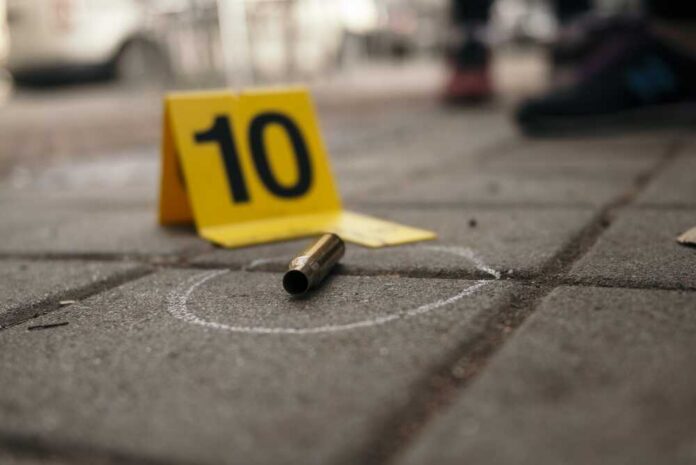
Six Chicago neighbors standing in the summer night air became crime statistics in seconds on North Central Park Avenue — and the way it happened says as much about our politics as it does about our policing.
Story Snapshot
- Six adults were shot at a late-night gathering in Humboldt Park; two men were critically hurt.
- Police say an unknown attacker opened fire on a crowd of more than 100 people, then vanished.
- Reporters quickly labeled it a “mass shooting,” even as key facts like motive and suspects remain blank.
- The case exposes a bigger problem: rising chaos, weak accountability, and political spin replacing common-sense safety.
What Happened On North Central Park Avenue
Chicago police say the shooting started just after 2 a.m. Sunday in the 900 block of North Central Park Avenue, near Augusta Boulevard. A large crowd had gathered outside in Humboldt Park, with some reports putting it at over 100 people packed into the street and sidewalk.
As they stood talking, an unknown person opened fire into the group, hitting six people before fleeing into the night. No one has been arrested as of the latest public reporting.
The gunfire hit four men and two women, all adults. Police and hospital reports show their ages ranging from 33 to 46 years old. Two men, ages 35 and 36, were shot multiple times and rushed to separate hospitals in critical condition.
The other four victims, including a 46-year-old woman and a 34-year-old woman, were taken to area hospitals in good condition and are expected to survive. Detectives in Chicago’s Area Four are now handling the case.
How The Media Framed It As A Mass Shooting
Major outlets did not hesitate to call this a mass shooting. NBC Chicago, the Chicago Tribune, CBS Chicago, and national outlets all used that phrase in their first stories.
The label fit the usual media rule of four or more people shot, but the coverage did not explain that standard, or whether it matched any legal definition. The result was powerful headlines attached to very thin public facts about the attacker, motive, or method.
Some reports called the attack a drive-by, while others simply said an unknown offender opened fire on the crowd. Time stamps also drifted. Local television and print stories placed the shooting just after 2 a.m., at 2:09 a.m., or “around 3 a.m.” depending on which outlet you read.
That kind of wobble is normal in breaking news, but it undercuts trust when politicians later use those same headlines to push talking points about guns or policing.
What We Know Versus What We Do Not Know
The core facts are solid and widely confirmed. Six people were shot at a large outdoor gathering in Humboldt Park. Two men were critically wounded by multiple gunshots. Four other adults, men and women, were hurt but in stable or good condition.
The location, victim ages, and basic medical details all line up across Chicago outlets and national reporting. On the question of “what” happened, the public record is fairly clear.
Six people were shot and injured, two critically, during a drive-by mass shooting early Sunday morning in Chicago’s Humboldt Park neighborhood.
The attack occurred around 2 a.m. in the 900 block of North Central Park Avenue. According to the Chicago Police Department, an… pic.twitter.com/2dXuwQ4P2B
— Matt Robinson (@mattrobinson) July 26, 2026
Almost everything else is fog. Chicago police have not named a suspect or a motive in their public comments. No information has been released about how many shots were fired, what caliber weapon was used, whether one shooter or several took part, or whether the attack came from a car, a sidewalk, or a nearby alley.
Early reports are built on short police statements, not full incident reports, 911 audio, or body-camera video, which leaves big holes in the story.
Why This Matters For Safety, Not Just Statistics
To many national voices, this will be remembered as another line in a weekend shooting count. For residents of Humboldt Park, it is a sign that public order in their own neighborhood walks a very thin line.
This same area has seen other recent shootings, including earlier cases where people were hit during arguments on Division Street sidewalks or gatherings near festival grounds. When crowds cannot gather without the risk of sudden gunfire, that is a failure of government at the most basic level.
From a common-sense view, the missing pieces in this case matter because they block accountability. If the public never sees who fired, how they got the gun, and why they felt bold enough to spray bullets into a crowd, then the system has not answered the only questions that count.
The focus should stay on catching and jailing the person who pulled the trigger, not on recycling talking points that treat criminals and lawful gun owners as the same problem.
What A Serious Response Would Look Like
A serious response would start with facts, not slogans. That means releasing a detailed Chicago Police Department incident summary once it will not harm the investigation, along with 911 timelines and clear descriptions of how the shooter approached the crowd.
It means officers and prosecutors working together to pull surveillance video, match shell casings, and trace any recovered weapon so the shooter faces real prison time, not a quick plea and a quiet return to the street.
Community groups and churches in Humboldt Park have already worked in the past to calm hot corners and steer young men away from gangs and gun crime. That work matters and should be supported. But it cannot replace enforcement.
When someone fires into a peaceful gathering of adults at two in the morning, that is not a cry for help. That is a violent choice.
Sources:
nbcchicago.com, chicagotribune.com, chicago.suntimes.com, youtube.com, blockclubchicago.org, cbsnews.com, abc7chicago.com