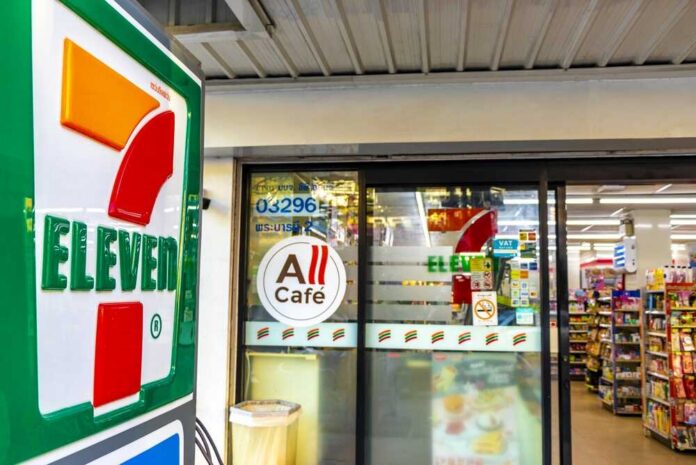
The company that taught America to live on Slurpees and cigarettes is about to rip 645 of its own stores off the map and bet the future on hot food, higher prices, and fewer places to stop.
Story Snapshot
- Seven & i Holdings will close or convert 645 North American 7-Eleven stores in fiscal 2026.
- The company is shifting hard toward bigger, food-focused “Food Forward” locations and wholesale fuel sites.
- Falling cigarette sales, soft spending by lower-income families, and inflation are driving the shake-up.
- The move aligns with a broader pattern of store closures reshaping where working Americans buy fuel and food.
645 stores vanish while a new 7-Eleven takes shape
Seven & i Holdings, the parent company of 7-Eleven, has locked in a plan to remove 645 North American convenience stores during its 2026 fiscal year, which runs from March 1, 2026 through February 28, 2027.
That number comes straight from its earnings filings and has been repeated by major outlets, from USA Today to CBS. These closures will reduce the base to just over 13,000 locations in the United States and Canada, down to about 12,272 convenience outlets by next spring.
7-ELEVEN TO CLOSE HUNDREDS OF U.S. STORES: Convenience store giant 7-Eleven plans to close hundreds of locations across the United States as part of a sweeping restructuring effort.
Full Story: https://t.co/MHACg6KY6t pic.twitter.com/KSbftxLiKD
— The Dallas Express News (@DallasExpress) July 19, 2026
The closures are not a random purge. Seven & i is trying to fix the math of its business. It plans to open about 205 new stores in the same period, but those sites are larger and built around prepared food, fresh items, and broader product ranges.
The company’s own documents frame this as a shift to a “food-centric convenience store” model. That means fewer tiny aisles of sugary snacks and more hot meals that look closer to fast food than a corner bodega.
From cigarettes and cheap snacks to hot food and higher margins
The old 7-Eleven model leaned heavily on tobacco, packaged snacks, and fuel. That mix no longer works the way it used to. Personal spending has softened, especially among lower-income families, as inflation continues to hit household budgets.
At the same time, rivals like Wawa, Sheetz, and Buc-ee’s trained drivers to expect real meals at gas stations, not just a limp hot dog. Seven & i is now chasing that “food-forward” trend because foodservice delivers far better profit margins than fuel.
Underperforming stores sit at the heart of the closure list. Company filings and follow-up reporting show that about 200 locations are being shut down outright for weak performance, while roughly 350 will be converted into wholesale fuel sites run by outside operators.
Another several dozen will close for contract or franchise reasons. In plain terms, the chain is keeping sites that can drive high-margin food and fuel volume and downgrading or eliminating the rest. That might be cold logic, but it tracks with how big retail survives.
What “closure” really means for drivers and workers
The official number, 645, hides some nuance that matters for everyday people. Some of those “closures” will still sell fuel as wholesale sites, just without a 7-Eleven-run store attached. Others will go dark entirely.
The company has not released a public list of affected locations or disclosed how many jobs will be lost. That lack of detail invites suspicion and fear, especially in communities that already feel boxed in by rising prices and fewer choices.
Research on store survival supports one key point: low sales volume is the strongest indicator that a store will eventually shut down. The company says it is targeting underperforming units. On paper, that fits academic findings.
Many will ask a different question: are these closures really about “bad stores,” or about a foreign parent company cleaning up its books before a North American stock listing? Seven & i has delayed and then eyed an initial public offering for this business, and higher margins look great to investors.
A wider wave of closures and a brewing trust problem
7-Eleven’s move is not happening in a vacuum. Analysts expect about 7,900 United States retail stores to close in 2026, and big franchise brands from GameStop to Wendy’s are trimming weak locations and tightening cost structures.
In the convenience retail sector, 7-Eleven has already closed about 444 North American stores in 2024, roughly 3% of its footprint, citing underperformance and changing consumer habits. The 645-store plan is the next stage of that same consolidation push, not a one-off shock.
Seven & i Holdings (parent of 7‑Eleven North America) is executing a major reshaping of its U.S. store footprint in fiscal year 2026. An earlier filing said 645 7‑Eleven stores would be closed; the company’s latest quarterly presentation broke that down: plans to permanently c…
— MarketMoodz Sentinel (@MM_Sentinel) July 20, 2026
That broader pattern feeds a real concern for working and middle-class families. Fewer competing fuel and convenience outlets usually means less price pressure. People who live in rural areas or lower-income neighborhoods often rely on these chains for quick meals and gas on the way to work.
When a corporate board in Tokyo or Dallas decides which sites “do not earn enough,” the human cost rarely shows up in the earnings deck, but drivers feel it at the pump and in their lunch break.
Corporate logic versus franchise pain and consumer power
Critics cite harsh accounts from Australian franchisees to question 7-Eleven’s motives. Media reports described franchise owners who were pushed to sell, then blocked, and left financially ruined, with some calling the process “theft” and a “rip-off.”
Those cases do not directly dispute the North American underperformance data, and United States courts have upheld the company’s franchise system in key rulings. Still, they color public perception: people see a giant brand willing to crush small operators when numbers demand it.
Instead, it means demanding clear information and judging by facts. Seven & i has produced hard numbers on closures, conversions, and openings.
It has not given store-by-store lists or job impact figures. That gap is where anger grows. Free markets work best when customers and communities know what is happening and can push back, boycott, or adapt. Quiet consolidation, done in boardrooms, runs counter to that transparency.
Sources:
foxbusiness.com, finance.yahoo.com, nypost.com, cstoredive.com, restaurantbusinessonline.com, govinfo.gov, abc.net.au, bostonbar.org, dallasexpress.com, cleveland.com, grocerants.blogspot.com, vettedbiz.com, academic.oup.com, linkedin.com, wobm.com