After weeks of chaos in Minneapolis, the Trump White House is pulling 700 federal officers—because local officials are finally helping deport criminal illegal aliens the smart way.
Quick Take
- Border czar Tom Homan announced an immediate withdrawal of 700 federal officers from Minnesota on Feb. 4, 2026.
- The federal footprint drops from nearly 3,000 agents to about 2,000, concentrated around the Twin Cities.
- The drawdown follows what Homan called “unprecedented cooperation” from counties and jails, shifting enforcement from street raids to jail-based transfers.
- The change comes after the January shootings in Minneapolis that killed two U.S. citizens and ignited protests, arrests, and political backlash.
Why the Trump team is scaling back—without ending enforcement
Tom Homan said the administration is withdrawing 700 federal law enforcement officers from Minnesota effective immediately, cutting the deployment from nearly 3,000 to roughly 2,000 agents.
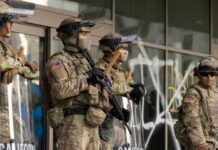
The remaining force will continue focusing on the Minneapolis–St. Paul area, where the operation has been most intense. Homan framed the move as a practical adjustment, not a retreat: fewer agents on the street, more emphasis on coordinated arrests and transfers tied to local jail cooperation.
The operational pivot matters because it changes the public-facing footprint of immigration enforcement. Street-level raids create more risk—risk of confrontations, risk of confusion, and risk of the kind of tragic outcomes that inflame a community and strain legitimacy.
Jail-based handoffs, by contrast, rely on local authorities flagging and transferring deportable criminal inmates already in custody. Homan explicitly tied the drawdown to cooperation that allows targeted enforcement while reducing friction and exposure.
What changed in Minnesota: local cooperation after a public crisis
Federal operations in the Twin Cities intensified in January, and the situation escalated after two U.S. citizens, Alex Pretti and Renee Good, were shot and killed by federal agents in Minneapolis. Reporting across outlets describes protests, clashes, and 158 arrests during the unrest that followed.
As tensions rose, President Trump reassigned leadership, sending Homan to oversee operations and replacing the previous on-scene official, Gregory Bovino, after controversy over the enforcement approach.
Homan’s message in Minnesota has been conditional: cooperation lowers the temperature, and the federal presence can shrink; resistance and disorder keep the pressure on. He has described the new approach as “smart law enforcement,” emphasizing local jail notifications and transfers rather than broad street activity.
Politically, that framing draws a bright line for voters who want order and constitutional governance: enforce immigration law, but do it with coordination and accountability that avoids unnecessary escalation in American neighborhoods.
JUST IN: White House border czar Tom Homan said Wednesday that effective immediately the federal government is withdrawing 700 federal law enforcement personnel from Minnesota. https://t.co/s3ucA6C97y
— The Minnesota Star Tribune (@StarTribune) February 4, 2026
How the new enforcement model works—and why it reduces conflict
The administration’s central claim is that the mission is becoming more focused on removing “criminal aliens” through custody-based processes. In practical terms, that means fewer agents making high-visibility moves in residential areas and more reliance on county cooperation to identify deportable inmates inside jails.
Homan said the drawdown reflects results from that collaboration. He also signaled that further reductions are possible if local cooperation continues and violence and heated rhetoric subside.
That approach also shifts the pressure onto local decision-makers who previously used “sanctuary” positioning to limit collaboration with federal immigration authorities.
Minnesota’s situation is noteworthy because Democrat state and city leadership had been publicly at odds with federal officials amid the shootings and protest response, yet counties and jails reportedly began cooperating more actively. The available reporting does not provide a comprehensive list of participating jurisdictions, so the full scope of cooperation remains unclear.
The unresolved questions: accountability, timing, and what “success” means
Homan has called the operation effective while acknowledging it has not been “perfect,” and major outlets describe the drawdown as part of a de-escalation strategy after what became a political and public-safety flashpoint.
The administration has not set a fixed end date for ending the operation entirely. Instead, Homan and allied reporting tie any broader withdrawal to continued cooperation from local authorities and a sustained reduction in violence and confrontation around enforcement activity.
For conservatives watching the bigger national picture, the Minnesota adjustment highlights a hard reality: local policies can either help restore order or force more federal intervention.
The reporting shows that when county systems cooperate, immigration enforcement can be narrower, safer, and less disruptive—while still carrying out the rule of law. What remains to be seen is whether this model holds if protests surge again or if local leaders reverse course under political pressure.
Sources:
Trump admin to withdraw 700 federal officers from Minnesota: Homan
Trump administration announces the withdrawal of 700 federal agents from Minneapolis
Trump administration will pull 700 immigration officers from Minneapolis