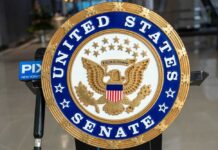
The Senate just turned a little-known Manhattan prosecutor into the most powerful spy boss in America, and it did it in a way that tells you everything about where Washington is headed.
Story Snapshot
- The Senate confirmed Jay Clayton as director of national intelligence in a 51–47 party-line vote.
- Clayton jumps from U.S. attorney and former markets cop to overseeing 18 intelligence agencies.
- He replaces acting director Bill Pulte, whose short, turbulent tenure drew heavy fire.
- The fight over Clayton was less about his résumé and more about power, politics, and the future of national security.
The vote that quietly reshaped America’s intelligence leadership
The United States Senate did something very simple on paper and very explosive in practice. Senators took a recorded roll call and, by a narrow margin of 51–47, confirmed Jay Clayton as the next director of national intelligence. Every Republican voted yes. Every Democrat voted no.
That kind of straight party-line tally is rare for a job that is supposed to rise above politics, especially when that job sits at the top of the country’s spy system.
Clayton’s confirmation ends weeks of uncertainty inside the Office of the Director of National Intelligence. The office had been run by acting director Bill Pulte, a businessman-turned-regulator whose aggressive layoffs and lack of intelligence background made Democrats, and even some Republicans, uneasy.
With the vote, the Senate traded a controversial temporary leader for a permanent director who has spent more time on Wall Street and in courtrooms than in classified briefings.
Who Jay Clayton is and why Trump wanted him in the job
Jay Clayton did not come out of the traditional intelligence pipeline. He built his name as a corporate lawyer, then as chairman of the Securities and Exchange Commission during President Trump’s first term, and later as United States attorney for the Southern District of New York, one of the toughest federal posts in the country.
In Manhattan he chased terrorists, cartels, and major national security threats, which gave him hands-on experience with the kinds of cases that touch intelligence every day.
BREAKING: The Senate has confirmed Jay Clayton as the new Director of National Intelligence, succeeding Tulsi Gabbard, in a 51–47 party-line vote. pic.twitter.com/iASzNpKY6b
— Breaking911 (@Breaking911) July 28, 2026
President Trump clearly wanted someone he knew and trusted in the director’s chair. The White House praised Clayton as “exactly the right leader” to strengthen the intelligence community, stressing his work against terrorism and organized crime and his mix of government and private-sector experience.
That résumé checks important boxes: tough on crime, comfortable in markets, and used to operating under pressure. From the president’s view, it means an adviser who understands both national security and how intelligence affects the economy.
Why Bill Pulte’s acting stint made this confirmation feel urgent
The path to Clayton ran through Bill Pulte, and that detour helped turn a routine confirmation into a high-stakes fight. Pulte, known more for housing and regulation than spycraft, stepped in as acting director after Tulsi Gabbard resigned.
Once in the chair, he quickly launched layoffs inside the intelligence office, cutting hundreds of jobs in the name of streamlining a bureaucracy many see as bloated and politicized.
Democrats said Pulte’s shake-up went too far, too fast. They worried he was tearing down analytic capacity and weakening foreign surveillance programs just as threats from China, Russia, and Iran were growing. Some Republicans quietly agreed that downsizing was good, but chaos was not.
That pressure helped create a strange consensus: whatever people thought of Clayton, almost everyone wanted somebody permanent, confirmed, and more experienced than Pulte running the shop before the next crisis hit.
The hearing fireworks: 2020, loyalty, and the politicization question
Clayton’s Senate Intelligence Committee hearing should have been dry. His job is mostly about foreign threats and managing agencies, not domestic politics. Yet much of the questioning centered on the 2020 election and whether he would clearly say who won. Clips from the hearing showed him dodging that direct answer, which angered Democrats and became cable-news fodder for days.
The Senate has confirmed Jay Clayton as director of national intelligence in a 51-47 vote, filling a key national security post.https://t.co/gZtJizYRWS
— Yoopya (@yoopya) July 29, 2026
For many on the left, that refusal signaled he was too aligned with President Trump and not independent enough to run intelligence. For many conservatives, it looked like a man refusing to play along with a political script. The core legal duty of the director is to provide honest information to the president, not to satisfy media demands.
That does not mean the questions were silly; it does mean the loudest controversy was about symbolism, not surveillance laws or threat assessments, where the real power sits.
The stakes: 18 agencies, surveillance fights, and a test of governance
Clayton now oversees 18 different intelligence agencies, from the Central Intelligence Agency and National Security Agency down to smaller offices in the State and Treasury Departments. He is the president’s main intelligence adviser, which means his daily briefings can shape decisions on war, trade, cyber, and diplomacy.
He also inherits stalled fights over foreign surveillance authorities, which had been tangled up during Pulte’s acting tenure and alarmed national security hawks in both parties.
This appointment is a test of a bigger idea. They argue that security can be strong without bloated bureaucracy, that someone with real-world legal and markets experience can cut through institutional games and give the president clear, apolitical facts.
Critics fear the opposite: that a loyalist director could filter or tilt intelligence to match political goals. The truth will show up in the next crisis, not in the hearing clips. What matters now is whether Clayton runs the office with discipline, keeps career analysts on mission, and resists pressure from any side to turn intelligence into a campaign tool.
Sources:
cnbc.com, en.wikipedia.org, whitehouse.gov, nbcnews.com, politico.com, abcnews.com, youtube.com, nytimes.com