

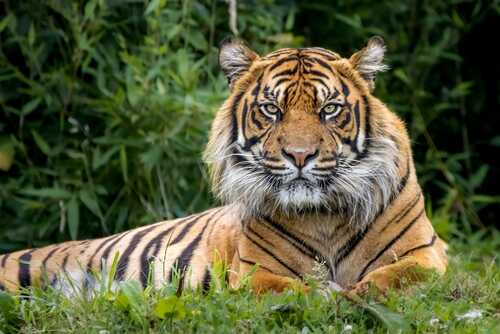
A 19-year-old farm worker died after a captive tiger mauled him during a TikTok video shoot in Lahore, Pakistan, and police have arrested the influencer and farm owner behind the stunt.
Story Snapshot
- Talha, 19, died after a tigress attacked him at a private breeding farm in Lahore’s Kahna area during a TikTok filming session.
- Police arrested influencer Noman Hassan and farm owner Fayyaz, accusing Hassan of taking the animal out of its enclosure for the shoot.
- Officials say Hassan tried to tell hospital staff the wounds came from a dog, not a tiger.
- Authorities sealed the farmhouse, filed charges under Pakistan’s criminal and wildlife laws, and moved the animal to the custody of the Punjab Wildlife Department.
A Video Shoot Turns Deadly At A Private Animal Farm
Talha worked at a private animal-breeding farmhouse in Lahore’s Kahna area. On November 11, police say Noman Hassan, a social media influencer with a large following, arrived to film content involving a big cat. During the shoot, the animal attacked Talha, leaving him with deep wounds to his neck and back.
Talha was rushed to a private hospital, where he later died from his injuries. His father, Munir Ahmed, filed a complaint naming Hassan and farm owner Fayyaz. The complaint claims Hassan had the tigress removed from her cage specifically so Talha could take part in filming.
Police backed up that account, stating that Hassan took the animal out of its enclosure during production. Talha’s father and brother, who also worked at the farm, are named as witnesses to the attack, though their full statements have not been made public.
An Alleged Cover-Up And Swift Police Action
Before the real cause became clear, reports say Hassan tried to tell hospital staff the injuries came from a dog attack. Authorities later determined a large wild cat was responsible. That alleged attempt to disguise the cause adds a troubling layer to an already reckless scene, suggesting an effort to dodge accountability rather than own up to what happened.
Lahore police moved fast. They arrested both Hassan and Fayyaz, sealed the farmhouse, and registered a case under Pakistan Penal Code sections covering negligence and endangering life, along with the Punjab Wildlife Act. The tiger was handed over to the Punjab Wildlife Department. Early police statements referred to the animal inconsistently, at one point calling it a “lioness attack” while releasing a photo that appeared to show a tiger.
The Punjab Wildlife Department offered a separate detail, saying Talha was attacked while feeding the animal inside its cage, rather than after it was removed for filming. That single point of disagreement over the exact sequence remains open, even as the core facts of the death, the arrests, and the charges are not in dispute.
A Pattern Of Risky Content Involving Apex Predators
This case fits a familiar and troubling mold. Social media rewards shock value, and dangerous animal encounters generate views precisely because they feel unscripted and extreme. Research tracking big-cat content on platforms like YouTube found dozens of videos featuring influencers in close contact with predators, often with messaging that downplays the real risk to both animals and people.
Pakistan’s wildlife laws technically restrict private ownership of animals like tigers to licensed, accredited situations. Yet enforcement has been described as inconsistent, allowing private breeding farms and menageries to operate in legal gray zones, particularly among those with money and influence. That gap between the law on paper and the law in practice is exactly where a 19-year-old ended up paying with his life.
A teenager has been attacked and killed by a pet tiger at a private farmhouse in Lahore, Pakistan.
The incident occurred while a social media influencer was shooting a dangerous TikTok video on the premises.
The teenager, an employee at the farm, sustained critical injuries and… pic.twitter.com/ZdawxhSqIc
— GDN Online (@GDNonline) November 15, 2026
Common sense says a wild tiger does not belong anywhere near a content shoot, no matter how many followers are waiting for the next viral clip. Whether the animal was pulled from its cage or encountered inside it, the underlying decision to put an untrained young worker in close proximity to an apex predator for entertainment was the real danger. Platforms that profit from this kind of content, and the influencers chasing clicks with it, share responsibility for normalizing it.
Pakistani authorities now face pressure to show that arrests translate into real accountability. The case will likely hinge on physical evidence, including video files from the shoot, medical records, and the animal’s housing history, to settle the remaining question of exactly how Talha came into contact with the tiger that killed him.
Sources:
ibtimes.co.uk, meridian.news, k24.digital, newsbytesapp.com, hindustantimes.com, ndtvprofit.com, dexerto.com, faunalytics.org, open.journals.ed.ac.uk