
President Trump put a bounty on taxpayer fraud and invited every American—including reporters—to claim it.
Story Snapshot
- Trump announced a Fraud Whistleblower Incentive Program with a 1% commission promise on recovered fraud money.
- Reports describe a $25 million federal initiative, with tips flowing through a government site for fraud reports.
- Eligibility extends to all citizens and independent journalists, subject to outlet approval for reporters.
- A first public payout of $10,000 went to creator Nick Shirley at the White House event.
Trump’s Pledge: Pay Citizens Who Expose Fraud
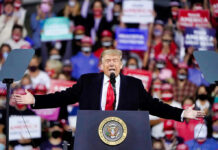
President Trump told the country he wants help catching fraud against taxpayers, and he is willing to pay for it. At the White House, he said tipsters who spark a government recovery would get a 1% commission. He named big numbers to make the point: find a billion, earn a percent. He framed the mission as simple and patriotic—turn private knowledge into public savings. He said reporters could join too, if their outlets allow it, putting the press on the same playing field as any citizen.
The White House and allied reports described the program’s channel and scope. Tips would go to a federal fraud site. Coverage identified a $25 million funding pool and the Department of Justice as the administrator in program descriptions. That setup gives a front door for leads and a home base for case review. The promise targeted waste, fraud, and theft that hit federal programs and taxpayers across the country, not narrow insider-only cases.
How the Reward Works—and Where Details Diverge
Trump spoke in plain terms: bring the fraud, get 1% of the money the government recovers. Public materials, however, also referenced award caps up to $30,000 and different triggers tied to criminal charges or enforcement. That creates tension between the sweeping 1% promise and more modest caps or conditions. Trump also said charges were not required if money was recovered, which adds one more moving part to the trigger for payment.
He further said he would decide who is “deserving” and act as the decision-maker if disputes arise. That is a notable design choice. Traditional whistleblower systems rely on clear rules, agency review, and appeal paths. Trump’s hands-on role could speed decisions and keep focus on results. It could also invite hard fights over credit when many people touch the same case, a common challenge in complex fraud matters.
First Check Cut, Big Claims Teed Up
A first public payment landed the same day. Conservative YouTuber Nick Shirley appeared at the event and received $10,000. That check signaled this is not only talk but an operating effort. The coverage did not detail which case tied to the check, how the amount was set, or the recovery math behind it. Still, the optics matched the message: show up with evidence, get paid, and send a signal to the rest of the country to do the same.
BREAKING: 🇺🇸 President Trump unveils a $25 million Fraud Whistleblower Incentive Program that pays tipsters a 1% commission on fraud they help uncover.
If you report $1 billion worth of fraud, you get $10 million.
Trump says there's no limit on the payout. pic.twitter.com/KRkK4mGOro
— Futures Max (@FuturesMax) October 21, 2026
The idea of paying whistleblowers is not new. Congress and agencies have long used rewards to bring hidden facts into the open. The False Claims Act lets private citizens sue on behalf of the government and share in the result. Those cases have driven a large share of federal recoveries. From 1987 to 2005, whistleblower-led cases accounted for about 64% of all False Claims Act settlements and judgments by dollars, underscoring the power of aligned incentives.
What Success Would Look Like—And Why It Matters
Clear rules, steady funding, and fast processing would define success here. Citizens need to know where to send tips, what evidence counts, how the government gives credit, and when a payment will arrive. The reward should tie to money recovered and deposited back to taxpayers. That is common sense and lines up with conservative views on accountability: pay for results, not for noise. A working program would expand the eyes and ears on federal spending and push cases to agencies that can act.
Tight design choices also matter. A program that welcomes journalists must protect editorial independence while honoring the same standards for proof and credit. A system that allows multiple tipsters must sort out originals from echo submissions. And a promise of 1% must match funding and law. These are solvable tasks with written rules, public guidance, and a record of recoveries. Get those right, and the program turns outrage over fraud into a steady stream of wins for taxpayers.
Bottom Line
Trump opened the door for every American to help catch fraud and get paid for it. The podium promise was big and plain, and the first check gave it life. The next step is the grind: publish the rules, track the recoveries, and prove the payouts line up with real money clawed back. If the system rewards honest tips and delivers fast, citizens get cash, agencies get cases, and taxpayers get relief.
Sources:
cbsnews.com, inquirer.com, washingtonexaminer.com, thegatewaypundit.com, usatoday.com, yahoo.com