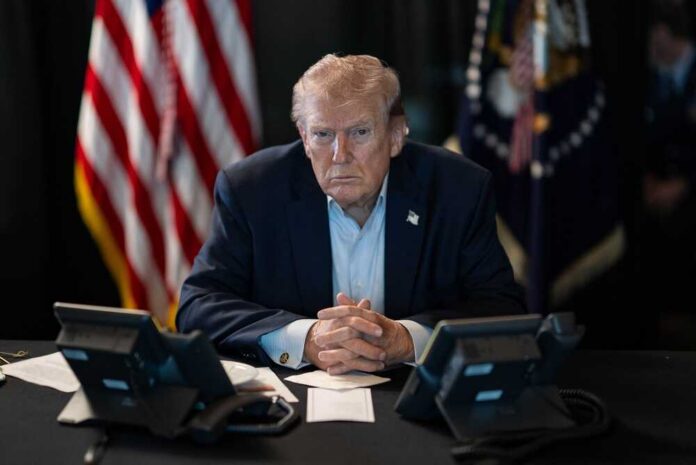
President Trump issued a stark ultimatum to Iran on March 30, 2026, threatening to obliterate the nation’s critical oil infrastructure—including Kharg Island, which handles 90% of Iranian crude exports—unless Tehran immediately reopens the Strait of Hormuz and ends the ongoing conflict.
Story Snapshot
- Trump threatens destruction of Iran’s Kharg Island oil hub, oil wells, and power plants via Truth Social if no deal is reached soon
- Iran’s closure of the Strait of Hormuz, which controls 20% of global oil trade, has triggered the high-stakes standoff
- Negotiations show “great progress” with a purported “more reasonable regime” in Tehran, but no direct talks have occurred
- U.S. has proposed a 15-point deal covering Strait access, ending the war, and halting Iran’s nuclear program
Trump’s High-Stakes Ultimatum Targets Iran’s Economic Lifeline
President Trump posted on Truth Social, warning that the United States would destroy Iran’s Kharg Island oil export terminal, oil wells, electric generating plants, and potentially desalination facilities unless Iran agrees to reopen the Strait of Hormuz immediately and end the war.
Trump stated negotiations with Tehran were showing “great progress” but emphasized critical infrastructure had been “purposefully not yet ‘touched'” as leverage. The threat represents an unprecedented escalation tying Iran’s primary economic asset—Kharg handles exports mainly to China and Asian markets—directly to resolving the Strait blockade.
REAKING: U.S. President Donald Trump has said the U.S. will “completely” obliterate Iran’s electric generating plants, oil wells and Kharg Island if the Strait of Hormuz is not “immediately” reopened and a peace deal is not reached “shortly.”
🔗Read more: https://t.co/dG1nfLGuK7 pic.twitter.com/azOpIijt5Q
— CNBC International (@CNBCi) March 30, 2026
Strait of Hormuz Closure Threatens Global Energy Markets
Iran’s restriction of tanker traffic through the Strait of Hormuz has created a critical chokepoint affecting global oil supplies. The 24-kilometer-wide waterway handles approximately 20% of the world’s oil trade, making its closure a direct threat to energy security for allies and Asian economies reliant on Middle Eastern crude.
Trump reported that Iran permitted 10 oil tankers to transit on March 26 as a goodwill gesture, later increasing the number to 20 starting March 27, signaling Tehran’s willingness to negotiate while maintaining leverage over global shipping routes.
Fifteen-Point Proposal Demands Nuclear Concessions
The Trump administration submitted a 15-point proposal to Iran addressing the reopening of the Strait, ending hostilities, and halting Iran’s nuclear weapons program. Iranian Foreign Ministry spokesperson Esmail Baghaei confirmed receipt of the proposal but denied any direct negotiations between Washington and Tehran are occurring, indicating talks proceed through intermediaries.
Trump referenced an unspecified “expensive, energy-related concession” from Iran on March 24, though details remain undisclosed. The proposal reflects conservative priorities of preventing nuclear proliferation while protecting American energy interests and maintaining strength through military positioning inside Iran.
Economic and Strategic Implications for American Interests
Destruction of Kharg Island would cripple 90% of Iran’s oil exports, delivering severe economic consequences to the regime while potentially spiking global oil prices in the short term. For American families already burdened by years of inflation from previous administrations’ fiscal mismanagement, any disruption risks higher energy costs at the pump.
However, Trump’s strategy aims to force Iran’s capitulation quickly, preventing prolonged conflict and securing the Strait’s permanent reopening. The threat of targeting desalination plants raises humanitarian concerns but underscores the administration’s determination to end Iran’s asymmetric warfare tactics that threaten freedom of navigation and global commerce.
The administration’s approach reflects a clear departure from weak diplomatic posturing that allowed adversaries to exploit American restraint.
By maintaining military forces inside Iran and explicitly identifying targets that fund Tehran’s regime and nuclear ambitions, Trump applies maximum pressure to achieve what matters most: protecting American interests, securing global energy flows, and preventing a nuclear-armed Iran.
Iran’s choice remains simple—accept reasonable terms to end the conflict and restore normal commerce, or face the complete dismantling of its economic infrastructure. This decisive stance resonates with Americans tired of endless Middle Eastern entanglements and globalist policies that prioritize adversaries over national security.
Sources:
Trump threatens to obliterate Iran’s Kharg Island oil hub if no deal reached shortly