A Russian bomber roared low over Britain’s flagship carrier and scattered underwater “ears” around it, turning a routine NATO drill off Iceland into a quiet test of nerve between nuclear powers.
Story Snapshot
- Russian Tu-142 “Bear-F” patrol aircraft flew low and close to HMS Prince of Wales during NATO operations.
- The plane dropped a swarm of sonobuoys, underwater listening devices, near the British carrier.
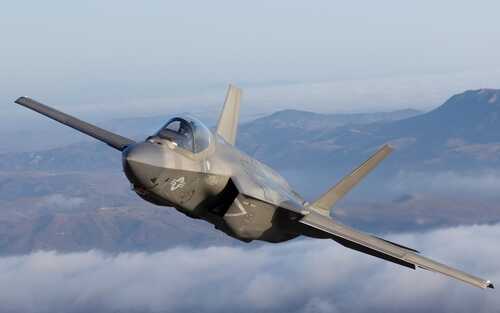
- Two British F-35 jets scrambled from the carrier to intercept and escort the Russian aircraft away.
- The United Kingdom Ministry of Defence condemned the conduct as “unsafe and unprofessional.”
What actually happened in the High North showdown
Britain’s carrier strike group was operating in the Norwegian Sea as part of Operation Firecrest, a NATO air defence and deterrence mission in the High North when the incident occurred. The Russian aircraft involved was a Tu-142 “Bear-F,” a long-range maritime patrol plane designed to hunt submarines and spy on fleets.
According to the United Kingdom Ministry of Defence, it repeatedly approached HMS Prince of Wales at low altitude and “unnecessarily close,” creating real collision and wake turbulence risks during ongoing flight operations.
Russian aircraft intercepted by RAF jets after 'repeatedly approaching' Royal Navy ships in the Arctic https://t.co/1uFbIfsA6w
— Daily Mail (@DailyMail) July 6, 2026
The Bear-F did more than just fly close. The aircraft dropped a “large number” of sonobuoys in the water near the carrier, described by British officials and defence outlets as tens of devices. Sonobuoys are small, expendable sensors that float and listen for submarine noise.
They send data back to the aircraft. Dropping many of them around a carrier amounts to taking a detailed picture of NATO underwater activity near one of its most valuable assets.
How the British response unfolded in real time
British forces tried to contact the Russian crew over international safety radio frequencies. The Ministry of Defence says the aircraft did not respond, even as it flew close to a busy deck where jets were launching and landing.
At that point two F-35 jets, the United Kingdom’s stealth fighters based on HMS Prince of Wales, scrambled. They intercepted the Tu-142 and flew close escort, staying with it until it finally left the area and broke off from the carrier group.
United Kingdom officials later issued an unusually sharp statement. They called the Russian behaviour “unsafe and unprofessional” and highlighted the risk of approaching a carrier conducting flight operations at low level.
Multiple outlets from Reuters to the BBC and defence trade sites echoed the language, reinforcing the official framing that this was not a standard shadowing mission but a dangerous stunt that crossed safety lines in a tense region.
Why sonobuoys and altitude matter more than most headlines admit
The altitude and the sonobuoys turn this from “routine Russian snooping” into something more serious. A big four-engine bomber flying low over cold, choppy seas near a moving carrier has very little margin for error if something goes wrong.
Any sudden manoeuvre, downdraft, or misjudged turn can put a 185-foot aircraft uncomfortably close to a warship packed with fuel, ammunition, and people. That is why aviators treat low-level passes near carriers as high-risk behaviour.
The High North is a region of strategic importance, where @NATO Allies continue to operate together to preserve security and stability, as part of Arctic Sentry.
While conducting routine operations in the Norwegian Sea, the UK's Carrier Strike Group encountered repeated activity… pic.twitter.com/QRBC6vvn5L
— NATO Allied Joint Force Command Norfolk – JFCNF (@JFCNorfolk) July 7, 2026
The sonobuoys add a second layer. They are not harmless junk. They help Russia map where NATO submarines might be, how noisy the carrier group is underwater, and how well allied ships can be tracked.
Doing that right next to the flagship broadcasts a message: Moscow is willing to probe NATO’s defences even during major allied exercises. For many, this looks less like random bravado and more like strategic testing of Western resolve and readiness.
Pattern of Russian probing and NATO’s deterrence message
This encounter is not a one-off. Research on Russian military intrusions into United Kingdom air and sea space shows a steady pattern of air forays in the North Sea and High North over the last two decades, with multiple intercept days each year.
NATO jets were scrambled four times in one week in April to intercept Russian aircraft that flew without flight plans and with transponders turned off over the Baltic Sea. In that context, the Bear-F’s pass near HMS Prince of Wales looks like part of a broader strategy of pressure and signalling.
NATO and the United Kingdom also sent their own message. The quick launch of F-35s from the carrier and the very public condemnation signal that allied forces will not simply ignore such moves, even if they stop short of open conflict. The timing matters too.
The incident came just before a NATO meeting where allies planned to pledge tens of billions of euros in military aid to Ukraine. By calling the manoeuvres unsafe and showing fighters escorting the Bear-F away, London reminded both Moscow and its own voters that hard power and serious defence spending still have a real purpose.
Sources:
cbsnews.com, independent.co.uk, reddit.com, youtube.com, instagram.com, x.com