
Senior officials once promised America could watch a firing squad online—now they may pull the plug.
At a Glance
- Pentagon officials said the execution would be livestreamed and set a date at Fort Hood.
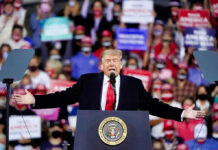
- Defense Secretary Pete Hegseth and President Trump signaled support for public viewing.
- Vice President JD Vance and other leaders cast doubt and urged restraint.
- Legal limits and global backlash raised hard questions about authority and prudence.
What Was Promised, Where, and When
Pentagon officials told major outlets that the execution of Nidal Hasan would be livestreamed, not rumored but on the books, with a firm date and place: December 3, 2026, 1 p.m. Central Time, at Fort Hood, Texas. That clarity mattered. It converted a policy idea into a scheduled event. It linked the punishment to the crime scene, which supporters argued carried moral weight and a message to future attackers.
The Pentagon’s plan to livestream the execution of Nidal Hasan, the Fort Hood shooter who killed 13 people and wounded 32 in 2009, is now under debate.
Defense Secretary Pete Hegseth said the execution would be broadcast. President Trump has approved a firing-squad execution,… pic.twitter.com/iZnT1AnE2R
— Armstrong Williams 🇺🇸 (@Arightside) October 14, 2026
Defense Secretary Pete Hegseth said the public would be able to watch and framed it as deterrence. President Trump said he approved the plan, and reporting noted that Acting Army Secretary Adam Telle issued the execution order by firing squad. For a brief window, the government’s on-record statements suggested an unprecedented, first-in-the-internet-age public execution was greenlit and imminent.
Why The Brakes Came On
Senior voices inside the administration and Congress started pushing back. Vice President JD Vance said he did not know if the livestream would happen and said he would not watch it. Several Republicans who back the death sentence opposed a broadcast on moral and strategic grounds. They argued public streaming looks like what jihadists do and could hand terrorists a recruiting clip on a silver platter. The chorus signaled not softness on justice, but skepticism about turning justice into a show.
The legal footing also looked shaky. Analysts pointed to military regulations that tightly limit who can witness an execution. They warned that no clear authority had been cited to beam it to the world, and they flagged possible claims under the Eighth Amendment and Article 55 of the Uniform Code of Military Justice. A plan that lacks a clean legal lane invites a court fight that could delay the sentence and muddle the message.
Deterrence, Dignity, And America’s Standard
Supporters said showing the execution would deter future mass killers. That claim needs evidence, not just instinct. Leading reviews from the National Academies and justice researchers have long found the deterrent effect of executions on homicide is uncertain, mixed, or not proven. A deterrence promise without data is a weak shield against the real risks: copycat martyrdom narratives, enemy propaganda, and desensitizing the public to state force—all of which cut against conservative principles of order, duty, and solemn justice.
America moved executions behind walls in the last century to avoid carnival atmospheres. Returning to a mass audience would be a radical break. Global pushback arrived fast. The European Union warned platforms not to carry the feed. The United Nations human-rights office said livestreaming would be tantamount to a public execution and could breach the ban on torture. Outsiders do not set U.S. policy, but their reaction previewed days of headlines that would frame the act as spectacle, not strength.
What A Conservative, Workable Path Looks Like
Justice must be certain, not theatrical. The government should keep the execution date while maintaining controlled witness access under law. If leaders still see value in transparency, they can expand pool reporting within existing limits and release a written, time-stamped account vetted for accuracy. If they believe a broader audience is essential, they should first publish the legal authority, the waiver, and the rules of viewing, and show a threat assessment weighing propaganda risks against any credible deterrence gain. That is accountability without courting a circus.
The Bottom Line
The early promise of a public livestream collided with legal constraints, platform realities, and a bipartisan instinct that justice should be firm but not performative. The administration appears to be reassessing, and that is wise. Punishment should speak softly and carry the weight of law. When the goal is to deter evil and honor the victims, the surest signal is a sentence carried out with clarity, restraint, and the confidence that comes from doing it by the book.
Sources:
cbsnews.com, bbc.com, apnews.com, abcnews.com, militarytimes.com, nationalsecurity.law.georgetown.edu, nbcdfw.com, france24.com, reuters.com, bbc.co.uk, nij.ojp.gov