
Washington moved fast after reports that a Russian plague researcher died, with offers to help and eyes on the data.
Story Snapshot
- President Trump said the United States would help Russia and is closely watching the case.
- The State Department and the Centers for Disease Control and Prevention (CDC) said they are monitoring the situation with partners.
- The World Health Organization (WHO) engaged Moscow and offered support while tests proceed.
- Nearly 200 contacts were reportedly quarantined and monitored in Siberia, in line with standard precautions.
What Washington Said And Why It Matters
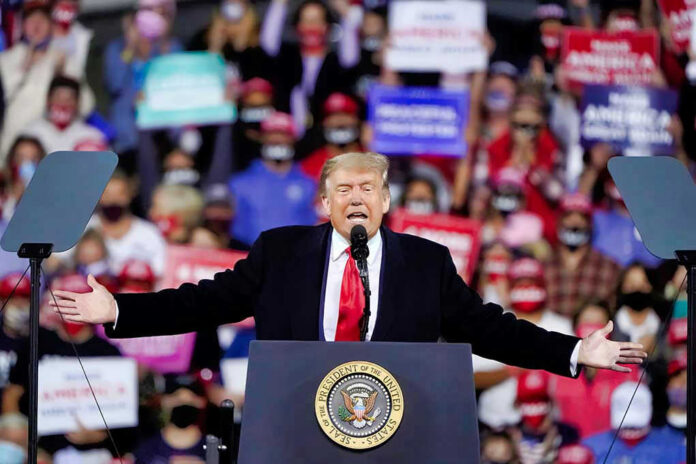
President Trump told reporters the United States would help Russia after questions about a reported fatal case tied to a plague institute in Siberia. He added that the administration is looking at the situation “very strongly” and will help “as much as we can”. The State Department said it is aware of the reports and is coordinating with the Centers for Disease Control and Prevention. That pairing signals an interagency approach built for speed and caution, not politics.
The State Department’s messaging urged prompt, accurate information sharing and stressed that many details were not yet confirmed. That tone fits the playbook for cross-border health risks. Move quickly, pull in the right experts, and keep the public grounded in facts. The Centers for Disease Control and Prevention confirmed it was closely monitoring the case alongside diplomats. That matters because it ties foreign policy to concrete public-health expertise, not just press lines.
What Moscow And Geneva Are Doing
The World Health Organization said it had contacted Russian authorities, noted that testing was underway, and offered support if needed. Russian officials publicly described the situation as under control while international outlets reported quarantine and monitoring of close contacts. Reports cited nearly 200 people under observation, which matches standard containment steps after a suspected pneumonic plague exposure. Early case isolation and contact checks buy time while labs work.
The Kremlin did not reject U.S. help. Reports said the offer was welcomed, though no details were shared on next steps or requests. That diplomatic opening leaves room for technical exchanges, such as diagnostics, data standards, or biosafety advice, if Moscow seeks them. Under global norms, national health authorities lead at home, while partners and the World Health Organization stand by to support when asked.
Why This Response Tracks The Outbreak Rulebook
Outbreaks rarely arrive with clean labels. Health agencies act on signals, then verify. The World Health Organization’s guidance calls for rapid verification, tight case definitions, and clear data on time, place, and person. Surveillance is enhanced in the first days to catch any spread early. That is why officials used words like “reported” and “suspected” while still moving to monitor and offer assistance. Speed first, certainty later is responsible practice when dealing with fast-moving respiratory threats.
The United States framed its posture as precautionary and cooperative. That reflects common-sense risk control and conservative governance: protect borders, keep the economy open, and avoid panic by sticking to facts. The public line pushed for accurate, timely data from Russia. That demand is not a jab; it is the baseline for joint health security. Transparency helps everyone distinguish a lab accident, a single fatal illness, or a wider problem, and it ensures any response is right-sized, not heavy-handed.
The Concrete Stakes At Home And Abroad
U.S. monitoring means watch lists at ports of entry, faster alerts to hospitals, and sharper lab readiness if needed. None of that shuts travel or commerce by default. It simply keeps the net tight. If Russia’s tests point to pneumonic plague, antibiotics and swift care save lives. If they point elsewhere, the same steps still work. The process is the point: verify the cause, protect contacts, and share data with partners to avoid blind spots that can grow into crises.
10 AM Top-of-the-Hour News
The White House is looking for more answers about the possible plague case in Russia. Worldwide News Network's Stacy Lyn is in Washington.: “President Trump says he is expected to speak with Russian President Vladimir Putin possibly today about a… pic.twitter.com/LtbeDWkYi8
— Worldwide News Network (@WorldwideNNX) October 7, 2026
Presidents set the tone, and tone matters. Trump’s “we’ll help” blends firmness with pragmatism. Offer help, demand clarity, and keep options open. That is how you defend the homeland without turning every foreign incident into a fire drill. The World Health Organization’s back-and-forth with Moscow, the State Department’s call for accurate reporting, and the Centers for Disease Control and Prevention’s tracking form a simple chain: see the signal, test the claim, and act only as far as facts require.
Sources:
bbc.com, cnbc.com, reuters.com, globalbankingandfinance.com, thehill.com