
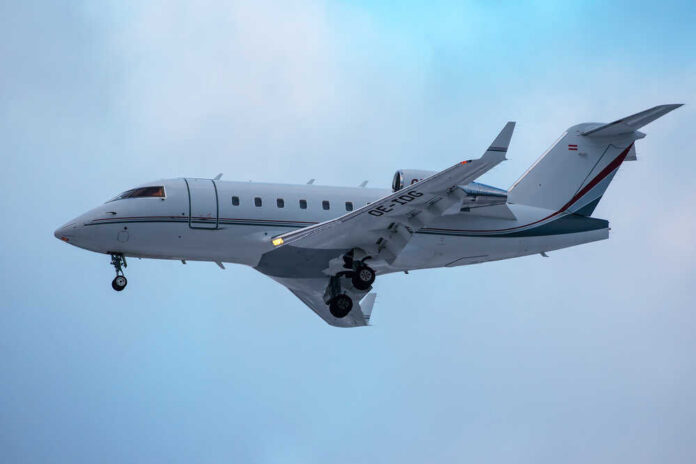
The loudest warning shot in the Cuba story isn’t a missile or a speech—it’s a set of U.S. aircraft broadcasting their presence on public flight trackers just 40 miles off the shoreline.
Quick Take
- Public aviation data shows at least 25 U.S. intelligence-gathering missions near Cuba since Feb. 4, 2026, a sharp break from prior patterns.
- Flights included Navy P-8A Poseidon, Air Force RC-135V Rivet Joint, and MQ-4C Triton drones operating near Havana and Santiago de Cuba.
- The missions appeared “overt” by design, visible on commercial trackers, which changes the political meaning of routine reconnaissance.
- The surge coincided with President Trump’s tougher Cuba posture: sanctions expansion, an oil blockade order, and rhetoric framing Cuba as a national security threat.
A surveillance surge that looks intentional because the public can see it
U.S. reconnaissance flights have long circled global hotspots, but the detail that changes the temperature here is visibility. A CNN analysis of public flight-tracking data described at least 25 intelligence missions since February 4, 2026, operating unusually close to Cuba—sometimes within about 40 miles of shore.
That distance matters because it keeps flights in international airspace while still feeling personal to Havana. Frequency matters even more, because it normalizes pressure through repetition.
These aircraft aren’t sightseeing. The Navy’s P-8A Poseidon specializes in maritime patrol and tracking activity at sea. The Air Force’s RC-135V Rivet Joint is built to vacuum up signals intelligence—communications, radar emissions, and electronic patterns that reveal what a military is doing even when it says nothing.
The MQ-4C Triton drone adds long-duration, high-altitude persistence. Put together, they paint a map of Cuba’s air defense habits, coastal movements, and outside support networks.
Why “overt” intelligence flights carry a sharper message than covert ones
Intelligence work usually tries not to advertise itself. When flights show up repeatedly on public trackers, two realities collide: the legal right to fly in international airspace and the political impact of a neighbor watching your front door.
The report emphasized how rare this level of public, near-coast activity had been before February. That rarity is the tell. If the pattern had been constant for years, it would be background noise. A sudden spike becomes a signal.
Signals matter because they shape choices without firing a shot. Cuban leaders can’t pretend they don’t see the aircraft when ordinary citizens can see them too.
U.S. decision-makers also know adversaries see them—Cuba, plus any Russian or Chinese personnel and equipment supporting Cuban surveillance.
The message to that broader audience is simple: the U.S. can monitor, identify, and if ordered, target activity in and around the island with little notice.
U.S. military intelligence-gathering flights have surged off Cuba's coast in recent months, with at least 25 such missions tracked since Feb. 4, according to an analysis of publicly available aviation data. https://t.co/Kob1N5gnWm
— NEWSMAX (@NEWSMAX) May 11, 2026
The political timing: rhetoric, sanctions, and blockade talk, tightening the vise
The surge didn’t arrive in a vacuum. The timeline described Trump reposting a comment in January about visiting a “free Havana” before leaving office, followed by moves framed as escalating pressure: an oil blockade order and expanded sanctions touching security, finance, defense, and energy sectors, plus language declaring Cuba a national security threat.
A flight campaign beside those steps reads less like routine collection and more like enforcement preparation—at minimum, collecting the data you want before you escalate.
If the goal is to warn Cuba off deeper cooperation with Moscow or Beijing, visibility amplifies deterrence. If the goal is to tighten an oil blockade, persistent maritime and signals coverage helps identify shipments, patterns, and potential evasion. The open concern is miscalculation: pressure can deter, but it can also corner.
Historical echoes from Venezuela and Iran, plus the Cuba memory Americans never forget
The analysis compared the pattern to earlier surges near Venezuela in 2019 and Iran in 2019–2020, when U.S. reconnaissance increased ahead of major confrontations.
That doesn’t prove the same endgame here, but it does establish a familiar playbook: expand intelligence collection, demonstrate presence, then leave opponents guessing what comes next.
Americans old enough to remember the Cold War have muscle memory; they also hear a louder echo—Cuba as the perennial tripwire 90 miles from Florida.
That proximity is not trivia. A crisis near Cuba compresses reaction time, media attention, and domestic politics into a tight loop. Florida’s communities, Cuba’s diaspora, and Washington’s national-security establishment all pull on the story in different directions.
The flights operate legally in international airspace, but legality doesn’t lower emotion. The U.S. learned in past decades that the island’s symbolism can inflate even small moves into a test of resolve.
What to watch next: patterns, not headlines
The report described “no intercepts” and didn’t confirm any post-report escalation, which keeps this in the gray zone: real pressure, short of open conflict. The smartest way to follow it is to track consistency.
Do missions keep coming at the same pace? Do they cluster near Havana versus Santiago de Cuba? Do aircraft types shift toward more maritime patrol versus more signals collection? Changes in the mix can hint at shifting objectives—blockade monitoring, air-defense mapping, or broader regional messaging.
READ NOW: US Spy Flights Surge off Cuban Coast — U.S. military intelligence-gathering flights have surged off Cuba's coast in recent months, with at least 25 such missions tracked since Feb. 4, according to a new report of publicly available…https://t.co/ANj82yCkj5
— Top News by CPAC (@TopNewsbyCPAC) May 10, 2026
Americans should demand two things at once: strength that discourages hostile footholds near our shores, and discipline that avoids stumbling into a crisis through theatrics.
Overt flights can be a steady deterrent if paired with clear policy and a defined end state. They become a gamble if they exist mainly to create drama.
The next chapter won’t be written by one viral map screenshot; it will be written by whether this “new and deviant” tempo becomes the new normal.
Sources:
U.S. intensifies intelligence-gathering off Cuba: report
U.S. intensifies intelligence-gathering off Cuba: report