
A government rule that demands nonstop secure contact turned a football weekend into a national argument about judgment, optics, and who pays the bill.
Story Snapshot
- Homeland Security said Secretary Markwayne Mullin had to use a government plane for secure communications.
- Mullin said the airspace reopened about 21 hours before his trip and he would reimburse costs.
- Critics focused on optics amid lingering delays and a luxury suite appearance.
- The core fight is required-use rules versus public trust when travel looks personal.
What Homeland Security Says Was Required
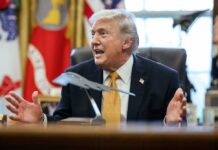
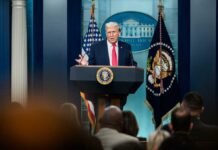
The Department of Homeland Security said Secretary Markwayne Mullin was required by law to fly on a government aircraft. The department linked that rule to two duties: secure communications and continuity of government during emergencies. That position matches how the federal system treats a small set of top officials. They must be reachable at all times, even on weekends. Mullin echoed that duty. He said he must stay in contact 24 hours a day, every day, without breaks.
Federal rules do allow this kind of “required use” travel. Government standards say some leaders must use secure planes because of national security and communications needs. The Government Accountability Office has recorded this policy across administrations, including required-use designations for certain Justice Department leaders. These rules exist so a crisis does not wait on a boarding pass. The idea is simple: when seconds matter, the phone has to work and the line has to be safe.
The Timeline And The Money Question
Mullin said the nationwide ground stop had ended almost a full day before he flew. He drew a line between flying during a ban and flying after the airspace reopened. He also said he would reimburse the government for the personal part of the travel. Department statements said the same thing: personal, nonofficial trips are paid by him, not by taxpayers. The Associated Press and other outlets reported those claims while also noting ongoing airport chaos that tested public patience.
The timeline matters because it shapes whether the act seemed reckless. If the airspace was open, then the core policy issue narrows to two checks. First, did required-use status apply? Second, did repayment match the rules set in federal travel law? The federal code outlines reimbursement when personal travel is involved, including how to compute fair value to the government. Proving payment is the cleanest way to drain heat from the story.
The Optics Battle That Won The Headlines
Critics said the trip looked out of touch while families slept on airport floors. They pointed to news that Mullin watched the game from a luxury suite linked to Bollinger Shipyards chief Ben Bordelon. That company has been tied to a major icebreaker contract. Some saw a perk from a contractor and raised conflict-of-interest alarms. Others hammered the simple contrast: stranded Americans versus a government jet headed to college football.
DHS HEARING: Ranking member Rep. Bennie Thompson says DHS Sec. Mullin is not "serious" after taking a government plane to Baton Rouge to watch the LSU-Texas college football game just 24 hours after a nationwide FAA ground stop.
"While Americans were stranded in airports across… pic.twitter.com/jyocApXq1n
— Marisela Ramirez (@mariselapenny) November 18, 2026
Commentators pressed the point on air and online. A CNBC host challenged Mullin on the plane and the timing. Social posts called the decision a bad look, even while noting his claim that the skies had reopened for 21 hours. From a conservative, common-sense view, the optics do damage even when rules permit the flight. Voters judge stewardship as much as statutes. If a choice invites doubt about priorities, it erodes trust that rules alone cannot restore.
Where Facts Anchor And Where Questions Remain
Several facts stand on firm ground. Homeland Security said required-use rules applied, and that Mullin must be in secure contact at all times. Mullin said he would reimburse and that the airspace was open before departure. Major outlets reported both points, alongside scenes of travel fallout. These details support the defense that the flight squared with policy. They also explain why a private citizen’s playbook does not fit a cabinet-level job in a tense security environment.
Important questions remain and deserve records, not rhetoric. What is the exact legal authority that forced the government aircraft in this case, and is there a written designation for the secretary? What were the precise takeoff and landing times relative to Federal Aviation Administration notices? Did reimbursement cover the correct amount under federal travel standards? Was any official work performed during the trip window? Clear documents can close these loops faster than any cable hit.
The Practical Standard Going Forward
Two ideas can both be true. First, continuity and secure communications are real and vital. Second, appearances can gut credibility in a single viral frame. The fix is not to hobble required-use policy. The fix is sunlight. Post the designation letter. Post the flight times. Post the repayment receipt. If rules required the plane and the secretary paid the personal share, show it. That is the conservative path: follow the rules, pay what you owe, and prove it with paper.
Sources:
yahoo.com, abcnews.com, nytimes.com, apnews.com, cnn.com, washingtonexaminer.com, advocate.com, x.com, rawstory.com, abc7chicago.com, irishstar.com