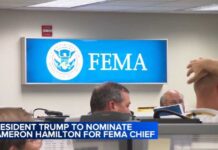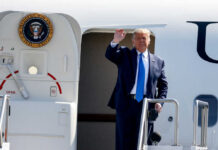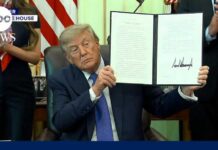


President Trump’s suggestion that the National Guard could be sent to America’s airports is reigniting a core conservative debate: how to restore border and travel security without normalizing a federalized force at home.
Quick Take
- Trump said the National Guard could be sent to airports “for more help,” signaling a potential escalation beyond federal agencies already active in travel hubs.
- Supporters who demanded stronger border enforcement are weighing security benefits against fears of government overreach and mission creep.
- The airport discussion lands during a second Trump term defined by divided MAGA opinion on foreign war, national priorities, and trust in institutions.
- Without clearer details, constitutional guardrails—command authority, scope, and rules of engagement—remain the central question.
What Trump Actually Put on the Table
President Trump said he could send the National Guard to airports “for more help,” a phrase that leaves key operational questions unanswered but immediately raises stakes.
Airports sit at the intersection of federal screening, immigration enforcement, and state jurisdiction, which is why proposals like this draw scrutiny fast. The idea also reflects a familiar Trump-era pattern: use visible enforcement to restore order, then negotiate the political fallout afterward.
President Donald Trump announced Wednesday that he may send the National Guard to America's airports. 🔗 https://t.co/CDiu5rvE3k pic.twitter.com/dq5IH05NAO
— Daily Mail US (@Daily_MailUS) March 25, 2026
Conservatives generally support decisive action to secure borders and enforce immigration law, particularly after years of illegal immigration and lax enforcement under prior administrations.
At the same time, many voters over 40 remember how quickly “temporary” security measures can become permanent bureaucracy. That tension—restore order but keep government limited—explains why the airport National Guard talk is energizing both supporters and skeptics inside the same coalition.
Why Airports Are a Flashpoint for Federal Power
Airports are not just transportation nodes; they are high-compliance zones where Americans already accept ID checks, screening, and surveillance. Adding uniformed Guard troops could strengthen deterrence and manpower, but it also risks blurring lines between military support and civilian law enforcement.
Conservatives who prioritize constitutional limits will want clarity on whether the Guard would be supporting logistics and security, or participating in enforcement actions that look like policing.
Authority matters because Guard deployments can occur under different legal statuses, and those statuses shape accountability and limits. If the mission is framed as support for federal operations, critics will ask what guardrails exist to prevent expansion into broad domestic enforcement.
If the mission is framed as state-led security assistance, supporters will still ask how coordination works inside federally regulated airport environments. The basic conservative question is simple: who controls it, and what stops it from growing?
MAGA’s Trust Gap: Security First vs. “Endless Missions”
The politics of this moment are shaped by something bigger than airports: a growing trust gap among Trump voters. Many backed Trump for border control, lower costs, and an end to “forever wars,” yet the country is now at war with Iran and energy costs remain a pain point for working families.
That broader frustration spills into domestic policy debates, where some supporters increasingly question whether any new “mission” will stay limited—or morph into another open-ended commitment.
That context doesn’t automatically make the airport proposal wrong, but it raises the standard it must meet. Voters who feel burned by past globalist commitments and bureaucratic drift are more likely to demand specificity up front: the mission’s duration, triggers for ending it, transparency for arrests or detentions, and protections for lawful travelers.
What to Watch: Guardrails, Metrics, and Civil Liberties
The most important next step is not the headline—it’s the implementation details that would follow. Clear metrics would help the public judge effectiveness: reduced smuggling routes through airports, faster processing for lawful travelers, fewer security incidents, and a defined end date.
Trump says he could send National Guard to airports 'for more help'https://t.co/5HStwUrB3B
— Earthquake Red Zone Needed in Washington State (@Knight172) March 25, 2026
Until more specifics are provided, the proposal sits in a gray zone that divides the right for understandable reasons. Some will see the Guard as a practical tool to restore order after years of institutional failure.
Others will see risk in expanding uniformed presence in a space where Americans are already conditioned to comply. The standard should be consistent: secure the country, enforce immigration law, and do it with transparent limits that respect constitutional boundaries.