
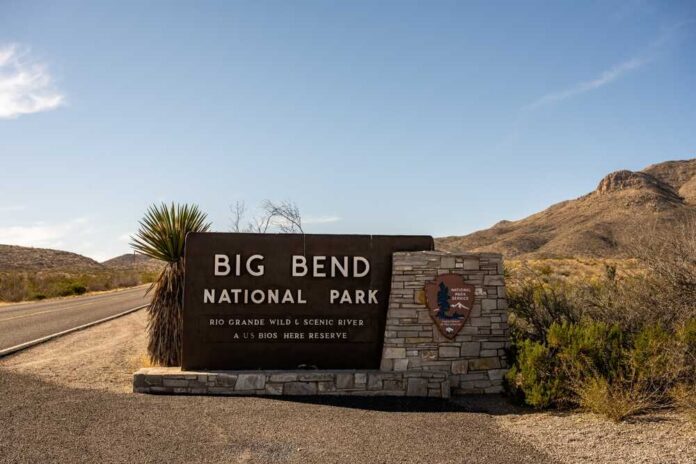
Washington hit pause on bulldozers inside Big Bend National Park after a $1.7 billion border build sparked a fierce local revolt and national scrutiny.
Story Snapshot
- Customs and Border Protection awarded $1.7 billion tied to Big Bend security projects.
- Officials say plans focus on vehicle barriers, patrol roads, and tech, not a 30-foot wall.
- Construction inside the park paused as the agency chief visits to assess next steps.
- Local sheriffs and park veterans argue rugged terrain already acts as a strong barrier.
What Triggered The Pause Inside A Beloved National Park
Customs and Border Protection moved heavy equipment into Big Bend National Park in August, tied to a sprawling contract for border infrastructure across the region. After days of pushback, the agency paused construction activities inside the park while leadership reviews the plan on the ground.
The contract language on federal spending sites links the award to “border wall in Big Bend Texas,” fueling confusion. Agency statements later stressed a package of roads, vehicle barriers, and cameras, not a towering wall.
Public pressure rose fast. Conservation groups posted images of cleared desert scrub and warned of lasting harm to wildlife corridors near iconic canyons. Tourism businesses worried about river access and the area’s outdoor economy.
Five county sheriffs, no strangers to the demands of border work, said the landscape itself is already a wall in most places. Sheer cliffs, deep canyons, and long stretches of desert make vehicles and foot traffic hard to move and easy to track.
The Money, The Plans, And The Confusion
Reporters found the federal award described as “for border wall in Big Bend Texas,” and one segment labeled as BBT-4, awarded to a major builder. Those records show a serious federal push to add infrastructure in the sector.
Customs and Border Protection then briefed media that the $1.72 billion would cover about 17 miles of vehicle barriers in select areas, new patrol roads, and surveillance systems rather than a continuous, thirty-foot steel wall inside the park. That split message helped fuel local doubt.
Trump admin briefly pauses contentious border project in Texas' Big Bend National Park https://t.co/pI43L9tIIg pic.twitter.com/Gn21jKFLLK
— New York Post (@nypost) August 18, 2026
Opponents also flagged waivers of environmental rules that allow fast-track building without the usual studies. Federal law lets the Department of Homeland Security suspend certain requirements to speed barriers and roads along the border.
Agencies have used that authority before, and courts have upheld it. The legal path may be solid, but the optics inside a national park are tough, especially when bulldozers meet beloved trails.
Local Lawmen And Park Veterans Push Back
Terrell County Sheriff Thaddeus Cleveland backed border security in principle but opposed vehicle barriers mapped for his county. He said engineers picked spots where a car could not pass anyway, making the expense wasteful and the presence disruptive.
He is a Republican and a former Border Patrol agent, which gave his criticism extra weight. Former park superintendents with long service records urged leaders to avoid waivers and keep heavy construction out of the park.
🇺🇲Border construction was halted today at Big Bend National Park, at least temporarily.
It just so happened that some of the park’s major attractions were in the way of a new patrol road and vehicle barriers being bulldozed along the southern border.
The work has drawn… pic.twitter.com/fOc7pLMVnW
— Mario Nawfal (@MarioNawfal) August 18, 2026
These critics said Big Bend historically sees fewer crossings than hot spots to the west and east, and recent numbers fell further. They argued extra roads could invite smuggling into remote zones that agents cannot patrol around the clock.
Some environmental advocates warned of damage near Santa Elena Canyon and said crews were clearing native plants without full surveys because waivers were in place. These are contested claims, but the agency pause suggests leaders heard the alarm.
Security Value Versus The Cost On The Ground
Research on barriers shows mixed results. Fences and vehicle obstacles can reduce crossings in flat, easy terrain where agents and sensors can monitor gaps well. Rugged country like Big Bend is different. Mountains and canyons slow people and smugglers already, and barriers can shift traffic, not end it.
Analysts across the spectrum agree walls alone do not stop illegal immigration, but they can help when matched with manpower and tech in the right places.
Common-sense conservative stewardship asks two questions: Does it work here, and is it worth the tradeoffs? If the terrain already blocks vehicles, then building vehicle barriers looks like theater, not strategy.
If a patrol road helps agents respond faster to the few routes that exist, that could be value. The right answer likely trims scope, protects key habitats and access points, and targets sensors and roads where agents say they truly need them. That is what a pause should sort out.
What To Watch Next
Customs and Border Protection leaders will face competing demands: deliver visible security gains fast and respect a crown-jewel park that powers regional jobs. Expect updated maps, fewer sensitive miles inside the park, and clearer language that matches the plan to the place.
Track whether sheriffs and park managers get a real seat at the table. If local buy-in rises and the gear shifts to smarter spots, the project can move with less noise and more effect.
Sources:
apnews.com, bigbendsentinel.com, fox26houston.com, newsmax.com, usnews.com, cnn.com, spectrumlocalnews.com, westernpriorities.org, newsweek.com, san.com, highergov.com