
A retired New York Police Department detective is charged with murder after a single shot pierced a car window on the George Washington Bridge and killed a commuter in rush-hour traffic.
Story Snapshot
- Police charged 62-year-old Victor Romero with murder in the bridge shooting.
- Investigators say a bullet entered through the rear passenger window of the victim’s car.
- Bridge cameras reportedly captured a near-collision moments before the shot.
- Police describe the case as an apparent road-rage attack; a lab is testing a bullet fragment.
Police say retired detective charged after deadly bridge shooting
Police arrested and charged retired New York Police Department detective Victor Romero, 62, in the fatal shooting of Con Edison worker Koran Irvine on the George Washington Bridge. Officials said the shooting happened during heavy traffic. Romero was taken into custody and faces a murder charge, according to police confirmations reported by multiple outlets. Reporters did not cite any defense statement from Romero at the time of publication. The investigation continued after the arrest, standard in a homicide case.
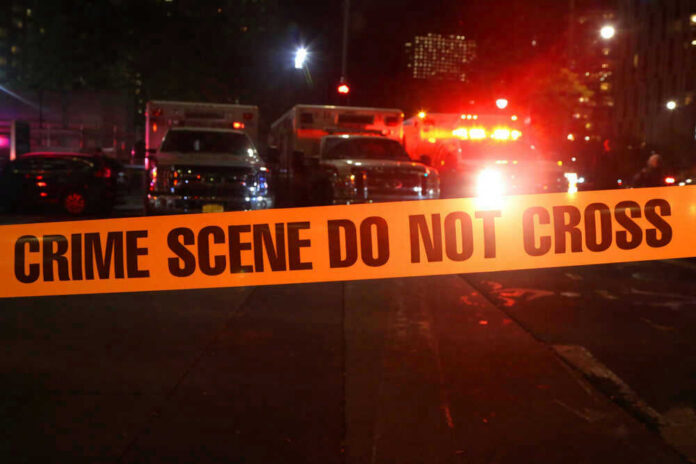
NBC New York reported that investigators believe the bullet entered Irvine’s blue Volkswagen Golf through the rear passenger-side window. Police sources said the round appeared to strike the driver’s headrest before entering his body, consistent with a shot fired from another vehicle alongside or behind the Golf. First responders could not save Irvine. The Port Authority Police Department closed lanes for hours to process the crime scene and pull video from bridge cameras.
Camera timeline shows near-miss, then a shattered window
Bridge surveillance cameras reportedly captured Irvine’s car nearly colliding with another vehicle on an approach ramp moments before the shooting. Investigators used that timeline to track movements across the span and to flag a suspect vehicle seen near the Golf before the rear window shattered. Police traced that vehicle after the shooting, which helped lead to Romero’s arrest, according to subsequent reports that cited law-enforcement sources. That approach—stitching together cameras, toll data, and traffic timing—has become standard on major crossings.
Detectives also recovered a bullet fragment inside Irvine’s car and sent it for analysis. A lab comparison can link a projectile to a specific firearm barrel if police later recover a gun. It can also exclude a weapon. Reporters said testing was underway when Romero was charged. That kind of lab work matters, but it rarely stops an arrest when investigators believe camera evidence, vehicle tracking, and other facts already meet the legal bar for probable cause.
Officials frame the case as road rage on a packed artery
Police and law-enforcement sources described the killing as a suspected road-rage shooting tied to the near-collision just before the gunfire. That pattern matches a broader public-safety problem: gun-involved road-rage attacks have surged in recent years across the country. Analyses drawing on Gun Violence Archive data show hundreds of people shot each year after traffic flare-ups, with deaths and injuries rising since the late 2010s. The George Washington Bridge carries enormous daily volume; a tense merge or missed signal can turn explosive fast.
A retired NYPD detective has been charged with murder in connection with a deadly shooting on the George Washington Bridge on Tuesday night. Authorities believe he fatally shot the 46-year-old victim in an apparent road rage incident. pic.twitter.com/m0vFbnMxP1
— CBS Evening News with Tony Dokoupil (@CBSEveningNews) October 21, 2026
Common sense says traffic anger plus a firearm within reach can turn a dumb mistake into a felony in seconds. American conservative values stress personal responsibility, restraint, and respect for life. That starts with the driver behind the wheel. If you are armed, the duty to de-escalate is higher, not lower. Prosecutors will look at intent, camera angles, distance, and the bullet path. If the state proves a purposeful shot into a crowded roadway, a murder charge fits the moral and legal stakes.
What comes next in court and on the bridge
Prosecutors will outline their theory in charging papers and, if secured, an indictment. Expect the state to anchor its case to the camera sequence, the tracking of the suspect vehicle, and any lab findings from the bullet fragment. Defense counsel may test the timeline, the shooting angle, and the link between any firearm and the fragment. A jury will decide guilt if the case goes to trial. For the public, the immediate takeaway is stark: a commute turned deadly in a heartbeat.
Policing agencies will likely review traffic-control footage and lane patterns on the approaches, looking for blind spots where tempers flare and crashes cluster. Port Authority procedures already emphasize camera coverage. This case will add pressure for even tighter response times and better signage to cut sudden merges. That is not about politics. That is about keeping drivers alive on one of the nation’s busiest bridges while the courts do their work.
Sources:
foxnews.com, nbcnewyork.com, cp24.com, abc7chicago.com, newjersey.news12.com, hindustantimes.com