
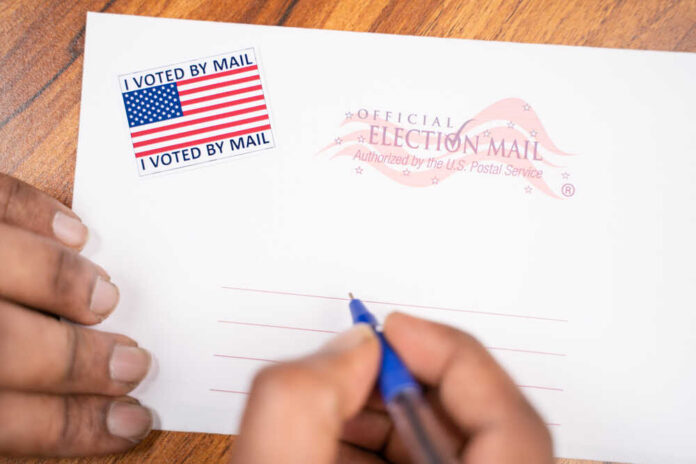
The Supreme Court cleared the road for President Trump’s mail-voting order, but the real fight now shifts to speed and scope.
Story Snapshot
- The Court lifted a block and said the suing states lacked standing for key parts.
- The White House order tasks federal agencies and the Postal Service with new roles.
- Lower courts had called core parts unconstitutional before the stay.
- Practical hurdles could still slow or shrink any changes before ballots move.
What The Supreme Court Actually Did
The Supreme Court issued an unsigned order that stayed a lower-court injunction against parts of President Trump’s mail-voting directive.
The justices said the states that sued did not have standing to attack one core section because it “does nothing to them,” which allowed implementation to resume, at least for now.
The ruling did not decide whether the order is lawful. It decided who can sue about what at this stage, and it did so weeks before early voting starts.
The Supreme Court handed President Trump a victory, allowing his administration to enforce his "election integrity" executive order restricting mail-in voting ahead of the November midterms.
The ruling clears the way for the Trump administration to move forward with restrictions… pic.twitter.com/7dKrOV28i5
— Fox News (@FoxNews) August 24, 2026
The immediate effect lands like a green light, but it is not the checkered flag. Agencies still must write, file, and defend rules. States still control most election mechanics under the Constitution.
Opponents can try again with different plaintiffs or tighter claims. That is how urgent election cases often move. Standing fights and stays decide the near term. Merits rulings come later, sometimes after the election clock runs out.
What Trump’s Order Tries To Do
The order, signed March 31, directed the Postmaster General to start a rulemaking to set uniform standards for mail-in or absentee ballot services.
It also told the Department of Homeland Security, with help from the Social Security Administration, to use federal databases to build a list of adult citizens for states to compare with their voter rolls. The stated aim is to protect the mail as a secure path for ballots and to verify citizenship for federal elections.
The plan’s design rests on a simple pitch many Americans accept: secure rolls, clean lists, and clear chain-of-custody for ballots equal trust in results. That vision aligns with common-sense priorities. Federal tools exist. Agencies hold data.
The Postal Service moves ballots at scale every cycle. The question is not whether security matters. The question is who gets to set the rules and how far federal actors can go before they run into state control and prior court orders.
Why Lower Courts Pushed Back
A federal judge in Boston earlier ruled that key parts of the order were unconstitutional. The court said the president exceeded his powers by trying to reshape voting procedures that belong to states and to Congress.
The court also found the United States Postal Service lacks the legal authority to issue binding regulations on who may vote by mail. That injunction froze much of the plan across 23 states and Washington, D.C. before the Supreme Court’s stay.
Another federal court blocked Postal Service proposals tied to the order, citing a prior settlement on election mail handling. Those rulings showed how legacy constraints, consent decrees, and agency limits can slow sweeping plans.
Appeals courts also refused to lift blocks in July. That left a patchwork until the Supreme Court stepped in on standing. Even with the stay, agencies still face those earlier legal roadblocks in other lanes.
What Changes Now And What Still Hangs
After the Supreme Court’s order, the administration can restart parts of its plan that do not trigger the same standing problems. The Postal Service posted a final rule in August to tighten mail-ballot handling if courts allow it to take effect.
The agency itself acknowledged that injunctions in California and Massachusetts still bar those changes for now. That admission shows the split-screen reality underneath today’s headlines.
🚨 Important context missing from the headlines: The Supreme Court has NOT ruled that Trump can ban or restrict mail-in voting nationwide.
It lifted an injunction in one lawsuit largely because the states’ challenge was considered premature. A separate nationwide injunction…
— Lance Lachlan ✌🏻 (@lancelachlan) August 25, 2026
Expect a rapid push on steps that do not require new state cooperation. Expect fresh lawsuits from parties the Court might see as proper plaintiffs. Expect more claims that timing risks voter confusion.
Also expect the administration to argue that uniform federal mail standards reduce confusion, cut fraud risk, and support equal treatment. The Supreme Court’s note on standing signaled limits on who may halt federal prep work. It did not bless every tool the order picks up.
The Practical Bottom Line For Voters
Ballots will still move through the United States Postal Service. State election offices will still set eligibility and run counts. Any new federal steps must fit around those facts and the calendar. The safer bet is targeted adjustments, not a wholesale overhaul in weeks.
As always, voters should check state rules early, request ballots on time, and track returns. That simple discipline beats chaos and keeps the focus where it belongs: accurate lists, secure mail, and clear results.
Sources:
apnews.com, cnn.com, theguardian.com, npr.org, whitehouse.gov