

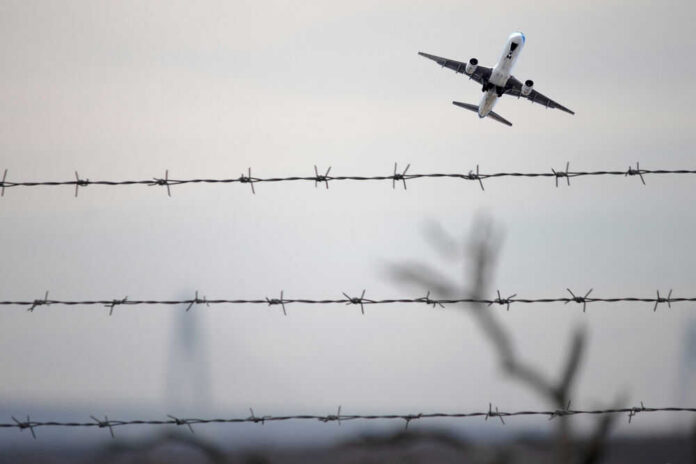
Twenty people stepped off a U.S. charter in Liberia, marking the first flight in a plan that could move up to 1,200 non-Liberians there within a year.
Story Snapshot
- First U.S. deportation flight under the Liberia pact arrived with 20 people.
- Liberia agreed to accept up to 1,200 third-country deportees over 12 months.
- The move fits a wider U.S. push to use “third-country” removals as a pressure valve.
- Early turbulence included resistance on the plane and rerouting on a later leg.
What Happened On The Ground In Liberia
U.S. officials flew 20 deportees to Roberts International Airport near Monrovia on August 20, 2026. The arrival marked the start of a bilateral plan under which Liberia will receive up to 1,200 non-Liberians over the next year, according to the country’s public announcement and government statements.
Reporters on the tarmac described the aircraft’s touchdown and transfer procedures. The flight marked one of the largest third-country arrangements now active in Africa under current U.S. policy.
The U.S. carries out its first deportation under an agreement for Liberia to accept up to 1,200 people who are not from the West African country, one of the Trump administration’s largest efforts yet to deport people to countries other than their own. https://t.co/ZmawRHYEbl
— NBC News (@NBCNews) August 21, 2026
U.S. media described tense moments on the first flight. Several people refused to deplane and had to be restrained by federal agents, according to reporting that cited people familiar with the incident.
The following day, a separate group that resisted removal to Liberia was instead flown onward to Equatorial Guinea, which showed how logistics can shift when compliance breaks down mid-route. These snags did not stop the rollout. They did, however, preview the friction to expect as flights scale.
Why Liberia, And Why Now
Liberia’s government said it will accept up to 1,200 third-country deportees from the United States within 12 months. Officials framed the move as a formal agreement with screening on the U.S. side and coordination with Monrovia on the receiving end.
The United States has faced hard barriers returning some migrants to their home countries. Third-country arrangements help clear that backlog when origin governments refuse documents, air links are blocked, or security and diplomatic issues stall removals.
Supporters point to border control, deterrence of illegal crossings, and faster case resolution. They also argue that sovereign nations can and should craft lawful pacts that share responsibility.
That fits long-standing principles: enforce the law, end catch-and-release incentives, and close loopholes that smugglers exploit. If a country of origin will not cooperate, then a willing partner that signs a deal and sets conditions becomes part of a practical fix, not a problem.
The Bigger Network Of Third-Country Removals
Human rights groups and legal analysts have tracked a growing U.S. network of these deals. They say the arrangements are often opaque and can shift risks onto weaker states. They warn about due process gaps and the risk that people could be harmed if monitoring is thin.
The U.S. Committee for Refugees and Immigrants notes that these removals differ from standard returns because the person has no real tie to the receiving nation. That structural difference raises unique legal and humanitarian stakes.
US carries out its first deportations under pact for Liberia to accept 1,200 non-Liberians https://t.co/rwnbVjP9sZ
— Chicago Breaking News (@ChicagoBreaking) August 22, 2026
Policy trade-offs are clear. A country that signs must plan for housing, health checks, and exit options. Liberia’s first reception involved airport processing and statements that deportees were free to leave the country if they could arrange travel, highlighting a model focused on transit rather than long-term settlement.
For the United States, these agreements work only if logistics hold, flights are predictable, and downstream countries cooperate when people move onward.
What To Watch In The Next 90 Days
Flight tempo will show whether the 1,200 target is realistic. Liberia’s capacity, security at intake sites, and pathways for onward travel will be the pressure points. U.S. agencies will need tight case screening and clear handoffs to avoid the mid-air reroutes seen after resistance on later legs.
Expect louder debate as numbers rise. The facts on the tarmac will matter more than talking points: punctual flights, orderly reception, and transparent reporting will decide if this pact scales or stalls.
Sources:
apnews.com, npr.org, aljazeera.com, nytimes.com, reuters.com, semafor.com, rfi.fr