

Kevin Warsh’s rise to the Federal Reserve chairmanship matters because it is not just a personnel change; it is a test of how much independence a central bank can retain when politics tries to frame the ending before the oath is even spoken.
Quick Take
- Warsh was confirmed by the Senate to succeed Jerome Powell as Federal Reserve chair, with Powell’s term ending Friday.[1]
- He was then sworn in at a White House ceremony, making the transition public and unmistakable.
- Warsh has pledged to protect the Federal Reserve’s independence and avoid precommitting interest-rate decisions.[1]
- His early remarks and allies have cast him as a reform-minded chairman, not a caretaker.[1]
The Swearing-In That Signals a Bigger Battle
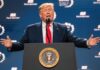
Warsh’s swearing-in at the White House gave the transition a sharp political edge, even though the Federal Reserve is supposed to stand apart from daily political combat.
The ceremony confirmed what the Senate had already set in motion: Warsh would replace Jerome Powell as chair after a 54–45 confirmation vote and begin a four-year term as the 17th chair of the Federal Reserve.[1] That sequence matters because it shows the handoff was formal, immediate, and publicly tied to the White House.
The office he inherited is not decorative. The Federal Reserve chair sits at the center of American monetary policy, where every signal about inflation, growth, and interest rates is parsed by markets within seconds.[1]
That is why Warsh’s early promise to preserve independence immediately drew attention.[1] In plain terms, the market does not only care who sits in the chair; it cares whether that person can resist pressure when the political winds blow hard.
Why Independence Is the Real Story
Warsh told senators during his confirmation hearing that political pressure should not influence monetary policy decisions, and he has repeated that independence is essential.[1] That statement may sound routine, but in practice it is the whole ballgame.
A Federal Reserve chair who invites short-term political demands can unsettle inflation expectations, weaken credibility, and turn a central bank into a campaign accessory.
Those who value stable institutions have a natural instinct here: rules matter more than slogans, especially when the stakes are the cost of money itself.[1]
BREAKING: Kevin Warsh is officially sworn in as the new Chair of the Federal Reserve pic.twitter.com/oR2p1GtDpT
— Hedgeye (@Hedgeye) May 22, 2026
That is also why his first public posture matters as much as the vote that installed him. CBS News reported that Warsh vowed to preserve the Fed’s independence over monetary policy and would not “predetermine” interest rates.[1]
That language matters because it suggests restraint, not theatrics. A chairman who wants to be taken seriously has to sound less like a partisan combatant and more like an adult in the room, even when the room is crowded with politicians and market traders looking for clues.
What Warsh Has Signaled About the Fed’s Direction
Warsh has called for what he describes as a regime change at the Federal Reserve, including changes to how the central bank communicates policy and manages inflation.[1] That is a stronger message than a standard promise of continuity.
It suggests he wants the institution to become more disciplined, more transparent, and less tolerant of drift. Supporters see that as overdue reform; critics may hear it as a warning that the Fed’s internal culture is about to be challenged from the top.
🚨 Kevin Warsh sworn in as Federal Reserve chair; expected to push changes at the Fed, including reducing its $6.7B balance sheet
— Lumida Wealth News (@LumidaNews) May 26, 2026
The timing of his first Federal Open Market Committee meeting, expected in June, will quickly reveal whether his rhetoric becomes a governing style or remains a confirmation-season talking point.[1]
Markets will watch for two things: whether he emphasizes price stability over easy money, and whether he keeps the institution visibly above partisan pressure.
If he does both, he strengthens the Fed. If he stumbles, the optics alone will invite doubt, and doubts about the Fed tend to spread faster than any rate cut can fix.
Why This Transition Will Not Fade Quietly
Warsh’s confirmation and swearing-in matter because they combine procedure, symbolism, and policy in one compressed moment.[1] The Senate vote gave him legitimacy, the White House ceremony gave the handoff a presidential spotlight, and his remarks about reform and independence set the terms of the argument that will follow him into office.[1]
The real story now is not whether the chair changed hands. It is whether the new chair can make the Federal Reserve look steadier, not more political, after one of the most visible transitions in recent memory.
Sources:
[1] Web – Kevin Warsh sworn in as new Fed chair at White House … – CBS News