
President Trump just turned tariff threats into a strategic Arctic victory, announcing a “framework” deal with NATO on Greenland that cancels punitive trade measures against European allies while potentially securing American interests in one of the world’s most resource-rich territories.
Story Highlights
- Trump cancels February 1 tariffs on eight European NATO nations after reaching a Greenland framework with Secretary-General Mark Rutte at Davos on January 21, 2026
- The framework covers Arctic security, mineral access, and long-term U.S. interests, but lacks specific details on Greenland ownership or control
- Deal represents escalation from Trump’s 2019 purchase proposal, now involving concrete NATO negotiations led by VP Vance, Secretary Rubio, and Special Envoy Witkoff
- Agreement averts immediate trade war while addressing critical national security concerns over Chinese and Russian Arctic expansion
Trump Secures NATO Framework After Tariff Pressure
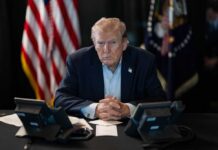
President Trump announced on January 21, 2026, at the World Economic Forum in Davos that he reached a “framework of a future deal” with NATO Secretary-General Mark Rutte concerning Greenland and broader Arctic security.
The announcement came after Trump threatened 10 percent tariffs escalating to 25 percent on eight European NATO members, including Denmark, the United Kingdom, France, and Germany.
Trump immediately canceled the scheduled February 1 tariffs following his meeting with Rutte, describing the framework as an “ultimate long-term deal” that secures everything the United States wanted regarding security and mineral access in the strategically vital region.
Strategic Arctic Interests Drive Framework Agreement
Greenland’s geographic position makes it indispensable for American missile defense systems and monitoring Russian and Chinese military activity in the Arctic. The semi-autonomous Danish territory contains vast deposits of rare earth minerals critical for defense technology and electronics manufacturing, resources currently dominated by Chinese production.
Trump’s framework addresses these national security imperatives while expanding beyond his 2019 purchase proposal that Denmark flatly rejected. The agreement involves NATO-wide coordination across the Arctic region, reflecting recognition that collective Western security depends on controlling this strategic northern frontier against adversarial encroachment threatening American sovereignty and economic interests.
Trump says he reached Greenland deal 'framework' with NATO, backs off Europe tariffs https://t.co/9MNy56lehX
— CNBC (@CNBC) January 21, 2026
Deal Details Remain Vague Despite Bold Claims
Trump characterized the framework as “infinite” and lasting “forever,” yet specific terms regarding Greenland ownership or U.S. control remain undisclosed. Vice President JD Vance, Secretary of State Marco Rubio, and Special Envoy Steve Witkoff will lead immediate negotiations to finalize details focusing on security arrangements and mineral extraction rights.
Trump ruled out military force during his Davos address, pivoting from early January 2026 when he explored options including military action to secure Greenland from Denmark.
The President posted on social media and confirmed in interviews with CNBC and CNN that the framework represents a diplomatic victory, though critics note the lack of concrete commitments raises questions about whether this amounts to substantive progress or political theater masking continued European resistance.
European Allies Navigate American Pressure
NATO Secretary-General Rutte publicly embraced the framework at Davos, stating the alliance should “be happy” with Trump’s leadership role, reflecting his strategy to prevent alliance fractures despite European member skepticism.
European Commission President Ursula von der Leyen and UK Prime Minister Keir Starmer had previously signaled willingness to retaliate against unilateral American tariffs, emphasizing NATO collective control over Arctic defense rather than U.S. dominance.
Denmark and Greenland have not commented on the framework, leaving uncertainty about their acceptance of terms that could erode sovereignty.
The canceled tariffs spare European exporters billions in economic disruption while Trump maintains leverage through the threat of reimposing trade penalties if negotiations fail, demonstrating the President’s willingness to use economic tools defending American interests even against traditional allies who’ve failed meeting NATO spending commitments.
BREAKING: Trump says he reached Greenland deal ‘framework’ with NATO, backs off Europe tariffs.
— LifeSiteNews (@LifeSite) January 21, 2026
Framework Tests NATO Unity Under Trump Leadership
This agreement marks a significant test of NATO cohesion as Trump pursues America-first objectives within the alliance structure his first term criticized for inadequate burden-sharing. Rutte’s accommodation of Trump’s demands reflects pragmatic recognition that maintaining American commitment to European defense requires flexibility on strategic priorities like Arctic control.
The framework could reshape NATO power dynamics by cementing U.S. dominance in northern territories while potentially opening pathways for enhanced mineral extraction benefiting American defense and technology sectors.
Long-term implications include strengthened deterrence against Russian and Chinese Arctic ambitions, though aggressive pursuit of Greenland control risks fracturing alliance unity if European partners perceive American overreach threatening smaller member sovereignty and collective decision-making principles fundamental to NATO’s founding charter.
Sources:
Trump stands down on NATO tariff threat, citing ‘framework’ for a Greenland deal – ABC News
Trump says he reached Greenland deal ‘framework’ with NATO, backs off Europe tariffs – Politico