
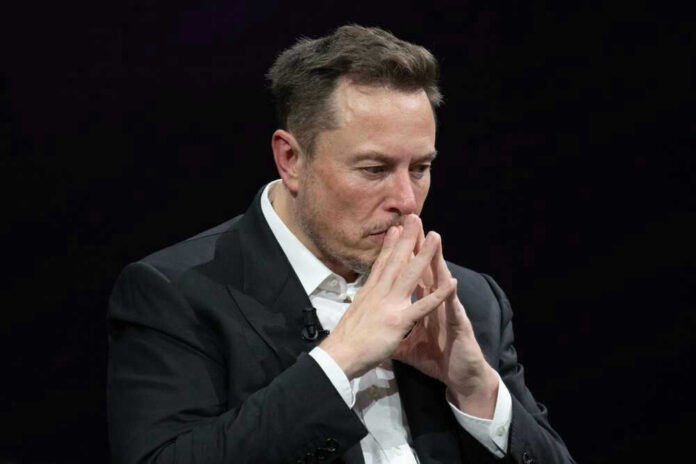
Elon Musk told a room full of Wall Street insiders he is “not MAGA,” just weeks after calling himself “dark gothic MAGA” at a Trump rally.
Quick Take
- Musk told the New York Times DealBook Summit “I’m not MAGA,” adding he isn’t sure what the term even means
- He said he felt “pretty foolish” after spending heavily on Republican midterm candidates who then underperformed
- Musk previously called himself “dark gothic MAGA” at a 2024 Trump rally and wore MAGA hats in public
- Reported spending hit roughly $290 million in 2024 and about $446 million in the 2026 midterm cycle, almost all backing Republicans
What Musk Actually Said On Stage
Speaking with Andrew Ross Sorkin at the DealBook Summit, Musk drew a sharp line between supporting Republicans and belonging to a movement. He said he practices no “blind adherence to a set of policies by the Republican Party” and admitted he’s unsure what MAGA even means anymore. That’s a notable shift in tone from a man once synonymous with Trump-world branding.
Elon Musk Says He’s ‘Not MAGA,’ Calls Himself ‘Quite Moderate’ pic.twitter.com/Wkdkj2eGNc
— New York Post (@nypost) November 19, 2026
Musk also explained his midterm spending wasn’t about ideology at all. He said his goal was simple: keep one branch of government — the House, Senate, or presidency — in Republican hands so Democrats couldn’t hold a supermajority. That’s a strategic, almost mechanical rationale, not a movement loyalty oath, and it deserves to be weighed on those terms rather than dismissed outright.
The Regret Behind The Rebrand
The timing matters. Musk’s comments came right after Republican candidates underperformed in the midterms, and he didn’t hide his frustration. He said he felt “pretty foolish” for spending so much money on races that didn’t pay off. That admission reads less like a calculated pivot and more like a billionaire venting after a bad investment.
Still, skeptics have a point worth taking seriously. Declaring yourself outside a movement right after that movement loses elections invites the obvious question: would Musk have said the same thing after a Republican sweep? Nothing in the public record answers that, and the chronology alone will keep the cynics talking.
The Dark MAGA Problem
Musk’s denial runs straight into his own words. At a 2024 Trump rally, he told the crowd, “As you can see, I am not just MAGA, I’m dark MAGA,” and he’s been photographed in MAGA hats on the campaign trail. That’s not vague association — it’s a direct, on-the-record self-description Musk hasn’t publicly walked back or explained.
A sympathetic reading says people evolve, and plenty of conservatives have grown frustrated with parts of the party without abandoning conservative principles. But Musk hasn’t offered that explanation. He’s left the contradiction sitting in public view, which gives critics an easy opening and leaves honest observers wanting more clarity than “I’m not sure what MAGA means.”
Following The Money Behind The Words
Numbers tell their own story. Musk reportedly donated nearly $290 million to Republican causes in 2024 and roughly $446 million in the 2026 midterm cycle, including major sums funneled through political action committees backing GOP candidates and opposing Democrats, such as in the Texas Senate race. That’s not pocket change spread evenly across the aisle — it’s a flood directed almost entirely one way, and reported totals from the 2026 cycle show the scale rivaled or exceeded his 2024 giving.
A Bigger Pattern Among Megadonors
Musk isn’t operating in a vacuum. Campaign finance watchdogs report that so-called dark money among the nation’s top 40 political donors has jumped to roughly 13 times its 2014 level, now making up close to a third of giving at that scale. Wealthy donors increasingly function like political institutions rather than traditional contributors, and Musk’s spending, regardless of what label he claims, fits squarely inside that trend.
None of this proves Musk is lying about his personal beliefs. A man can reject a label while still bankrolling the team that benefits from it, the same way a donor can give to a party without agreeing with every plank of its platform. But when the money overwhelmingly flows one direction, calling yourself neutral asks the public to separate identity from impact — a distinction that’s intellectually fair but politically hard to sell.
Sources:
foxbusiness.com, edition.cnn.com, news.meaww.com, thejournal.ie, votelog.org, brennancenter.org